
Vandaag of morgen in huis

Kwaliteit gegarandeerd

Welkomstaanbiedingen ontgrendelen: GRATIS bezorging | Tot 80% korting | Gratis 30 dagen JoyPlus-proefperiode
Download de app
Processing your own apples, grapes or berries can be appealing if you have an orchard, vegetable garden or hobby greenhouse. A manual fruit press works without electricity and is suitable for smaller harvests. Many models look similar, though, while capacity, preparation and cleaning requirements can vary considerably.
Before you order, it’s important to look beyond the number of litres. The combination of a fruit mill, pressing mesh, press basket and sturdy construction determines how much work is involved in practice.
A 6-litre, 12-litre or 18-litre fruit press usually refers to the capacity of the press basket. It doesn’t automatically mean you’ll get exactly that amount of juice in one go. Fruit contains skins, pulp, stones and varying amounts of juice.
A larger press basket is particularly useful if you want to process a lot of fruit in succession. For a few apples from the garden, a smaller model may be more practical, as you won’t need to gather as much fruit before you start.
Apples and other firm fruit need to be broken down first. A press on its own is therefore not always enough. A fruit press with fruit mill combines crushing and pressing in one set. Check the mill’s capacity too. The models listed come with a 7-litre fruit mill and a pressing mesh, but the press capacity varies by version.
Without proper preparation, the press may work less efficiently. Whole apples may also be awkward to fit into the press basket and can make it unnecessarily difficult to operate.
A cheap manual juicer or apple press may seem appealing, but also check:
According to the product information for this particular offer, the set includes a fruit mill and pressing mesh. Before buying, always check the current version, contents and included parts on the product page.
Choose a capacity that suits your harvest and the space you have available:
A large press basket may save time when you have a lot of fruit, but it also takes up more space. Check where you’ll place the press and whether the surface is stable enough before you buy.
A fruit mill is important for a juice press for apples, grapes and berries. Apples generally need to be crushed into smaller pieces first. Grapes and soft berries need a different approach from firm fruit. Check that the mill is suitable for your needs and that its feed opening is large enough.
A 7-litre fruit mill can be useful if you work in batches. However, the mill’s capacity is separate from that of the press basket. Compare both figures so you don’t just focus on the largest capacity shown.
The pressing mesh holds back solid pieces of fruit during pressing. A well-fitting mesh helps keep the process tidy, but it’s still important to clean it thoroughly after every use. Check that you can remove and rinse it easily.
Also check the listed materials and product information. Clear details about the materials used are relevant for parts that come into contact with juice. Read the instructions, warnings and any product safety information too. A stable base and a screw that turns smoothly are more practically important than a bold marketing claim.
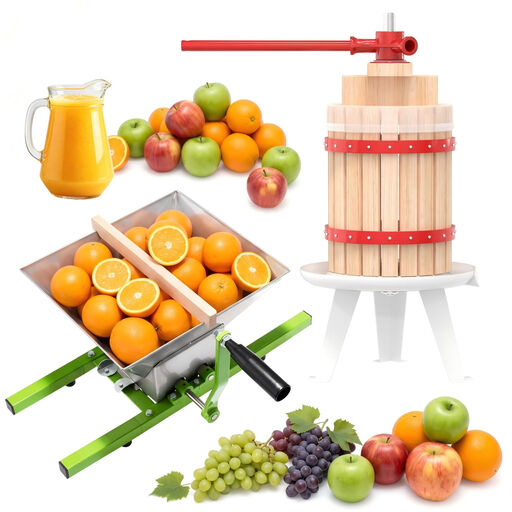
Why it suits this type of user: The 6-litre version is a good fit for smaller harvests and anyone who wants to try making their own juice.
The set lists both a 7-litre fruit mill and a pressing mesh, so you won’t need to look for separate parts straight away.
6-litre press capacity, 7-litre fruit mill and manual operation with no electricity required.
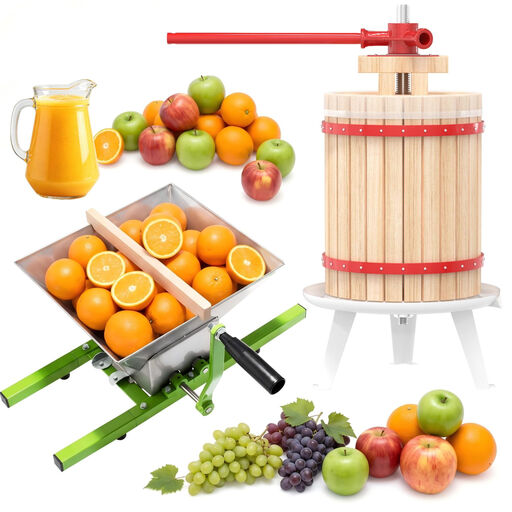
Why it suits this type of user: The 18-litre capacity offers more room for anyone who regularly processes fruit from their own garden.
The larger press basket means you won’t have to press very small batches repeatedly when processing a medium-sized harvest.
18-litre press capacity, 7-litre fruit mill and a pressing mesh included, according to the product title.
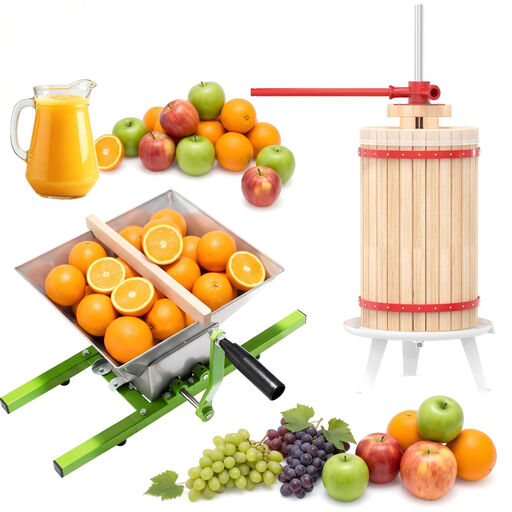
Why it suits this type of user: The 30-litre version is suited to large harvests and anyone who wants to process several batches in a short time.
The roomy press basket reduces the number of pressing rounds for larger quantities, provided you have enough space to work.
30-litre press capacity, 7-litre fruit mill and manual operation for processing larger batches.
We’ve put together a complete, up-to-date list of products that meet these strict selection criteria and the applicable European safety regulations.
Juice from berries and grapes may be thinner than apple juice. Use a suitable collecting container and check that the pressing mesh fits properly.
It depends on the type of fruit, how ripe it is and how much juice it contains. A 6-litre press basket is designed for smaller batches, while an 18- or 30-litre model gives you more room for larger harvests. The basket’s capacity is not the same as the amount of juice you’ll collect.
A fruit mill is practically essential for whole or firm apples, as it breaks the fruit down first. Grapes and soft berries are easier to process, but suitable preparation helps with these too. Check whether your chosen set includes a mill and what its capacity is.
Its lifespan depends on the materials, how heavily it’s used, storage and maintenance. Clean the parts after every use, dry them thoroughly and store the press somewhere protected from moisture. Before buying, check the product information on materials, assembly and usage limits. This will help reduce the risk of premature wear.
