
Vandaag of morgen in huis

Kwaliteit gegarandeerd

Welkomstaanbiedingen ontgrendelen: GRATIS bezorging | Tot 80% korting | Gratis 30 dagen JoyPlus-proefperiode
Download de app
A manual espresso machine gives you more control over grinding, dosing and frothing milk than a fully automatic coffee machine. This makes a portafilter machine an appealing choice for home baristas, but it also means you have more decisions to make. A model with lots of features won’t necessarily suit your kitchen, coffee habits or the time you have available.
As Joybuy Product Recommendation Officer, I cut through the marketing language to focus on the product specifications that matter. This guide shows you what to look for in an espresso machine for home use.
An espresso machine with 15 bar pressure sounds impressive, but that figure alone doesn’t tell you how your espresso will taste. Pump pressure is just one part of the system. The grind, amount of coffee, tamping and water temperature all affect the result too.
So, as well as checking the pump pressure, look at whether:
The Krups Virtuoso and various De’Longhi models both list a pump pressure of 15 bar in their product specifications. This is verifiable information, but it doesn’t guarantee the same flavour with every type of coffee.
An integrated coffee grinder saves space and lets you grind beans straight into the portafilter. However, you’ll still need to adjust it. The right grind depends on the beans, roast and extraction time you’re aiming for.
A model with a built-in grinder is handy if you want to use fresh beans without buying a separate grinder. If you mainly use pre-ground coffee, a compact coffee machine for ground coffee could be a more affordable option.
A coffee machine with a steam wand can make cappuccino, latte macchiato and other milk-based drinks, but frothing milk is a skill you’ll need to learn. Check the position of the wand, the space beneath it and how easy it is to clean after use.
A separate milk frother may be simpler to use, while a proper steam wand gives you more control over the milk’s temperature and texture. Don’t touch metal parts during or immediately after use: the brew group, portafilter and steam wand can get hot.
First, measure the space between your worktop and any kitchen cupboards. A compact machine is handy in a small kitchen, but you’ll also need to consider how easily you can access the water tank.
Look for:
The De’Longhi Dedica models are 14,9 cm wide and have a 1,1-litre water tank. The Krups Virtuoso also has a 1,1-litre tank, but its shape and dimensions are different. So compare the overall footprint, not just the capacity in litres.
A coffee machine for ground coffee is a good fit if you like trying different blends or already own a coffee grinder. E.S.E. pods can offer extra convenience, but check whether the compatible filter is included.
According to the product description, the De’Longhi Dedica EC685.R works with ground espresso coffee and E.S.E. coffee pods; the specific E.S.E. filter is sold separately. The Krups Virtuoso XP441810 is designed for ground coffee, according to its product specifications.
A semi-automatic coffee machine generally involves more steps than a fully automatic model: dosing the coffee, tamping it, starting the machine and cleaning the portafilter. In return, you have more control over the brewing process.
The De’Longhi La Specialista Arte lists a temperature control system and three pre-programmed recipes: espresso, Americano and hot water. According to the product information, this model also has an integrated grinder with eight grind settings. These details come from the brand’s product specifications; the final flavour depends on the coffee, settings and preparation.
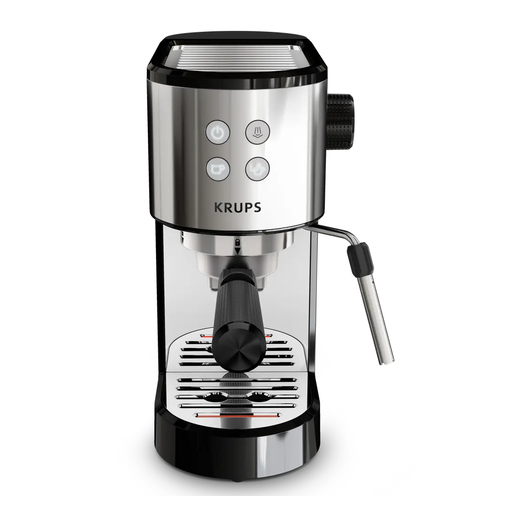
Why it suits this profile: This compact portafilter machine is designed for ground coffee and offers a straightforward starting point for making espresso and cappuccino at home.
The product specifications clearly state that it uses ground coffee, has a 1,1-litre tank and a pump pressure of 15 bar. That means you’re not paying for an integrated grinder you may not use.
Removable 1,1-litre water tank, makes up to two cups, and a separate system for hot water and frothing milk.
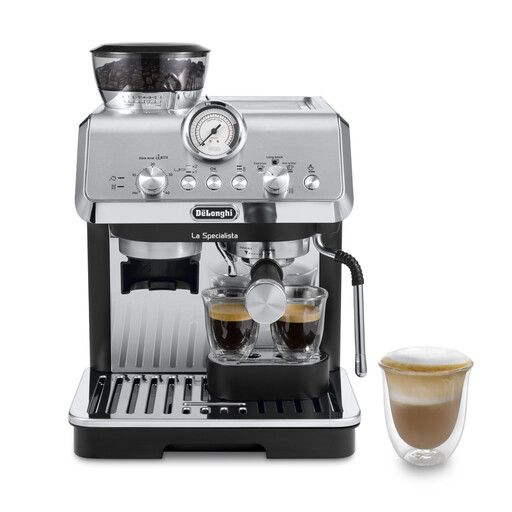
Why it suits this profile: A good choice if you want more control over the grind and regularly make espresso, Americano and milk-based drinks.
Eight grind settings and temperature control give you more practical control than simply relying on a high bar rating.
Integrated grinder with eight settings, 1,5-litre tank, 1550 W power and a steam wand for milk-based drinks.
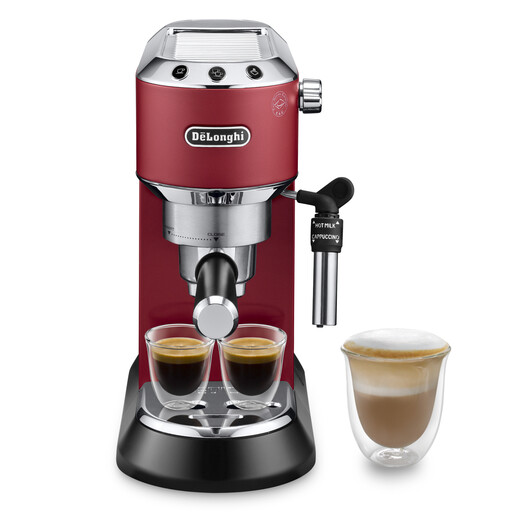
Why it suits this profile: A practical choice if you’re short on worktop space but still want to make espresso and speciality milk drinks yourself.
Its 14,9 cm width and removable tank are clearly stated. It’s also made clear that the E.S.E. filter is sold separately.
Suitable for ground coffee and E.S.E. pods with the right filter, with a steam wand, cup warmer and the option to make two cups at once.
We’ve put together a full, up-to-date list of products that meet these strict selection criteria and the applicable European safety requirements.
Yes, as long as you’re happy to practise a few regular steps: dosing the coffee, tamping it, checking the extraction time and cleaning the portafilter. A model for ground coffee without a built-in grinder can be an easier place to start. If you want coffee at the touch of a button, a fully automatic machine may be a better choice.
Its lifespan depends on how often you use it, water quality and maintenance. Rinse the brew group after use, empty the drip tray and clean the steam wand straight after frothing milk. Descale the machine according to the instructions and only use the recommended product if the manufacturer specifies one. According to the product information, the models mentioned come with at least a two-year statutory warranty within the EU; statutory consumer rights may also apply.
As well as the purchase price, you’ll pay for coffee, water, electricity and cleaning products. Ground coffee can be convenient, while beans used with a separate or integrated grinder give you more flexibility. Remember to factor in accessories such as a tamper, milk jug or, if needed, a separate E.S.E. filter. That way, you can compare the overall cost rather than just the price of the machine.
