
Vandaag of morgen in huis

Kwaliteit gegarandeerd

Welkomstaanbiedingen ontgrendelen: GRATIS bezorging | Tot 80% korting | Gratis 30 dagen JoyPlus-proefperiode
Download de app
A manual espresso machine gives you more control over your coffee than a fully automatic espresso machine. You measure out the coffee, fit the portafilter and decide how much effort to put into frothing milk. This appeals to home baristas, but it also means more choices and more chances of making the wrong purchase.
A shiny casing or a “15 bar” rating doesn’t tell the whole story. You should also consider the filter type, controls, water tank and how easy the machine is to clean.
A 15 bar espresso machine sounds appealing, but a higher rating doesn’t automatically mean every espresso will taste better. Pump pressure is just one part of the brewing process. Grind size, coffee quantity, tamping and water temperature all play a part too.
So, treat pump pressure mainly as a technical specification. Also look at the filter holder, temperature control and controls.
Not every portafilter machine works with the same coffee pods. Some models are suitable for ground coffee and E.S.E. pods, while others just need an additional filter. So check that the espresso machine for ground coffee and coffee pods you want comes with the right accessories.
For example, several De’Longhi Dedica models are listed as needing a separately available E.S.E. filter. It’s a small extra purchase, but an important one to factor into your overall convenience and costs.
An espresso machine with a milk frother or steam wand takes a little practice. A steam wand gives you control over the milk, but you’ll need to position the jug properly and clean the wand straight after use. If you mainly want to make a quick cappuccino, you may find a manual milk function more labour-intensive than expected.
A portafilter machine usually uses ground coffee. Some models also support E.S.E. pods. Check:
A built-in grinder, as found on some models in the De’Longhi La Specialista range, means you don’t need a separate grinder. However, it also takes up more space and involves extra settings and cleaning.
A removable tank is handy for everyday use. A capacity of around one litre suits a compact espresso machine and a few cups a day. If you’re making coffee for several people, a larger tank may be useful, such as the 1.7 litres listed for the De’Longhi Classic EM450.
Measure the space on your worktop before you buy. Consider the height as well as the width and depth. You’ll need to be able to remove the water tank and have room to fill the portafilter.
A thermoblock can reduce heating time, while a steam wand froths milk and can also dispense hot water. Check whether the machine can make espresso and steam at the same time; this isn’t specified for every model.
Maintenance is part of owning any manual espresso machine:
Take care around hot parts and steam. The filter holder, spout and steam wand can cause burns during use. Place the machine on a stable, heat-resistant surface and keep it out of reach of young children.
The selection below matches specific features with familiar usage scenarios. The information is based on the available product descriptions and technical specifications. Brand claims about flavour or extraction are not presented as guaranteed results.
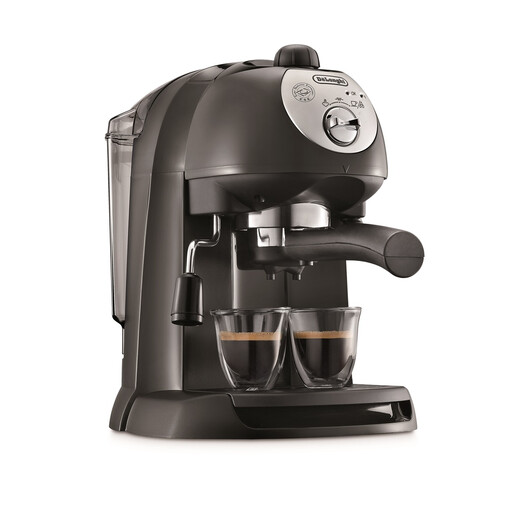
Why it suits this profile: This model has a simple dial, a 1-litre water tank and space to make two cups at once. It works with ground coffee and E.S.E. pods, making it easy to get started.
The product details list both ground coffee and E.S.E. pods, so you don’t have to choose just one type of coffee from the outset.
15 bar pump pressure, 1-litre tank, makes two cups at once and has dial controls.
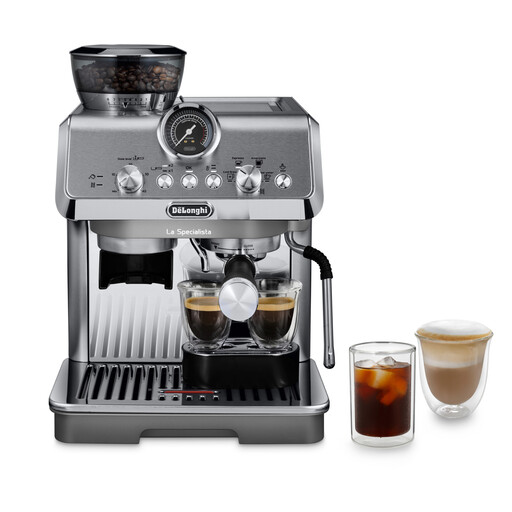
Why it suits this profile: This is a more advanced espresso machine for anyone who wants more settings to choose from. The built-in grinder has 8 grind settings, and the machine features a steam wand, temperature settings and several recipes.
The specifications cover more than just pump pressure: you’ll find details on grind settings, temperature control, water capacity and accessories.
Built-in grinder with 8 settings, 1.5-litre tank, 15 bar pump pressure and a manual steam wand.
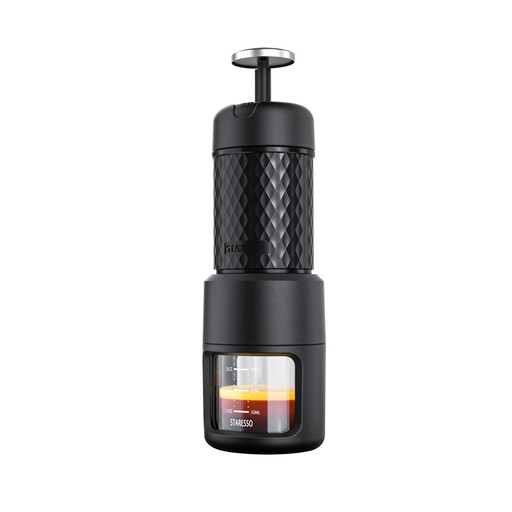
Why it suits this profile: This portable espresso machine works without electricity and is designed for the office, travel, camping and coffee on the go. You can use ground coffee or capsules and add hot water.
The product doesn’t need to be plugged in. Its parts can be taken apart and are designed to be rinsed after use.
Manual operation with no electricity, compatible with ground coffee and capsules, with volume markings at 30, 60 and 90 ml.
We’ve put together a complete, up-to-date list of products that meet these strict selection criteria and the applicable European safety regulations.
Yes, but expect a short learning curve. You’ll need to measure out the coffee, tamp it and keep an eye on the brewing time. A model with simple controls, a removable water tank and clearly marked filters makes it easier to get started.
Its lifespan depends on how often you use it, water quality and maintenance. Clean the filter holder and steam wand regularly, and descale according to the instructions. Check the cable, plug and seals too. With normal use and suitable care, these parts can last longer, but no manufacturer can guarantee a set lifespan for every situation.
As well as the purchase price, you’ll pay for coffee, water, E.S.E. pods if you use them, descaler and sometimes a separate grinder. Ground coffee can be an economical option, while fresh beans require extra equipment. A compact machine with a small tank may also waste less water, but this depends on how you make your coffee.
