
Vandaag of morgen in huis

Kwaliteit gegarandeerd

Welkomstaanbiedingen ontgrendelen: GRATIS bezorging | Tot 80% korting | Gratis 30 dagen JoyPlus-proefperiode
Download de app
If you’re looking for mango snacks, the options in the UK can be overwhelming: dried mango, mango mochi, mango jelly, mango sweets, mango gummies, mango ice cream and mango popping boba. The packaging often shows a juicy fruit, bright colours or words like “natural” and “light”. That doesn’t always tell you what you’re actually buying.
This guide helps you compare products based on ingredients, nutritional value, texture, storage method and when to enjoy them. That way, you can avoid a disappointing purchase and choose a tropical snack that suits your preferences.
A product with a large mango image doesn’t have to be mostly mango. In sweets and gummies, the mango content can be limited. For example, Amos Peelerz Gummy Candy contains 6.2% mango purée according to the product information, while Cokoc Mega Trophy Gummies list 3.5% concentrated mango juice. The rest consists of glucose syrup, sugar, gelling agents and flavourings, among other things.
Always check the ingredients list and the quantitative ingredient declaration. If mango appears near the top of the list, it generally makes up a larger proportion of the product than if only “mango flavouring” is mentioned.
During drying, water evaporates and the flavour becomes more concentrated. What’s more, many varieties contain added sugar, glucose or maltose. Be&Cheery Dried Mango, for instance, lists 72.6 grams of sugar per 100 grams and 343 kcal per 100 grams. Yan Jin Pu Zi Large Dried Mango contains 61.5 grams of sugar per 100 grams according to the label.
Pay attention to the difference between total sugars and added sugar. A product can contain natural fruit sugars, but the ingredients list will show whether extra sugar has been added.
Konjac jelly often contains very little energy, but that doesn’t mean it has the same texture or flavour as fresh mango. DELIEF Vegan Collagen Konjac Jelly Mango lists 5 kcal per 100 grams, but according to the ingredients list it mainly contains water, sweeteners, thickeners, mango flavouring and vitamin C. “Vegan collagen-like peptide” is a product description; no medical effect should be attributed to it.
If you’re expecting a fruity, chewy snack, dried mango is a better choice. If you’re mainly after a chilled, light portion, konjac jelly could be worth considering.
Check before you buy:
A product with “vegan” in its name should still be checked against the full ingredients list and allergen information. The packaging is what counts.
Compare products on the same basis. A 120-gram bag may look small, but dried mango contains relatively high levels of carbohydrates and sugars per 100 grams. For gummies and sweets, the energy value is often around 300 to 340 kcal per 100 grams.
Konjac jelly can contain much less energy according to the label. Jelly B Konjac Jelly Mango, for example, lists 3 kcal per 100 millilitres. This mainly tells you about the energy value, not automatically about satiety, nutritional quality or any health benefit.
The storage method determines which product is practical:
With dried mango containing sulphites, check the allergen declaration. For sweets with colourings such as E110 and E102, a mandatory warning about activity and attention in children sometimes appears.
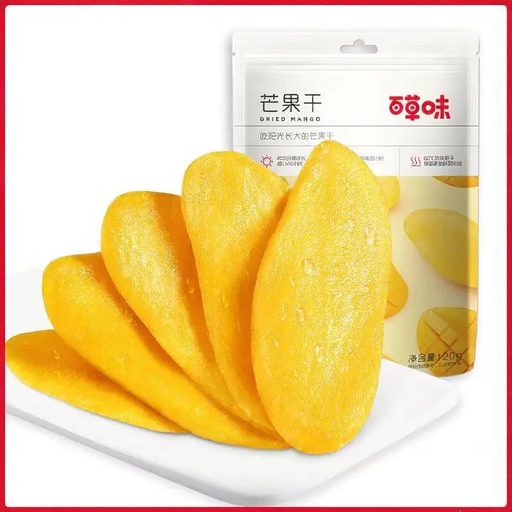
Why this fits the profile: A straightforward 120-gram bag for anyone wanting to try dried mango without buying a large pack straight away.
The product information lists mango as an ingredient and clearly shows the nutritional values per 100 grams. This lets you check sugar and energy content in advance.
120 grams; ready to eat; according to the product information, no artificial colourings; 343 kcal and 72.6 grams of sugar per 100 grams.
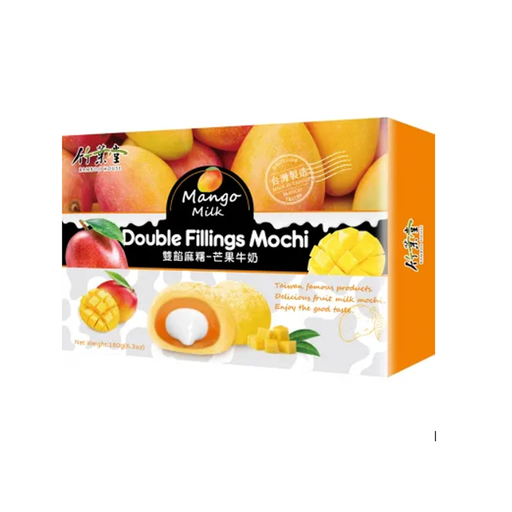
Why this fits the profile: For fans of soft mochi with a combination of mango and creamy filling.
The double filling and allergens are clearly described. This means you know the product contains milk and egg and isn’t suitable for every diet.
180 grams; individually wrapped; mango and creamy double filling; 352 kcal per 100 grams.
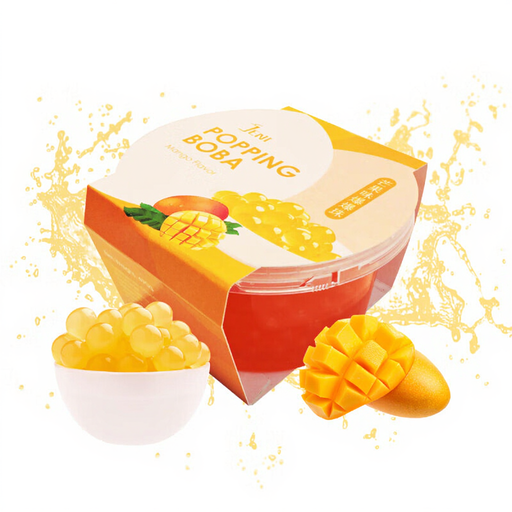
Why this fits the profile: A large pack for anyone who regularly makes bubble tea, smoothies or desserts with mango popping boba.
The intended use is clearly stated: the pearls are meant for drinks, desserts and bubble tea. They must be refrigerated after opening.
490 grams; resealable packaging; ready to use; 86 kcal and 17 grams of sugar per 100 grams.
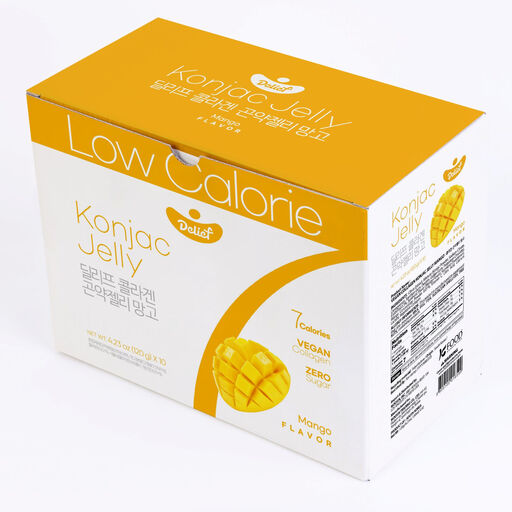
Why this fits the profile: Handy portion packs for on the go, at the office or as an alternative to heavier mango sweets.
The portion size and nutritional values are stated. The term “vegan collagen-like peptide” is not interpreted as having any medical effect.
10 sachets of 120 grams; ready to eat; 5 kcal per portion according to the product description; plant-based ingredients according to the product information.
We’ve put together a full, up-to-date list of products that fully meet these strict selection criteria and comply with current European safety regulations.
According to the product information provided, konjac jelly products are among the varieties with the lowest energy value. DELIEF lists 5 kcal per 100 grams and Jelly B lists 3 kcal per 100 millilitres. Always check the actual packaging, as recipes and portion sizes can vary.
Yes, dried mango is unrefrigerated and ready to eat. Do pay attention to the sugar content and any sulphites. Keep the opened bag well sealed and check the ingredients if you are allergic to sulphur dioxide or sulphites.
According to the product information, mango popping boba can be stored before opening in a cool place away from direct sunlight. After opening, the packaging should be sealed and refrigerated. Mango ice cream and mochi ice cream should be kept in the freezer at all times. Always follow the storage instructions on the packaging of the specific product.
