
Lover of chunky salsa
You want to chop mango, herbs and vegetables without puréeing everything until smooth. Short pulses or chopping ingredients separately can help you control the result.


For mango salsa with distinct chunks, a food chopper with short bursts or a pulse setting is a better choice than blending for too long; a jug blender may still suit you if you also want to make smooth mixtures. Food Network Kitchen describes a method that uses short pulses, then stirs some of the ingredients in by hand. Choose a manual food chopper if you don’t want to rely on a power socket; a stick blender with a chopper attachment offers more functions, but comes with extra attachments.
You want to chop mango, herbs and vegetables without puréeing everything until smooth. Short pulses or chopping ingredients separately can help you control the result.
You want to make a small portion of salsa in a simply equipped holiday cottage using a manual food chopper.
You want to use the same appliance for things like purées, dips or drinks, and weigh up the extra attachments against that versatility.
For salsa with distinct chunks, control over the chopping process is important. Choose the type of appliance based on the available power supply and what else you’ll use it for.
Choose this if: you want to chop a small portion without a power socket.
Bear in mind: it takes hand strength, and you’re limited by the bowl capacity; the Tefal K1330404 holds 500 ml.
Choose this if: you have a power socket and want to chop ingredients briefly and separately.
Bear in mind: which parts are dishwasher-safe; Bosch says that the parts of the MMR08A1 are dishwasher-safe.
Choose this if: you want to make smooth mixtures as well as salsa; the Philips HR2041/00 has a pulse setting.
Bear in mind: Philips designed this model for smooth blending; its maximum capacity is 1.9 l and its effective capacity is 1 l.
Choose this if: you want one set for puréeing or whisking as well as making salsa.
Bear in mind: the attachments included and the space you’ll need to store them.
| What to consider | What to check before buying | Who is this important for? |
|---|---|---|
| Keeping the texture | Check whether you can stop the appliance part-way through, for example using a pulse setting or momentary switch. | If you want salsa with visible chunks, you’ll want to stop the appliance before everything becomes smooth. Around 36% of consumers say keeping the chunks is their top priority. |
| Power and space | Check that there’s a usable power socket and enough worktop space; a manual food chopper requires hand strength. | In a simply equipped holiday cottage, not needing a power socket may matter more than having extra functions. Around 29% of consumers put power and the space needed to take the appliance with them first. |
| Cleaning | Check the instructions to see which parts of the bowl, blade and lid can go in the dishwasher. | When using a temporary kitchen, you’ll want to know in advance how to clean the separate parts. Around 21% of consumers say cleaning is their main concern. |
| Portions and other uses | Compare the effective bowl capacity, and only choose attachments if you’ll use them. | If you also want to make other portions or dishes, usable capacity and the attachments included are key. Around 14% of consumers put portion size and versatility first. |
Philips lists a maximum capacity of 1.9 l and an effective capacity of 1 l for the HR2041/00. Looking only at the maximum capacity could therefore give you the wrong idea of how much you can prepare.
Compare the effective capacity with the portion you want to make.
Tefal says that the bowl and blades of the K1330404 can go in the dishwasher, but the lid cannot.
Check the cleaning instructions for every part before you buy.
Braun’s Dutch product page lists both 1000 W in the product description and 750 W in the technical specifications for the MQ55254M. Don’t treat either figure as a definitive point of comparison.
Consider the chopper and attachments included, and ask for the specifications of the exact version if necessary.
The manual 5 Second Chopper K1330404 is an option for small portions when you want to chop without a power socket.
The electric MMR08A1 is worth considering if you want to chop ingredients briefly.
The HR2041/00 jug blender suits anyone who wants to make smooth mixtures as well as salsa.
The MultiQuick 5 Pro MQ55254M combines a stick blender with a SizeControl chopper and other attachments.
This selection includes jug blenders, stick blenders with choppers, and manual and electric food choppers for making mango salsa. If you want to keep the chunks, look for short bursts and the ability to stop the appliance part-way through.
 Image unavailable
Suits anyone who wants to chop ingredients in a separate chopper cup as well as blend.
Two speeds and a pulse setting; 1500 ml blending jug, 600 ml travel bottle and 300 ml chopper cup.
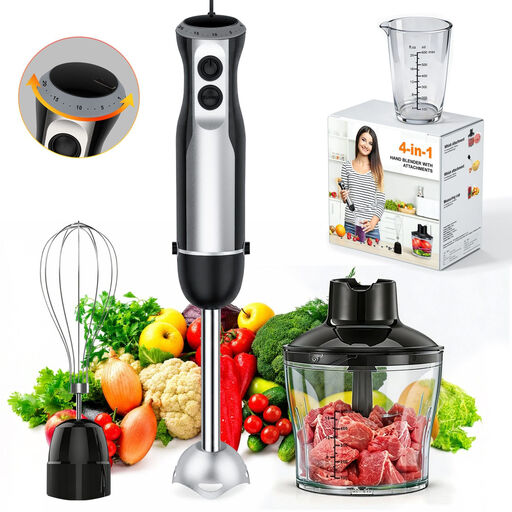 Image unavailable
Suits anyone who wants to take a stick blender, whisk and measuring jug as well as a chopper.
Twenty speeds and a turbo function; the chopper has a capacity of 500 ml.
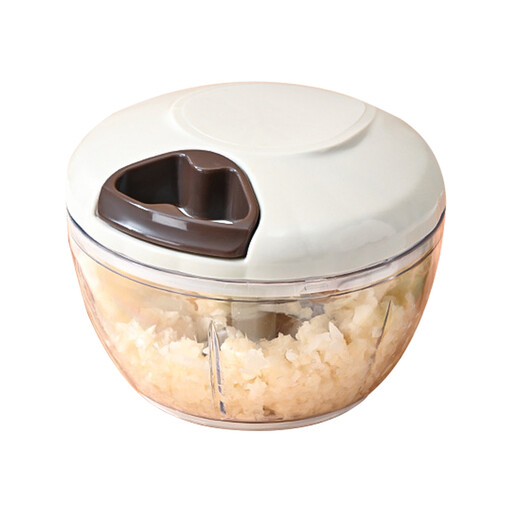 Image unavailable
Suits anyone who wants to chop salsa without electricity and control the texture by varying the number of pulls.
Stainless steel blades; the parts are designed to be washed by hand.
 Image unavailable
Suits anyone looking for a jug blender that, according to the product description, is also designed for chunky salsa.
Three speeds and a 1.5 l jug.
 Image unavailable
Suits anyone who wants to pulse ingredients briefly in an electric food chopper and see them through the glass bowl as they prepare them.
300 W, two speeds and 304 stainless steel blades. Cut larger ingredients into 2 cm cubes first and use short pulses; continuous use is limited to 30 seconds.
Pulse the ingredients briefly, then stir some of the mango and vegetables in by hand. That’s the method used in Food Network Kitchen’s mango salsa recipe, not a tested guarantee for any particular appliance.
Wash your hands, the raw vegetables, fruit and fresh herbs, and use clean kitchen utensils. The Voedingscentrum advises refrigerating prepared leftovers within two hours and keeping the fridge at 4 °C.
For an online purchase by a consumer, there is generally a statutory cooling-off period of up to 14 days after delivery, with some exceptions. ACM ConsuWijzer also explains that the legal guarantee is separate from a manufacturer’s warranty; if a product is faulty, the retailer is your point of contact.
The Dutch government describes CE marking as a safety requirement for electrical appliances placed on the market in the EU. Check the mark and instructions for use on an electric model; CE marking doesn’t tell you how well the appliance makes salsa.