
Fan of chunky mango
You want a chunky salsa with distinct pieces, so it’s best to do the chopping by hand. The Netherlands Nutrition Centre’s recipe calls for the mango to be cut into small cubes.


For distinct pieces of mango, it’s best to cut the fruit by hand; the recipe reviewed by the Netherlands Nutrition Centre calls for diced mango, not puréed mango. For a finer salsa, or for chopping onion and herbs, a mini chopper with pulse control is a better fit. A larger food processor is mainly worthwhile if you also want to process bigger batches or do more slicing and grating. Compare the usable capacity, included attachments and cleaning instructions for the exact model.
You want a chunky salsa with distinct pieces, so it’s best to do the chopping by hand. The Netherlands Nutrition Centre’s recipe calls for the mango to be cut into small cubes.
You want to quickly chop onion, herbs or ingredients for a finer salsa for lunch, without using a large bowl. A compact chopper can be more practical for these quantities.
You want to use the same appliance for larger quantities or for slicing and grating, too. If so, look beyond the bowl and check which attachments are included and how to clean them.
Choose this if: you want distinct pieces of mango or you’re only making this lunch.
Trade-off: you’ll do the chopping yourself, but avoid the blade accidentally turning the mango into a fine purée.
Choose this if: you’re making small batches or mainly want to finely chop onion and herbs.
Trade-off: a small bowl may mean processing larger quantities in several batches. Pulsing helps you control the chopping, but doesn’t guarantee distinct cubes.
Choose this if: you regularly make larger quantities or want to slice and grate as well.
Trade-off: extra attachments need space and take time to clean. The bowl’s total capacity isn’t necessarily the usable capacity for every ingredient.
| What to consider | What should you check? | Who is this most relevant to? |
|---|---|---|
| Texture you want | Choose hand-chopping for cubes; if you’re considering a chopper, check whether it has pulse control. | If I want distinct pieces of mango, I’d rather cut it by hand. Around 36% of consumers say texture is their top priority. |
| Portion size and speed | Compare your portion with the bowl size and the maximum fill level stated in the manual. | I don’t want to keep refilling and emptying the bowl for a lunch portion. Around 29% of consumers say portion size and speed are their top priorities. |
| Using it for other recipes | Check whether the slicing or grating disc you want is included with the exact model. | If I want to use the appliance for other slicing or grating tasks too, the right attachments matter. Around 21% of consumers say versatility is their top priority. |
| Cleaning and storage | Read the cleaning instructions for each part and check where the attachments can be stored. | After preparing food, I want to be able to clean the parts thoroughly and store them conveniently. Around 14% of consumers say care and storage are their top priorities. |
A chopper is designed to chop or purée ingredients, whereas the recipe reviewed by the Netherlands Nutrition Centre calls for diced mango. The texture may therefore be different from what you want for a chunky salsa.
Decide first what texture you’re after. Cut the mango by hand if distinct pieces matter, and use the appliance for the finer ingredients if you like.
A bowl’s total capacity doesn’t automatically tell you how much of each ingredient you can process in it. For example, Braun lists a separate usable capacity for liquids for the FP3132BK.
Check the manual for the exact model against the ingredients you’re using, and don’t treat a liquid limit as a general limit for solid ingredients.
If everything won’t fit in one batch, you may need to fill and process the bowl several times.
The Kenwood CHP61.000WH listing at Joybuy has a different model number from the CHP61.100WH reviewed here. The KitchenAid 5KFC3516ECU is also a different model variant from the 5KFC3516EOB.
Check the full model number, variant and features before linking specifications or a product recommendation to an item.
The 5KFC3516EOB reviewed here is a mini chopper for small quantities.
Kenwood describes the Easy Chop CHP61.100WH as a compact chopper for small quantities, and lists salsa as one of its uses.
The MultiTalent 3 MCM3501M reviewed here is designed for anyone who wants to slice and grate as well as chop.
The PurEase FP3132BK reviewed here combines chopping with slicing, grating and other food-preparation tasks.
This selection includes choppers and food processors for small salsa batches, controlled chopping and extra slicing or grating. For each model, check the bowl capacity, attachments and instructions that matter for the way you’ll use it.
 No image available
The two bowls offer different capacities for smaller or larger preparations.
Bowl capacities: 0.6 l and 2 l. The product name lists 300 W. The bowls and lids are not heat-resistant; avoid temperature changes above 50 °C and don’t use them in the microwave.
 No image available
An option if you want to mix, slice and grate ingredients as well as chop them.
The product information lists a 2.3 l bowl, 800 W and a pulse function. Check which slicing and grating parts are included with this variant.
 No image available
The chopping function and pulse control are useful if you want to process ingredients gradually; the disc is designed for slicing and grating.
The product information lists a 1.3 l bowl and a reversible slicing and grating disc. The chopping blades and disc are sharp; handle them carefully when fitting, removing and cleaning them.
 No image available
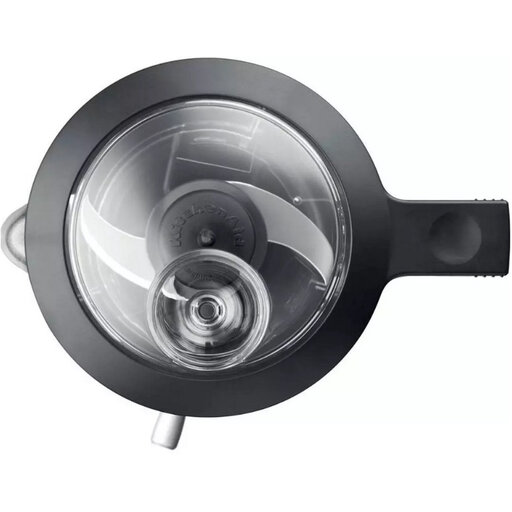
The product information lists chopping, puréeing and salsa among the uses for this mini chopper.
The bowl has a capacity of 830 ml, and the product information lists pulse control. The bowl is not dishwasher-safe.
 No image available
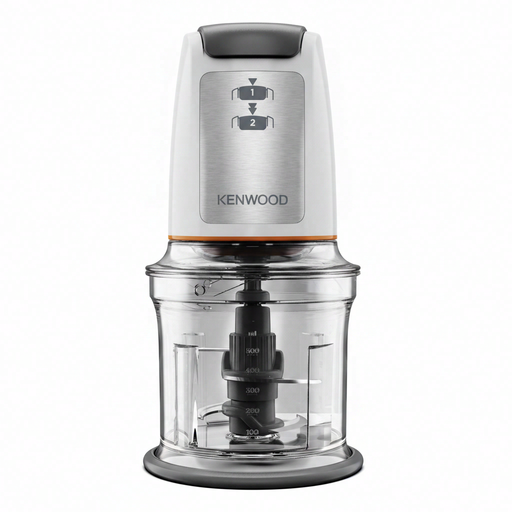
The small bowl is designed for smaller quantities; the product information lists chopping, dips and salsa among its uses.
The bowl capacity is 500 ml, with a maximum fill of 225 g. The appliance has four blades and two speeds. After using the chopper for up to 30 seconds, let it cool for 2 minutes before using it again.
If you want distinct pieces of mango, dice it separately and chop the onion and herbs to your liking. For a finer salsa, you can use a chopping blade and short pulses; the final texture depends on the ingredients and the appliance.
Wash vegetables, fruit and fresh herbs under running water, and use clean kitchen utensils. Follow the instructions for the exact appliance when taking it apart and cleaning it. One dishwasher-safe part doesn’t mean every part can go in the dishwasher.
The Netherlands Nutrition Centre describes a mango salsa that is covered and chilled in the fridge for a few hours, and advises keeping home-cut vegetables chilled in a well-sealed container. This is preparation and storage advice, not a guarantee that every salsa will keep for the same amount of time.
According to ACM ConsuWijzer, online purchases generally come with a statutory 14-day cooling-off period from the day after delivery, subject to applicable exceptions. If a product used normally doesn’t meet what you could reasonably expect, you also have statutory rights against the seller. These are separate from any manufacturer’s warranty.
The Netherlands Food and Consumer Product Safety Authority states that electrical products covered by the Electrical Equipment Decree must carry a CE mark. Whether the requirement applies depends, among other things, on the voltage category: the directive mentioned applies to a rated AC voltage of 50 to 1000 V and a rated DC voltage of 75 to 1500 V. Check the documentation for the specific appliance; a CE mark is not an independent test result.