
Fan of chunky salsa
You want recognisable chunks of mango and vegetables, not a completely smooth dip. Short pulses and adding ingredients later matter more than blending everything to a purée.


For recognisable chunks of mango, briefly pulse only some of the ingredients, then stir in the rest later; that’s the approach used in Food Network Kitchen’s recipe. If you’re making a larger batch, usable capacity matters more than the jug’s stated capacity alone, and Consumentenbond advises staying within the marked fill line. If chopping and slicing are your main priorities, a food processor may be worth considering, but its bowl size doesn’t prove it will make evenly sized chunks.
You want recognisable chunks of mango and vegetables, not a completely smooth dip. Short pulses and adding ingredients later matter more than blending everything to a purée.
You’re making more salsa at once and want to know whether one workable batch will be enough or whether you’ll need several rounds. Compare the usable capacity with the fill line for the specific appliance.
You’d like to use the appliance for other blending, chopping or slicing tasks after your get-together, so you’re weighing up a jug blender against a food processor.
| What to consider | What to look for | Who is this important for? |
|---|---|---|
| Chunky texture | Check whether the model has a pulse setting. Decide which ingredients you’ll briefly blend and which you’ll add chopped later. | If you want to keep visible chunks of mango and vegetables, check the texture as you go. Around 36% of consumers prioritise keeping larger pieces. |
| Amount per batch | Compare the usable capacity with the amount you want to make, and stay within the maximum fill line. | If you want to make enough salsa for a family get-together in as few batches as possible, usable capacity is key. Around 29% of consumers prioritise the amount they can make per batch. |
| Other kitchen tasks | Check which blades and slicing discs are actually included with the model. Compare a jug blender with a food processor based on the tasks you want to do. | If you also want to use the appliance for chopping, slicing or blending after your get-together, the included accessories matter. Around 21% of consumers prioritise versatility. |
| Cleaning | Check the instructions for each part to see which components are dishwasher-safe and whether the blades can be removed. | If you want to keep cleaning to a minimum after preparing your salsa, check the cleaning instructions and removable parts. Around 14% of consumers prioritise easy cleaning. |
A jug blender is designed for blending and puréeing. Blending for too long works against a chunky texture; Food Network Kitchen’s recipe pulses some of the ingredients and adds the rest later.
First decide what texture you want, then choose which ingredients to pulse briefly and which to chop by hand.
Stated capacity, usable capacity and the maximum fill line are different measurements. So a larger jug doesn’t mean you can fill it to the brim.
Compare the usable capacity of the exact model with the amount you want to make, and stay within the marked fill line.
A lower usable capacity may mean splitting the preparation into several batches.
The bowl capacity doesn’t tell you how much mango salsa you can make at once or whether the ingredients will be cut into evenly sized chunks. The included attachments also determine whether the appliance can chop or slice.
Check which accessories come with the exact model. If recognisable chunks are your main priority, you can also chop the ingredients by hand.
Extra attachments take up storage space and need cleaning after use.
The MultiTalent 3 MCM3201B is worth considering if chopping is your priority and you’d also like to tackle other kitchen tasks.
The Perfectmix+ BL811D38 is a jug blender option if you’d like to make smooth recipes as well as salsa.
The PowerBlend 9 JB 9040 is a jug blender option if adjustable texture and use for other recipes are important to you.
The 5000 Series jug blender is worth considering if you’re looking for a pulse setting and removable blades; check the exact version.
These products are blender options for making salsa. Compare the stated capacity, pulse function and any chopper bowl for each model; not every feature is listed for every model.
 No image available
The listed pulse function gives you control over short bursts of blending, so you can check the texture as you go.
The product name lists a capacity of 1.5 l, two speeds and a white finish. The product description mentions removable parts that are dishwasher-safe.
 No image available
The listed pulse function is useful if you want to blend ingredients in short bursts and check the texture as you go.
The product name lists a 1,500 ml blending jug and a 300 ml chopper bowl. It also mentions a 600 ml travel bottle and dishwasher-safe parts.
 No image available
The listed pulse function makes this model worth considering if you want to blend some of the salsa briefly.
The product information lists a usable capacity of 1.5 l, a power rating of 1,200 W and removable blades. An automatic cleaning function is also mentioned.
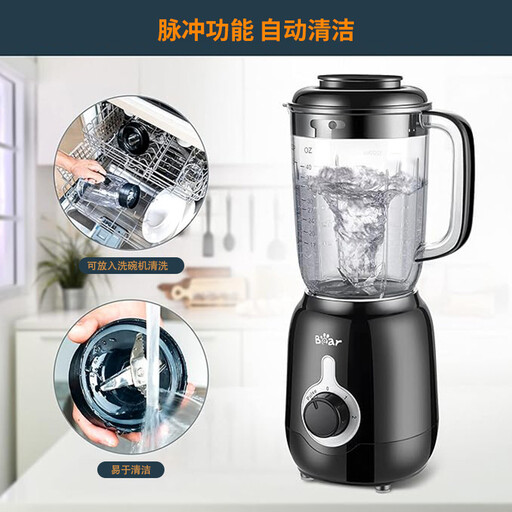 No image available
The product name lists a pulse function, which you can use to blend in short bursts.
The product name lists a 1.2 l jug, a power rating of 500 W and two speeds. The product description mentions chopper bowls that each hold 100 g; check that this capacity suits the amount you want to chop.
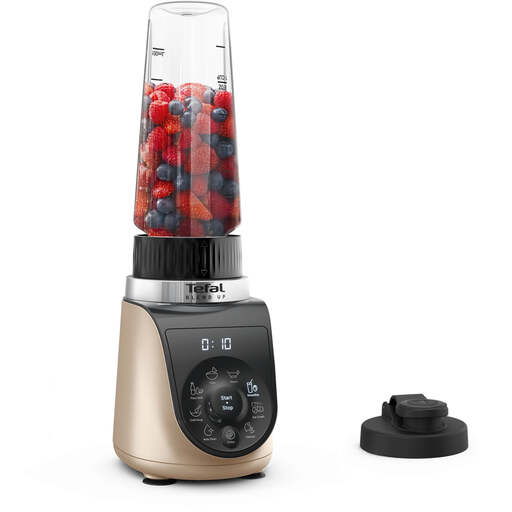 No image available
This is a personal smoothie blender. The product description lists sauces and dips as possible recipes.
Briefly pulse some of the mango with the other ingredients, checking the texture as you go. In Food Network Kitchen’s recipe, the remaining mango, pepper and spring onion are stirred in afterwards.
No, stay within the appliance’s maximum fill line. Also compare the usable capacity with the stated jug capacity, as they may differ.
Check your model’s manual to find out which removable parts are dishwasher-safe. Consumentenbond advises wiping the housing with a damp cloth and drying the parts thoroughly after washing.
According to Voedingscentrum, chopped vegetables and salads should be kept chilled; a fridge temperature of 4 °C is suitable. Cover leftovers well and refrigerate them within 2 hours.
No, there is no fixed statutory warranty period in the Netherlands. Rijksoverheid states that you’re entitled to a product that works as it should and can contact the retailer if there’s a problem; a manufacturer’s warranty is in addition to this.