For a small portion of thick mango purée, a hand blender is often practical. A personal blender is better suited to a single drinkable smoothie, while a jug blender works well for several portions or thinner mixtures. The Consumers' Association notes that jug blenders are less suited to small, thick portions. Check the usable capacity and the instructions for frozen mango: the Netherlands Nutrition Centre thaws mango first in one of its recipes.
Which appliance is right for you?
For making small portions of purée
Do you mainly make one small portion of thick mango purée and want to keep storage space and washing-up to a minimum? Compare a hand blender with a small blending cup. The Consumers' Association recommends taking small portions into account when choosing an appliance.
For a smoothie on the go
Would you like to blend mango with enough liquid and drink your smoothie straight from the cup or take it with you? The Consumers' Association describes personal blenders that make the smoothie in the blending cup, which you can then drink from.
For using frozen mango
If you regularly use frozen mango, check whether the instructions for your chosen model allow it. The Netherlands Nutrition Centre thaws mango before using it in a mango bowl recipe.
What should you look for when choosing?
Start by thinking about the consistency and portion size you want. Then consider the space available, how the appliance handles frozen mango and how many parts you’ll need to clean after use.
Hand blender
Best for: small portions that you purée in a suitable bowl or cup of your own. The Netherlands Nutrition Centre uses a hand blender to blend mango with yoghurt.
Consider: you’ll need a suitable bowl; thicker mixtures or firmer pieces can be harder to purée.
Personal blender with blending cup
Best for: usually one liquid smoothie that you want to drink from the blending cup or take with you.
Consider: the smaller cup limits the portion size, and a smoothie claim doesn’t prove that frozen mango will blend well without enough liquid.
Jug blender
Best for: making liquid mango blends more often, or preparing more than one portion at a time.
Consider: a jug usually takes up more space and creates more washing-up; jug blenders are less suited to small, thick portions.
| What to consider |
What should you check? |
Who will find this important? |
| Small, thick portion |
Choose between a hand blender for a suitable bowl and a jug blender; check whether your recipe calls for liquid. |
If I mainly make one small, thick portion, I want to be able to purée it in a suitable bowl. Around 33% of consumers say that making small, thick purées is their main priority when buying. |
| Space and portion size |
Compare the dimensions, the cup supplied and the usable capacity, not just the jug’s maximum capacity. |
In a small kitchen, I want an appliance I can put away and a portion that fits my cup. Around 27% of consumers prioritise storage space and a single drinkable portion. |
| Frozen mango |
Read the instructions for frozen fruit, liquid and operating times; thawing is an option for mango bowl purée. |
If I often use frozen mango, I want to know how my recipe and appliance will handle it. Around 20% of consumers say frozen mango is their main priority when buying. |
| Cleaning and purchase |
Check which parts can be removed and are listed by the manufacturer as dishwasher-safe, and which accessories you’ll need. |
After making a small portion, I don’t want to clean more parts than necessary, and I’d rather not pay for features I won’t use. Around 20% of consumers prioritise cleaning and the overall purchase decision. |
Common buying mistakes
-
Looking only at the wattage
Wattage alone won’t tell you whether a model can handle thick or frozen mango. The Consumers' Association points out that firmer ingredients can be more challenging for many budget blenders. Braun’s Dutch product page also lists different power ratings for the MQ50236M.
First decide what you want to make, then check the instructions and specifications for the exact model.
-
Confusing maximum jug capacity with usable capacity
The Philips HR2041/00 has a maximum capacity of 1,9 l and an effective capacity of 1 l. These figures therefore refer to different amounts.
Compare the effective or usable capacity with the portion you usually make.
-
Choosing a large jug for small portions only
The Consumers' Association says that jug blenders are less suited to small or thick portions.
First compare a hand blender or personal blender. A jug blender is a better fit if you’ll also use the extra capacity.
A larger jug also needs more storage space and can mean more washing-up.
Brands to consider
Braun
The MultiQuick MQ50236M is a hand blender with accessories, designed for blending and puréeing small portions.
- Braun lists a metal blending shaft and removable accessories for this model.
- The Dutch product page lists both 1000 W and 750 W. Don’t treat either figure as a confirmed power rating when comparing models.
Philips
The HR2041/00 is a jug blender for thinner mixtures or more than one portion.
- Philips specifies 450 W, one speed setting plus pulse, and an effective capacity of 1 l with a maximum jug capacity of 1,9 l.
- When comparing portion sizes, effective capacity is more useful than the maximum jug capacity.
Nutribullet
The Original NB603DG is a personal blender for making a smoothie in the cup supplied.
- Nutribullet lists a 600 W motor base and a 700 ml cup for this model.
- The cup capacity may be restrictive if you want to make several portions at once.
Bosch
The VitaPower MMB2111S is a mini blender with a blending cup for one portion.
- Bosch specifies a 0,6 l cup and mentions recipes using frozen fruit.
- This is information from the manufacturer, not an independent test of thick mango purée. Check the instructions for your recipe.
Tefal
The Blendforce 3 BL5958F0 with glass jug is an option if you also want to prepare larger quantities or other dishes.
- Tefal lists a usable capacity of 1,25 l, removable blades and a dishwasher-safe jug.
- A jug of this size makes less sense if you only prepare a very small, thick portion.
Products at Joybuy
This selection includes hand blenders for puréeing in your own bowl and personal blenders for making a smoothie portion.
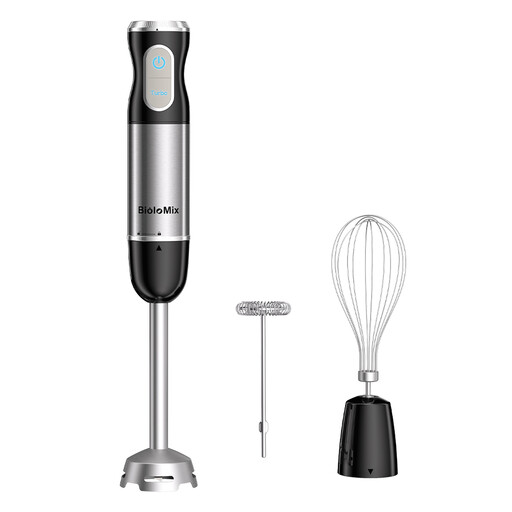 Image unavailable
BioloMix HB3016 3-in-1 hand blender
Suited to small portions you want to purée in a suitable bowl or cup of your own.
The product name mentions a detachable design and splash protection.
View at Joybuy
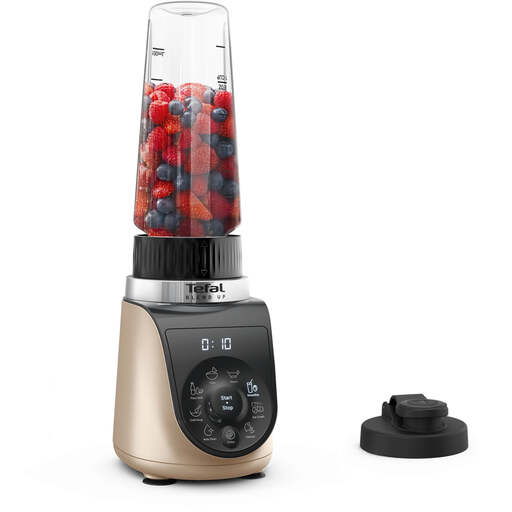 Image unavailable
Tefal BL190A Blend Up Personal Smoothie Blender
Suited to anyone looking for a personal blender for a smoothie portion.
View at Joybuy
 Image unavailable
Braun MQ55254M MultiQuick 5 Pro hand blender
Suited to purée you want to make with a hand blender in a suitable bowl.
View at Joybuy
 Image unavailable
ROUNY 4-in-1 Immersion Blender
Suited to small quantities you want to purée in a suitable bowl or cup.
The product name lists 1200 W, 15000 rpm, a 700 ml cup and a 500 ml chopper. The description recommends a maximum of 1 minute of continuous use, followed by 1 minute of rest.
View at Joybuy
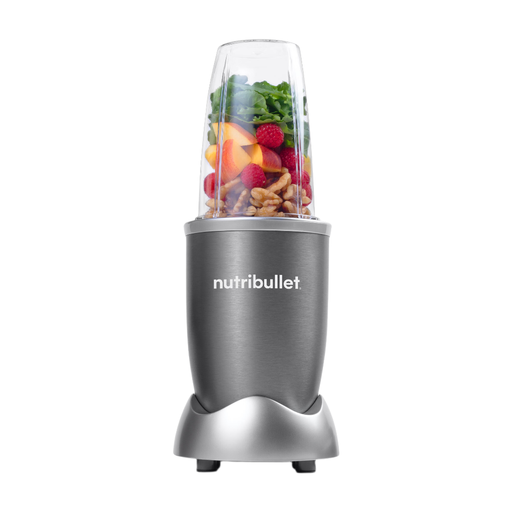 Image unavailable
Nutribullet Original Blender Grey 600W
Suited to anyone looking for a personal blender to make a smoothie in a cup.
The product name lists 600 W and a cup with a blade.
View at Joybuy
Frequently asked questions
Should frozen mango go straight into the blender?
No, thawing is an option for mango purée. In the Netherlands Nutrition Centre’s mango bowl recipe, the mango is thawed first and then puréed with yoghurt. If you want to blend mango while it’s still frozen, follow the instructions for your exact appliance and recipe.
How should I clean the appliance after making a portion?
Follow the manual when removing and cleaning the blending shaft, blade and cup. Bosch lists some parts of the MMB2111S as dishwasher-safe; check exactly which ones. Unplug the appliance, and don’t immerse the motor base, cord or plug in water.
How should I store leftover mango?
The Netherlands Nutrition Centre says you can store cut mango in a sealed container in the fridge. Remove the skin and stone, then cut the mango into pieces before freezing it. This is not a storage time recommendation for homemade purée.
What cancellation period and protection do I have when buying online in the Netherlands?
ACM ConsuWijzer states that online purchases generally come with a statutory 14-day cancellation period after delivery, although there are exceptions. A product must also meet the standards you can reasonably expect when used normally; the seller is responsible if it breaks sooner than you could reasonably expect. A manufacturer's guarantee does not automatically replace this statutory right.
Is CE marking required for an electric blender?
The Dutch government says that electrical appliances sold on the EU market must carry CE marking. The European Commission also sets out voltage limits for household appliances that determine when the Low Voltage Directive applies. Check the product information for the specific model; this general information does not confirm that an individual listing complies with the rules.


