
Vandaag of morgen in huis

Kwaliteit gegarandeerd

Welkomstaanbiedingen ontgrendelen: GRATIS bezorging | Tot 80% korting | Gratis 30 dagen JoyPlus-proefperiode
Download de app
If you’re searching online for mango products, you’ll quickly come across colourful cans, bottles, puddings and snacks from Asia. The packaging often suggests an intense fruit flavour, yet the actual mango content can vary significantly. Even a product with “mango” in its name may consist mostly of sugar, water or other fruits.
With this guide, you can compare mango drinks, mango juice, mango nectar, snacks and desserts based on verifiable information. That way, you can make a more informed choice for an everyday treat, a party, or a store cupboard filled with Asian flavours.
Always check the ingredients list and, for drinks, the percentage of mango or fruit juice. FOCO Mango Juice Drink contains 30% mango juice according to the product information. With FOCO Mango Passion Fruit Drink, it’s 10% mango juice and 5% passion fruit juice. That gives a different taste and composition compared to a product with a higher fruit content.
Also look out for terms like “mango flavour” or “mango taste”. These don’t always indicate a high proportion of real mango.
A mango juice or tropical mango drink can vary considerably in sugar and energy per 100 ml. FOCO Mango Juice Drink lists 12 grams of sugar and 48 kcal per 100 ml. FOCO Coconut Water with Mango lists 5.2 grams of sugar and 20 kcal per 100 ml. So compare the nutritional values, especially if you’re buying several cans or bottles.
“Light”, “refreshing” or “natural” are no substitute for the ingredients list. According to a brand’s own research, a product may be described as natural or refreshing; judge the actual composition on the label for yourself.
A 425 g can is handy for sharing, but once opened the product needs to be kept refrigerated according to the packaging. A 350 ml bottle, on the other hand, is ideal for a single serving. With a multipack, the price per portion may be lower, but only buy a larger quantity if you can make use of the shelf life and storage space.
Use these three checkpoints before placing an order:
Fruit percentage
Check the percentage of mango, mango purée or mango concentrate. A higher fruit content can give a more pronounced fruit flavour, but it doesn’t say anything about the sugar level on its own.
Nutritional values per 100 ml
Always compare the same unit. A 500 ml bottle may contain multiple servings. Note down energy, carbohydrates and of which sugars in particular. This stops you from thinking a larger size is a bargain when you’re actually buying more than you need without realising.
Packaging and storage
Check whether the product can be stored unrefrigerated and what needs to happen after opening. For drinks, a resealable bottle is practical for on the go. Cans are suitable for individual consumption moments, while cartons or multipacks are handy for families and parties.
With coconut water with mango, it’s also important to see how much coconut water and how much mango it contains. FOCO Coconut Water with Mango lists 5% mango juice and 20 kcal per 100 ml. That’s a different product choice compared to a sweeter mango nectar with a higher mango or sugar content.
For dried mango, mango slices in syrup and mango pudding, different features are relevant:

Why this fits the profile: A tin is suitable for sharing and can be used for desserts, fruit salads or as a snack.
The ingredients are clearly listed: mango, sugar, water and citric acid. The size is also verifiable in advance.
425 g, ready-to-use mango slices and, according to the product information, no artificial colours or preservatives.
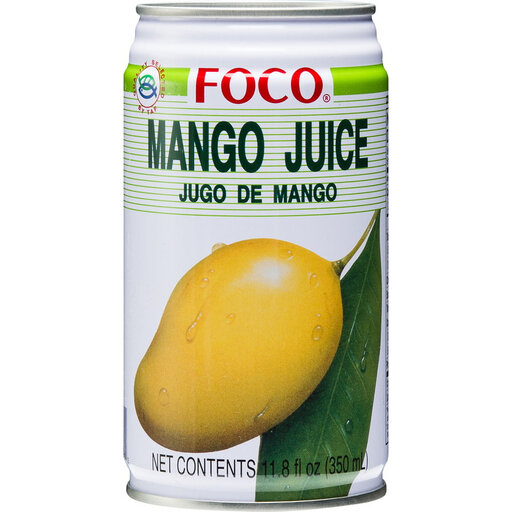
Why this fits the profile: Ideal for anyone looking for a ready-to-drink mango nectar with a recognisable fruit percentage.
The label states 30% mango juice, so you can compare the composition rather than relying solely on the packaging.
350 ml per can, 30% mango juice and 48 kcal per 100 ml according to the product information.
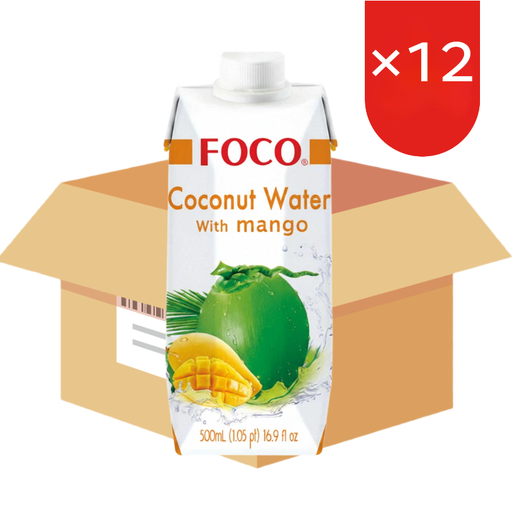
Why this fits the profile: A box of twelve packs suits families, office supplies or a gathering with multiple drinking occasions.
The mango content is listed as 5% mango juice. This lets you distinguish the milder mango-coconut flavour from more concentrated mango juice.
500 ml per pack, twelve per box and 20 kcal per 100 ml according to the product information.
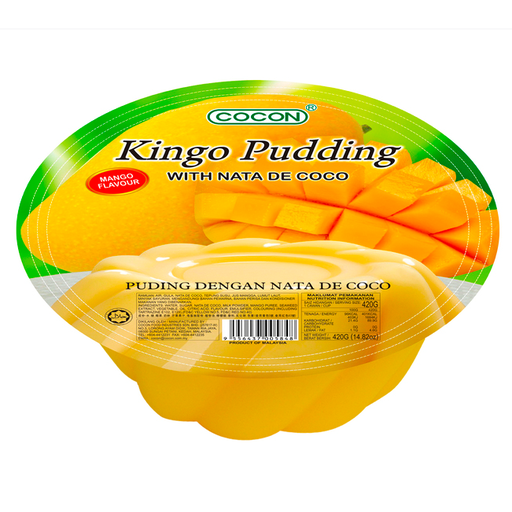
Why this fits the profile: This mango pudding combines a smooth pudding with nata de coco and can be served chilled as a mango dessert.
The product description mentions both mango and nata de coco. So you know in advance you’re choosing a dessert with pieces and a chewy texture.
420 g, mango flavour, nata de coco and 83 kcal per 100 g according to the stated nutritional information.
We’ve put together a full, up-to-date list of products that fully meet these strict selection criteria and comply with current European safety regulations.
Mango juice or a juice drink contains mango or mango concentrate, but the exact proportion varies from product to product. A mango nectar often contains water, sugar, acidity regulators and a smaller amount of fruit. Check the percentage of mango on the label rather than just the product name.
Unopened products can often be stored in a cool, dry place outside the fridge, unless the packaging states otherwise. After opening, drinks and desserts usually need to be kept refrigerated and used within the stated period. With tinned fruit, check for damage and seal opened packs properly.
Choose a multipack of mango drinks if guests want to grab a bottle or can themselves. For a dessert table, mango slices in syrup, mango pudding or a fruit pudding with nata de coco are easier to share. For smaller portions and minimal preparation, individual puddings or a bag of dried mango are more practical.
