
Vandaag of morgen in huis

Kwaliteit gegarandeerd

Welkomstaanbiedingen ontgrendelen: GRATIS bezorging | Tot 80% korting | Gratis 30 dagen JoyPlus-proefperiode
Download de app
Choosing a mango drink might seem straightforward, but the differences between mango juice, mango fruit drink, fizzy pop and an Asian-style mango drink are significant. On the label, you might see a striking mango image, yet the product may only contain a small amount of mango. What’s more, two bottles with the same contents can differ greatly in sugar content, texture and when you’d drink them.
With these checks, you can avoid a bad buy and choose a mango drink online with more confidence.
Always check the ingredients list and the percentage of mango. A fruit drink, for example, might be mostly water, apple juice or sugar. Rubicon Still Mango Deluxe 1 L lists 19% mango purée according to the product information. Maaza Mango Drink contains 17% mango purée according to the label.
In contrast, a product like Tymbark Mango Mint Drink contains 1% mango juice from concentrate according to the listed ingredients, topped up with apple juice and mint. That can work well if you’re after a light fruit drink, but less so if you expect a pronounced mango flavour.
The name tells you something about the type of product, but for a fair comparison, look closely at the ingredients. DubbelDrank Mango Passion Fruit contains at least 38% fruit according to the product description, but of that, 5% is mango and 2.5% is passion fruit; the largest stated proportion is apple juice.
A mango and passion fruit drink therefore often has a fresher, tangier taste than pure mango juice. If you’re after a smooth, full flavour, it’s better to focus on the proportion of mango purée or mango in the ingredients.
A 1-litre mango drink is handy for families, breakfast or a meal with several people. Once opened, the pack usually needs to be kept chilled and used within the time stated on the packaging. For occasional use, 200 ml to 350 ml bottles are more practical and there’s less risk of waste.
For catering, an office or a family, a box or multipack can make more sense. In that case, check the total volume, the shelf life and the storage space you have available.
Look in the ingredients list for mango purée, mango juice from concentrate or just mango flavouring. A higher stated mango percentage gives you a useful point of comparison, but it doesn’t determine the flavour alone. Passion fruit, apple, lemon juice, sugar and flavourings also play a part.
Compare the nutritional values per 100 ml, not just per bottle. In the stated product information, Sagiko Mango Juice contains 11.9 g of sugar per 100 ml. FOCO Mango Passion Fruit Drink lists 9.8 g of sugar per 100 ml. Wicky Mango Fruit Drink contains less than 0.1 g of sugar per 100 ml according to the label and uses sweeteners.
“No added sugar” doesn’t always mean the same as “sugar-free”. For Iam Superjuice Mango Drink, the product description states 30% mango and no added sugar; the sweet taste reportedly comes partly from steviol glycosides. So always check the full ingredients list and nutritional information table.
Choose the size based on how you’ll use it:
A mango nata de coco product also contains pieces, so it offers a different drinking experience from smooth mango juice. For children, guests or catering use, check whether that texture is what you want.
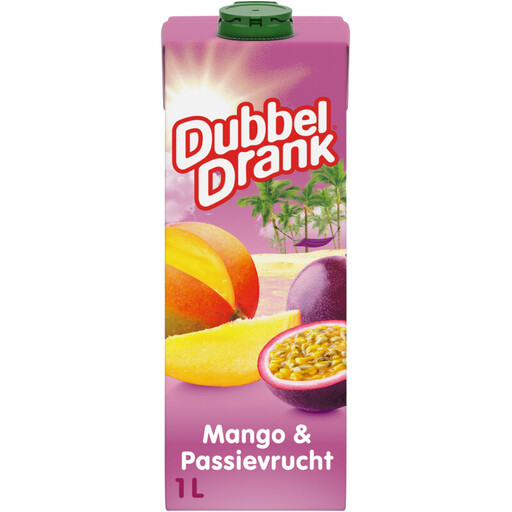
Why this fits the profile: The 1-litre format is suitable for sharing at home. The combination of mango and passion fruit offers more variety than a single-flavour mango drink.
The product information states a fruit content of at least 38%, so you’re not relying solely on the mango image.
1-litre pack; mango combined with passion fruit; according to the product information, enriched with vitamin C and D.
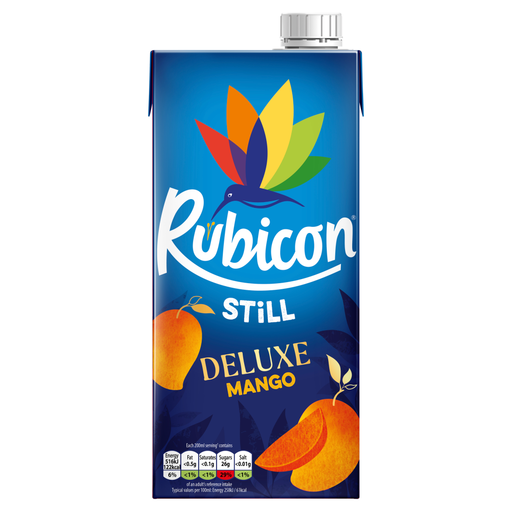
Why this fits the profile: If you’re after a richer mango flavour, you get a product with 19% mango purée according to the label, in a shareable pack.
The stated percentage of mango purée makes the choice more verifiable than a general claim about tropical flavour.
19% mango purée according to the ingredients; 1-litre pack; still (non-carbonated) drink.
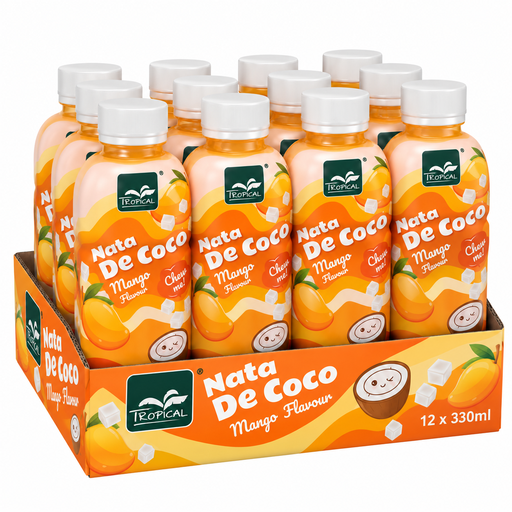
Why this fits the profile: The box of 12 bottles is practical for stocking up, parties, catering or fans of Asian drinks with a distinctive texture.
The packaging clearly states 22% nata de coco and 5% mango from concentrate. So you know upfront that this isn’t smooth mango juice.
12 × 330 ml; nata de coco for extra texture; 4.6 g of sugar per 100 ml according to the product information.
For fans of bubbles, Rubicon Sparkling Mango 330 ml, Jarritos Mango 370 ml and Hatakosen Ramune Mango 200 ml are logical options to compare. With a sparkling mango drink, check the carbonation, sweeteners and sugar content. According to the product information, Rubicon Sparkling Mango contains 13 g of sugar per 100 ml, while Rubicon Mango 330 ml with sucralose lists 4.5 g.
If you’re looking for a sugar-free mango drink, you could consider Wicky Mango Fruit Drink 6 × 200 ml. The product information states less than 0.1 g of sugar per 100 ml. For larger business orders, Iam Superjuice Mango Drink 12 × 330 ml is an option with a total of 3.96 litres and, according to the description, 30% mango.
Store opened products as directed on the label. Also always check the best-before date, seal and allergen information. The products mentioned do not list any of the 14 major EU allergens, but the label on the packaging you receive remains the definitive guide.
We’ve put together a full, up-to-date list of products that fully meet these strict selection criteria and comply with current European safety regulations.
Mango juice usually consists of mango juice or purée, possibly from concentrate. A mango fruit drink can also contain more water, sugar, other fruit juices, flavourings or sweeteners. So compare the mango percentage and the ingredients list.
A 1-litre pack, such as Maaza Mango Drink or Rubicon Still Mango Deluxe, is practical for sharing. For a family that uses mango drinks more often, a multipack can be better value and easier to store. Once opened, the product usually needs to be kept chilled.
This varies by product. Store an opened bottle or pack in the fridge and follow the time stated on the packaging. Seal the pack properly and don’t use any product where the cap, seal or packaging was damaged when you bought it.
