
Vandaag of morgen in huis

Kwaliteit gegarandeerd

Welkomstaanbiedingen ontgrendelen: GRATIS bezorging | Tot 80% korting | Gratis 30 dagen JoyPlus-proefperiode
Download de app
At first glance, picking a mango drink seems straightforward. Yet products vary widely in fruit content, sweeteners, carbonation, packaging and portion size. A striking mango label doesn't automatically mean you're buying mango juice or mango nectar. Sometimes it's a mango fruit drink with little fruit, a fizzy mango soda, or a tropical mango drink with extra ingredients.
The main pitfalls when buying a mango drink are:
First, check how much mango, mango purée or mango juice from concentrate the product contains. Ingredients are usually listed in descending order by quantity. If sugar or syrup appears before mango on the list, the product isn't primarily made from mango.
A fruit drink isn't necessarily the same as pure juice. For example, Maaza Mango Drink states 17% mango purée, while FOCO Mango Passion Fruit Drink contains 10% mango juice and 5% passion fruit juice. The latter is a blended tropical drink, not just mango.
With an Asian-style mango drink, other features may also influence your choice, such as nata de coco, aloe vera pulp or a distinctive bottle. These ingredients change the texture and the drinking occasion.
Compare the nutritional values per 100 ml, not just per package. This way you can fairly compare a small can with a 1-litre bottle. For instance, Sagiko Mango Juice states 11.9 grams of sugar per 100 ml, while Rubicon Sparkling Mango states 13 grams of sugar per 100 ml.
A product labelled “no added sugar” doesn't necessarily mean it isn't sweet. Iam Superjuice Mango Drink states 30% mango juice, no added sugar and steviol glycosides as a sweetener. Wicky Mango Fruit Drink states less than 0.1 grams of sugar per 100 ml, with sucralose and acesulfame-K. So always check the full label.
Also pay attention to marketing claims from brands. According to the product information from the brand or supplier, a drink might be described as refreshing, natural or rich in vitamin C. Don't treat such descriptions as independently proven benefits; use the ingredients list and nutrition table as your verifiable basis.
If you want a fizzy mango drink, look for “carbonated water” in the ingredients. Jarritos Mango, Rubicon Sparkling Mango and HATA KOSEN HATASODA Mango are examples of carbonated options. They work well with a meal or at a party, but are less suitable when you're after a smooth fruit drink.
For extra texture, you can choose a mango drink with nata de coco. Tropical Nata de Coco Mango contains 22% nata de coco according to the product information, and comes in a case of 12 bottles of 330 ml. KATO Mango Juice with Nata De Coco is a smaller option at 320 ml.
Finally, check the storage instructions. Many drinks need to be refrigerated after opening and consumed within the period stated on the packaging. When you receive your order, also check the best-before date and don't use a bottle if the seal is damaged.
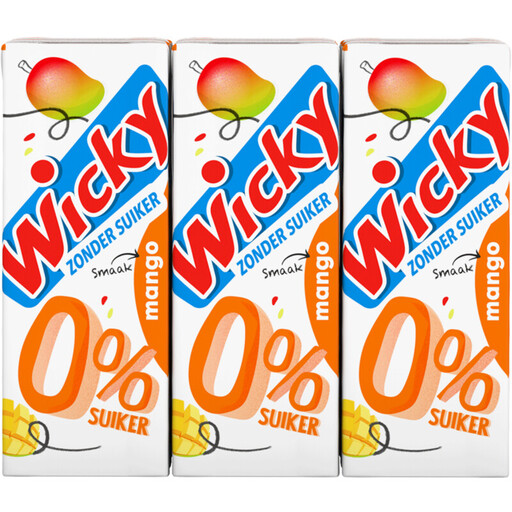
Why this fits the profile: The six 200 ml portions are practical for school, work or a quick break. The product information states less than 0.1 grams of sugar per 100 ml.
The nutritional information makes the sugar content clear. However, note that the drink contains sweeteners and only 0.2% mango juice from concentrate.
Handy multipack, small portions and less than 0.1 g sugar per 100 ml according to the product data.
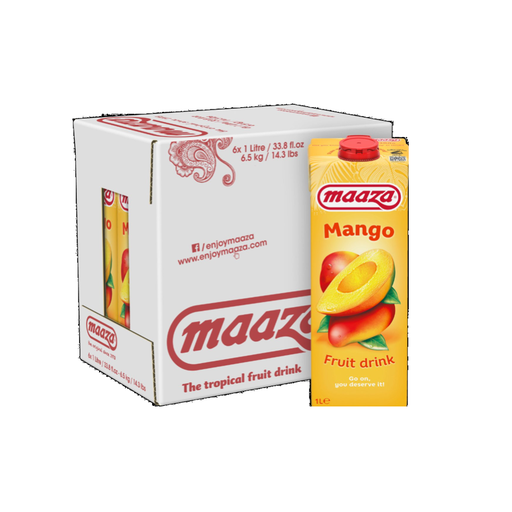
Why this fits the profile: The packaging is designed for families, mealtimes and stocking up at home. The product information states 17% mango purée.
The fruit percentage is clearly stated, so you can distinguish this drink from varieties that rely mainly on flavourings.
1-litre format, 17% mango purée and suitable for serving chilled across multiple mealtimes.
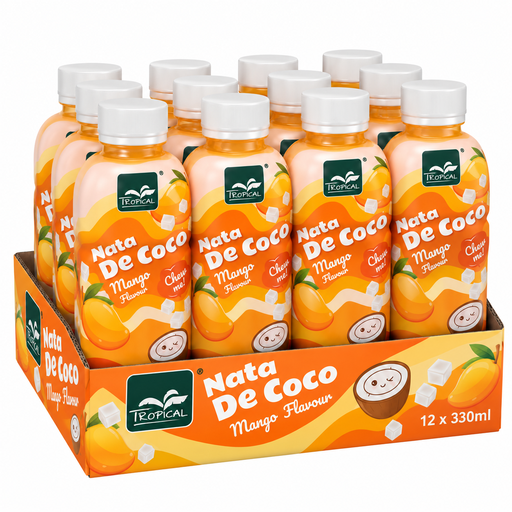
Why this fits the profile: For fans of an Asian-style mango drink with extra bite. The case of 12 bottles suits parties, stocking up and regular use.
The product information states 22% nata de coco and 5% reduced mango juice from concentrate. So you know in advance that texture is the focus.
330ml per bottle, 12 bottles per case and 4.6 g sugar per 100 ml according to the provided nutritional information.
We've put together a full, up-to-date list of products that fully meet these strict selection criteria and comply with current European safety regulations.
Mango juice consists of mango juice or purée, possibly with added water. A mango fruit drink may also contain sugar, sweeteners, acids, flavourings or other fruit juices. Check the fruit percentage and the ingredients list to see the difference.
First, check the nutritional values per 100 ml. Wicky states less than 0.1 grams of sugar per 100 ml, but it does contain sweeteners and only 0.2% mango juice from concentrate. Iam Superjuice states no added sugar, 30% mango juice and steviol glycosides. So the choice depends on what matters most to you: low sugar, more mango or a particular sweetener.
Always follow the label. Many products need to be kept in the fridge after opening and consumed within the stated period. Gently shake a drink containing fruit pieces if the packaging advises it. A small bottle or single-serve pack reduces waste if you don't finish the drink in one go.
