
Vandaag of morgen in huis

Kwaliteit gegarandeerd

Welkomstaanbiedingen ontgrendelen: GRATIS bezorging | Tot 80% korting | Gratis 30 dagen JoyPlus-proefperiode
Download de app
Magnetic building blocks for children combine building, play and independent problem-solving. However, not every magnetic building set is automatically suitable for every child. A large number of pieces may sound appealing, but it says little about how useful the set will be. Terms such as “strong magnets”, “STEM toy” or “extra safe” should always be considered alongside the specific product information.
For parents in the Netherlands, these are the main pitfalls to look out for:
Only choose construction toys for children aged 3 and over if the child can use the pieces safely and responsibly. The age guidance is not a minor detail: younger children are more likely to put pieces in their mouths. Also check whether there are warnings about small parts and whether the seller provides information about the manufacturer or responsible economic operator in the European Union.
A CE marking should be visible or included in the product information for toys offered on the European market. This marking is a declaration by the manufacturer that the product complies with the relevant EU requirements; it is not an independent quality mark. References to EN 71 can also be useful, but always check that this information genuinely applies to the specific product.
ABS plastic is commonly used for magnetic building blocks. It is lightweight and suitable for pieces with fixed shapes, but quality also depends on the finish. Look for:
A statement such as “washable” does not automatically mean that pieces can be rinsed under the tap or put in the dishwasher. Follow the manufacturer’s care instructions instead.
For a child who mainly makes simple figures, a compact set may be sufficient. Anyone wanting to build houses, vehicles or larger structures will get more from a combination of squares, triangles and special pieces. Also consider how the tiles or building blocks connect. A set may be magnetic but still less suitable for large structures if the shapes shift easily.
You should also think about the space available for play. Magnetic tiles and larger constructions take up more room on the floor than a small structure built on a table. A storage box or gift box can be useful if the set needs to be put away in a cupboard after playtime.
The recommendations below are based on the listed pieces, materials, age information and product features. Before buying, also check the current product page, images and safety information.
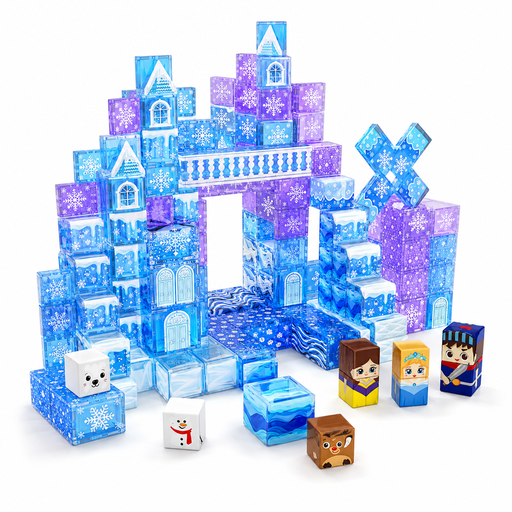
Why it suits this profile: The transparent design with a snow or ice theme gives young builders a visual focus without immediately needing a large expansion set. The product name states that it is suitable from the age of 3 and highlights an educational STEM focus.
The age guidance and specific theme make the choice clearer than a set with an unclear target audience. Do check the exact contents and dimensions on the product page.
Transparent pieces, a snow and ice design, and positioning as an educational toy suitable from the age of 3.
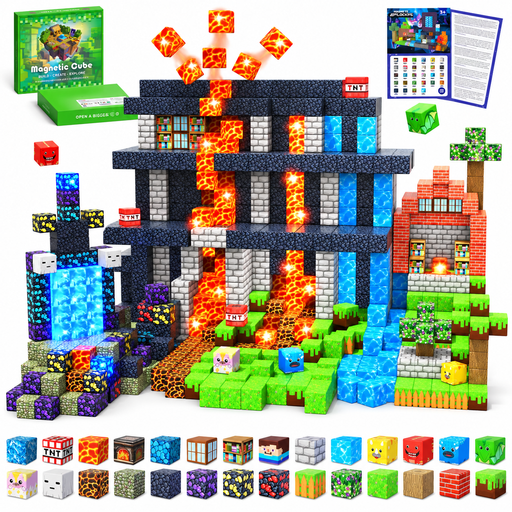
Why it suits this profile: This set contains 150 pieces, rounded edges and a design focused on fine motor skills and spatial imagination. That makes it a good choice for families who want to build larger structures together.
The higher number of pieces offers more scope for play than a small starter set. Check which shapes are included beforehand, so the number of pieces genuinely matches your building plans.
150 pieces, rounded edges and a natural appearance according to the product description.
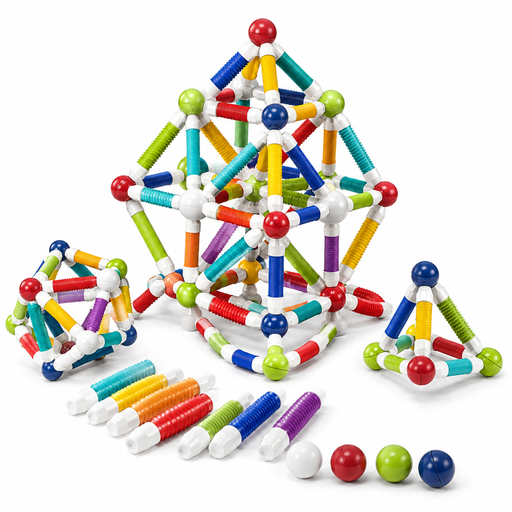
Why it suits this profile: The set contains 85 pieces, is made from ABS plastic and is listed with a gift box. This makes it suitable for regular use at home or as a gift for children aged 3 and over.
The material information means you are not relying solely on appearance or marketing terms. For intensive use, regularly check for cracks, loose parts or damaged magnetic connections.
85-piece set, ABS plastic and an included gift box according to the product name.
We have put together a complete, up-to-date list of products that fully meet these strict selection criteria and the applicable European safety requirements.
Magnetic building blocks can help children practise shapes, balance and planning through play. For example, set a simple challenge: build a bridge that can support a light toy figure. This encourages the child to see which shapes remain stable. Afterwards, let them create their own variations rather than simply copying the example models.
For fine motor skills, it helps to connect and separate the pieces carefully. With toys designed to develop spatial awareness, you can ask which shape is needed to make a roof, wheel or tower. These are playful activities, not guaranteed learning outcomes. The experience varies from child to child.
That depends on the specific set. Only choose a product that clearly states it is suitable from the age of 3, and read the warnings. Supervise young children and remove damaged pieces from the play area immediately. Magnets must not become accessible if a piece breaks open.
In most cases, use a soft, slightly damp cloth and dry the pieces thoroughly afterwards. Do not use harsh cleaning products or submerge the pieces unless the manufacturer expressly permits it. After cleaning, check that seams, edges and connections are intact.
Their lifespan depends on the material, construction and handling. Store the set in a dry place, avoid throwing the pieces and check regularly for cracks or loose parts. A larger set will not automatically last longer; the finish and the way the toys are used are just as important.
