
Vandaag of morgen in huis

Kwaliteit gegarandeerd

Welkomstaanbiedingen ontgrendelen: GRATIS bezorging | Tot 80% korting | Gratis 30 dagen JoyPlus-proefperiode
Download de app
A magnetic whiteboard seems simple: a white surface, a frame and a few magnets. Yet many people buy a board that turns out to be too small, difficult to mount or prone to staining. So don’t focus only on the price or an attractive product photo.
The most common pitfalls are:
A small whiteboard of around 50 x 35 cm is ideal for a shopping list, weekly planner or quick reminders. For a home office, 60 x 55 cm may be enough if you mainly use it to note down tasks and appointments.
A large whiteboard is more practical for brainstorming, lessons and presentations. Boards measuring 1500 x 900 mm or 2000 x 1000 mm offer more writing space, but also need a wide, sturdy wall. Measure the wall, but also check that there’s enough room to stand and write around the board.
A magnetic board should hold documents, photos or planning cards in place with magnets. Check the product information to make sure it specifically says “magnetic” or “magnetisch”.
Also consider the writing surface. According to the product description, a smooth, lacquered surface is designed for writing and dry wiping. Always use a whiteboard marker, not a permanent marker. Permanent ink can cause stains and isn’t designed for use on a whiteboard.
Cleaning is important if you use the board frequently. A suitable whiteboard eraser helps you remove everyday notes. Clean the surface according to the manufacturer’s instructions when needed, and don’t leave ink on it for long periods.
A whiteboard with an aluminium frame is often lightweight and well suited to an office or meeting room. A whiteboard with a wooden frame, such as a model made from solid pine, may fit in better with your home decor. The frame material doesn’t determine the writing quality; that depends on the surface.
Also check:
A folding whiteboard can be useful in a shared space. A foldable model takes up less room when not in use, but check its dimensions when unfolded beforehand.

Why it suits this type of user: Its compact size is ideal for a home office, student room or kitchen where you only need to jot down quick notes and reminders.
The size makes it clear that this board is intended for light use, so you won’t pay for space you don’t need.
Lacquered steel surface, aluminium frame, magnetic properties and mounting hardware, according to the product description.
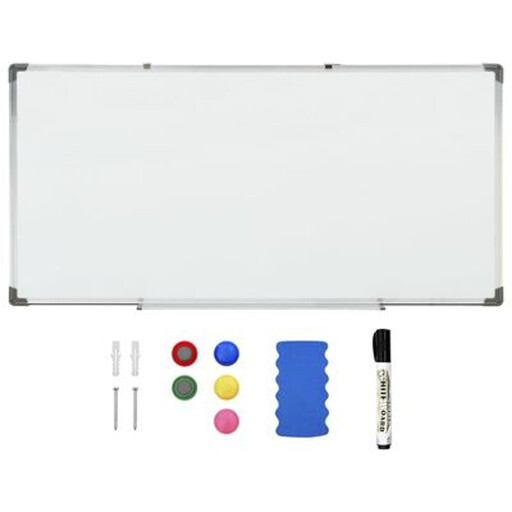
Why it suits this type of user: A good choice if you want a larger board for home or the office and would like to get started with the basic accessories included.
The product description lists the dimensions and included items, so you can check in advance what you’ll need for everyday use.
Includes a marker, eraser, five magnets and mounting hardware according to the product information; measures 110 x 60 cm.

Why it suits this type of user: Its size is designed for meeting rooms, offices and situations where several people need to see the information at once.
Its generous size helps prevent presentations from becoming cramped, but check the wall width, load-bearing capacity and mounting requirements in advance.
Generous 2000 x 1000 mm size, designed for use in a conference room or office.
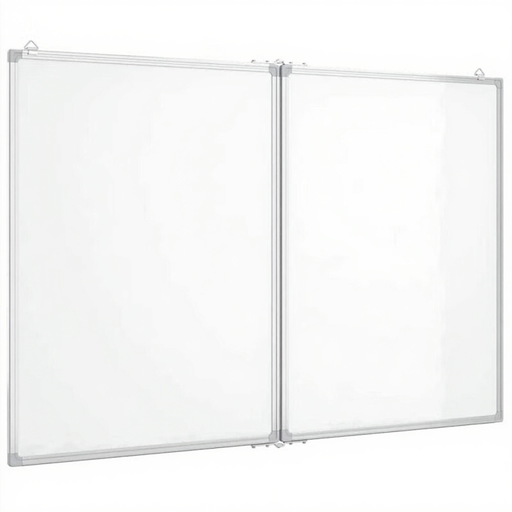
Why it suits this type of user: The two hinged panels are practical for a classroom, meeting room or home workspace that doesn’t always have the same layout.
Its folding design takes up less storage space. However, check that the wall and mounting points are suitable for its size.
Two hinged panels, an aluminium frame, magnetic properties and a stated size of 120 x 100 cm.
We’ve put together a complete, up-to-date list of products that meet these strict selection criteria and the applicable European safety regulations.
A board is only a pleasure to use when you have the right accessories for its surface. Choose a whiteboard marker designed for dry-wipe boards. Ideally, store markers horizontally or follow the instructions on the packaging, and erase notes regularly.
A whiteboard eraser with a felt wiping surface is suitable for everyday dry wiping, according to the product descriptions for the Deli models mentioned. Don’t use the eraser on permanent marker, and don’t wet the board when wiping it. A separate cloth can help remove dust or any leftover ink.
For schools and offices, it’s useful to keep several erasers and markers in a designated place. That way, the magnetic planning board is ready for the next person to use.
First, check the type of wall and the mounting materials supplied. Use wall plugs and screws that are suitable for the surface. For larger models, it’s best to follow the installation instructions and check that the board is securely fixed before hanging magnets or documents on it.
Its lifespan depends on the quality of the surface, the markers you use, the cleaning method and how it’s mounted. Permanent markers, abrasive cleaning products and ink left on the surface for a long time can cause damage. A board that’s cleaned regularly with suitable products will generally stay in good condition for longer.
After buying the board, ongoing costs are usually limited to whiteboard markers, magnets and possibly a replacement whiteboard eraser. Check which accessories are included when you buy. This helps prevent an apparently cheap board from costing you more than expected.
