
Vandaag of morgen in huis

Kwaliteit gegarandeerd

Welkomstaanbiedingen ontgrendelen: GRATIS bezorging | Tot 80% korting | Gratis 30 dagen JoyPlus-proefperiode
Download de app
Magnetic tiles for children may seem simple: click a few shapes together and you have a house, tower or vehicle. However, magnetic building blocks can vary considerably in size, number of pieces, magnetic connections and safety information. A low price may therefore prove less appealing if the toy falls apart easily, is unsuitable for the child’s age or contains too few pieces for open-ended building.
These buying tips help parents, carers and grandparents compare magnetic construction toys objectively.
A set with 120 magnetic building blocks may automatically seem more extensive than a set with 36 pieces. That is not always the case. Mini tiles are smaller and may be suitable for detailed patterns, but they produce smaller constructions. So also check the dimensions and the balance between squares, triangles and other shapes.
According to some brands’ product descriptions, strong magnets provide a secure connection. This is a brand claim, not a universal guarantee. Stability also depends on the size of the tiles, the design of the construction and how the magnets are enclosed.
Also pay attention to damage. If a tile cracks or a magnet comes loose, the toy must be taken out of use immediately in accordance with the safety instructions.
Many magnetic tiles are intended for children aged 3 and over. This does not mean supervision is unnecessary. Small parts and magnets can be dangerous if swallowed. Swallowing multiple magnets can cause serious injury. Always choose a set suitable for the child’s age and check the tiles regularly.
For beginners, a 36-piece magnetic tile set can be easy to manage. A 50-piece magnetic tile set offers more combinations without introducing a large number of pieces straight away. Larger sets containing 64, 100 or 150 pieces are better suited to children who have been building for longer or want to play together.
Do not focus only on the total number. A useful starter set usually contains several geometric shapes, such as:
Many magnetic building blocks are made from ABS plastic. Check whether the product information mentions smooth edges, a sturdy casing and enclosed magnets. For safe ABS toys, clear warnings, an age indication and information about the responsible party in the European Union are also important.
The mention of a standard such as EN 71 can help when assessing toy safety. Always check the current product information; a marketing statement is no substitute for inspecting the toy during use.
Magnetic tiles are usually ready to use straight away and do not require batteries. Careful use can nevertheless extend their lifespan:
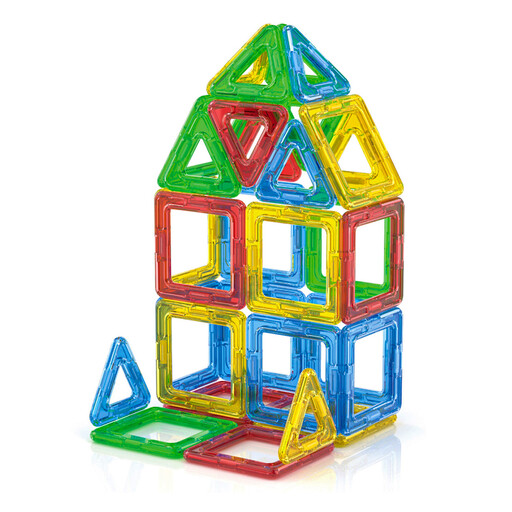
Why it suits this profile: This compact starter set is intended for children aged 3 and over and contains 36 mini pieces for creating first flat patterns and simple 3D shapes.
The number of pieces and recommended use are clearly stated. However, check the current product page, as the additional information gives a different number.
36-piece starter set, ABS plastic and a colourful gift box; no assembly or batteries required.
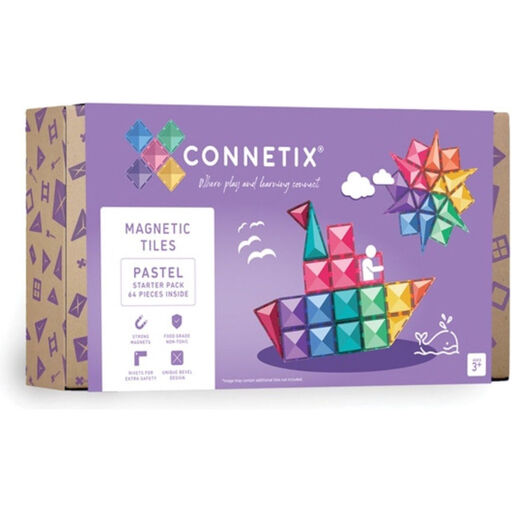
Why it suits this profile: The set contains 64 pieces in eight pastel colours and several geometric shapes, making it suitable for longer, more varied building sessions.
The contents clearly state which shapes and colours are included in the box. The product information also recommends inspecting the tiles and rivets before every use.
64-piece set, 2D and 3D building options, ABS plastic and magnets that, according to the product information, are secured inside the tiles.
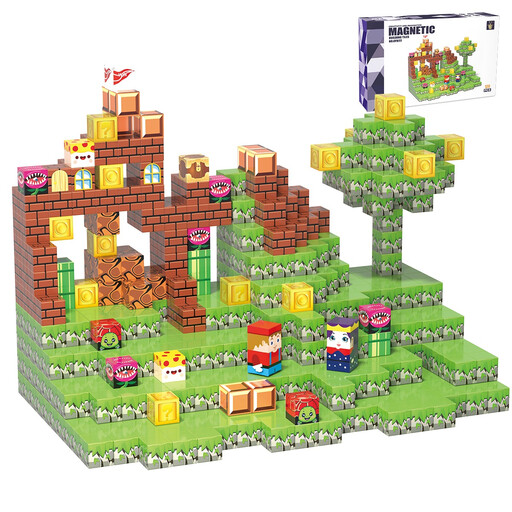
Why it suits this profile: The 120 mini tiles with a forest theme are designed for detailed scenes and compact play, for example while travelling or in a quiet play corner.
The compact size and storage container are clearly described in advance. As the pieces are small, supervision remains important for children aged 3 and over.
120 mini pieces, forest theme, storage container and a project guide according to the product description.
We have put together a complete, up-to-date list of products that fully meet these strict selection criteria and the applicable European safety regulations.
Magnetic tiles can form part of STEM toys when children learn through play about shapes, balance, patterns and constructions. An adult can ask questions such as: “Which shape makes the tower sturdier?” or “What happens if you make the base wider?” This creates a valuable learning opportunity without completely directing the play.
For nurseries or families with several children, sets containing 100 or 150 pieces are practical, provided there is enough storage space and supervision. For a birthday present, a 36- or 50-piece set is often easier to manage. With themed or transparent sets, always check the exact contents, as not every product page lists all the specifications.
Many sets in this category carry an age recommendation of 3 years and over. They contain small parts and magnets. Use them under supervision, set damaged tiles aside and do not allow children to put the pieces in their mouths.
Their lifespan depends on use, storage and the quality of the casing. Regularly checking for cracks, loose magnets and damaged edges is more important than simply looking at the material listed on the packaging. Store the tiles somewhere dry, avoid heavy pressure and follow the brand’s care instructions.
The sets mentioned work through magnetic connections and manual operation. They do not require batteries. Additional shapes or expansion sets may be useful later, but first check that the size and magnetic connection are compatible.
