
Vandaag of morgen in huis

Kwaliteit gegarandeerd

Welkomstaanbiedingen ontgrendelen: GRATIS bezorging | Tot 80% korting | Gratis 30 dagen JoyPlus-proefperiode
Download de app
Magnetic tiles are a popular toy, and for good reason. They provide hours of creative and educational fun. But the wide selection can be overwhelming, and not all sets are worth the money. Before you make a purchase, it's smart to know what to look for. We'll discuss the most common pitfalls and give you practical tips to make the right choice.
Many parents and caregivers invest in magnetic toys, only to find out later that they don't meet expectations. These are the three main problems to avoid:
To avoid the pitfalls above, focus on a few key product features. These specifications determine the toy's quality, safety, and longevity.
The tile's construction is crucial. Look for sets made of ABS plastic. This material is strong, durable, and free of harmful substances like BPA. Even more important is how the magnets are secured. The magnets should be fully and firmly encased in the plastic, often with rivets for extra security. Check if the product complies with the European toy safety standard, EN71. This is usually mentioned in the product description.
Most top brands, like Magna-Tiles and Connetix, use a standard size for their square tiles: approximately 7.5 x 7.5 cm. This ensures that sets from different brands are often compatible. If you already own a set or plan to expand in the future, it's wise to check if a new set follows this standard size. For example, you can easily supplement a Magna-Tiles set with a Coblo-compatible brand, allowing you to stay flexible.
For a child just starting out with magnetic building blocks, a set of 30 to 60 pieces is often enough to discover the basics. This allows them to create both flat figures and simple 3D structures. Want to build larger castles or have multiple children playing at the same time? Then a set of 100 pieces or more is a better investment. A good mix of squares and various types of triangles forms the foundation for most creations.
Not every set is suitable for every situation. Below are a few popular choices, tailored to different needs and preferences.
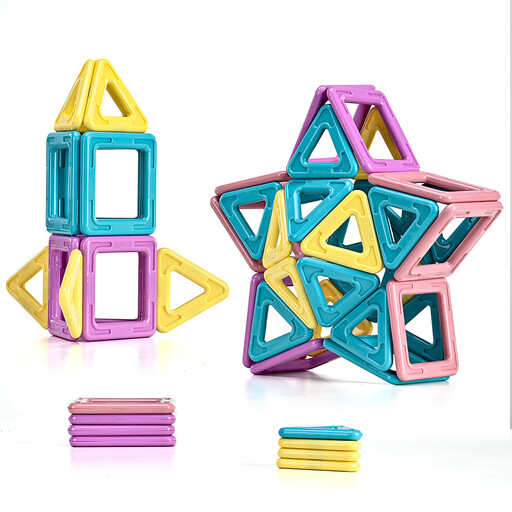
Why it's a match: An affordable starter set with enough pieces and soft pastel colours to explore the basics of magnetic building without a major investment. Ideal as a first introduction to this type of educational toy for ages 3 and up.
This set is made of safe ABS plastic with encased magnets and, according to the manufacturer, complies with the EN71 standard, avoiding the risks of cheap, brittle alternatives.
Good value for 50 pieces. The soft macaron colours are visually appealing and offer a calmer alternative to the bright standard colours.
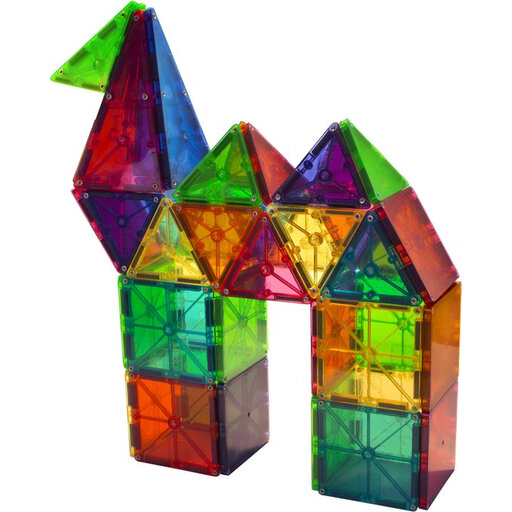
Why it's a match: For those who want to invest directly in a large, durable collection from a reputable brand. Ideal for families with multiple children or for those who want to create serious, large-scale structures as part of STEM play.
Magna-Tiles is known for its strong magnets and robust construction, which prevents collapsing structures. The tiles are compatible with many other brands, making future expansions easy.
A large 100-piece set for endless building possibilities. Its proven durability and brand recognition make this a reliable choice for long-lasting fun.
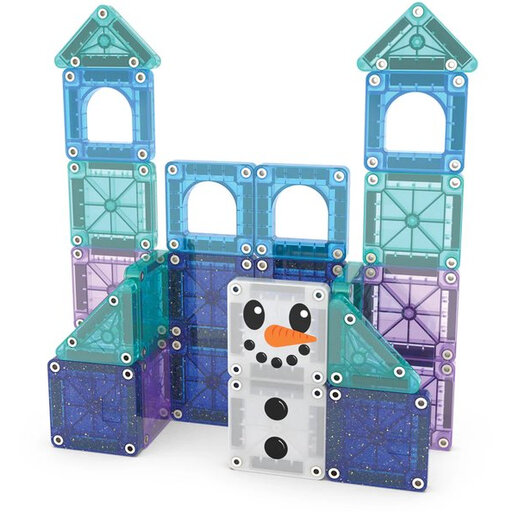
Why it's a match: Perfect for on-the-go creativity. This compact travel set is easy to take in the car, on a plane, or to a restaurant, and offers a fun thematic change of pace from standard sets.
Despite its small size, this set delivers the trusted Magna-Tiles quality with strong magnets. It's not a 'cheap' travel version, but a full-fledged, compact set that is fully compatible.
Portable and thematic (Winter Wonder), ideal for travel. The unique colours and glitter tiles add a new dimension to creations.
We have compiled a complete, up-to-date list of products that meet these strict selection criteria and safety regulations.
Not always, but many popular brands like Magna-Tiles, Connetix, and Coblo use a standard size of approximately 7.5 x 7.5 cm for their square tiles. This means they are often interchangeable in practice. However, it's always wise to check the product description, especially if you want to expand an existing collection.
Most manufacturers recommend their sets for children ages 3 and up. This is due to the presence of magnets and the potential for small parts if a tile were to break. For younger children, adult supervision is always recommended.
A starter set with 30 to 60 tiles is typically a great start. This gives a child enough material to learn the basic shapes and build both 2D and simple 3D structures. For more complex builds, or if multiple children will be playing at the same time, a set of 100 pieces or more offers significantly more possibilities.
