
Vandaag of morgen in huis

Kwaliteit gegarandeerd

Welkomstaanbiedingen ontgrendelen: GRATIS bezorging | Tot 80% korting | Gratis 30 dagen JoyPlus-proefperiode
Download de app
Magnetic building blocks may seem simple at first glance: click the tiles together and start building. However, sets vary considerably in size, magnetic connection, material, recommended age and construction possibilities. A low price may therefore prove less attractive if pieces come loose quickly, are too small for young children or are difficult to store.
This guide helps parents, gift buyers and hobby builders compare magnetic construction toys in a focused way. We look not only at the number of pieces, but above all at how the set is used, safety and the information actually provided in the product description.
A set with 150 pieces sounds more extensive than one with 36 pieces. However, that does not automatically indicate how many constructions are possible. The distribution of shapes is important: squares and triangles are suitable for basic constructions, while special pieces can add extra themes or functions.
So check:
According to the product listings of some brands, strong magnets create more secure connections. This is a manufacturer’s product claim, not a guarantee that every tall construction will remain stable. Weight, shape, the surface and the way the set is built also have an impact.
Also pay attention to how the magnets are enclosed. According to the product information, the magnets in Tokky sets are incorporated into the ABS pieces and sealed using ultrasonic welding. Nevertheless, check the tiles regularly during use to ensure that none are damaged or that a magnet has not come loose.
Magnetic building tiles and small building blocks contain pieces that can pose a choking hazard. An age recommendation of 3+ is not merely an optional suggestion. You should also consider the child’s behaviour: some children keep pieces in their mouths for longer than others.
If magnets are swallowed, seek medical advice promptly. You should also keep magnetic pieces away from magnetically sensitive items, such as certain electronic devices and payment cards.
ABS plastic is widely used for building blocks. Look for practical information such as smooth edges, the absence of burrs and how the magnets are sealed. Claims such as “safe”, “non-toxic” or “environmentally friendly” should ideally be supported by specific information about the material or applicable standard.
Some product listings refer to EN 71, the European series of standards for toy safety. Always check whether the information relates to the specific product, rather than just to a general product range.
Larger magnetic building blocks are generally easier for young children to hold. The Tokky Magnetic Tiles 50 Piece Set states that each piece measures 5 cm. The XINQIYUAN set, on the other hand, uses mini tiles measuring 2.5 cm. This compact size can be useful for detailed constructions and taking the set on the go, but it requires extra attention to the recommended age and supervision.
A small construction set for children can be suitable as an introduction. For large buildings or multi-level constructions, more pieces and a good distribution of shapes are important. With a classic LEGO building set, the focus is often on step-by-step construction following instructions. Magnetic building blocks usually offer more freedom, without a fixed sequence.
For adults, a building set for adults with a specific architectural theme may be more appealing than free building. In that case, also consider the dimensions, display options and the time required to build it.
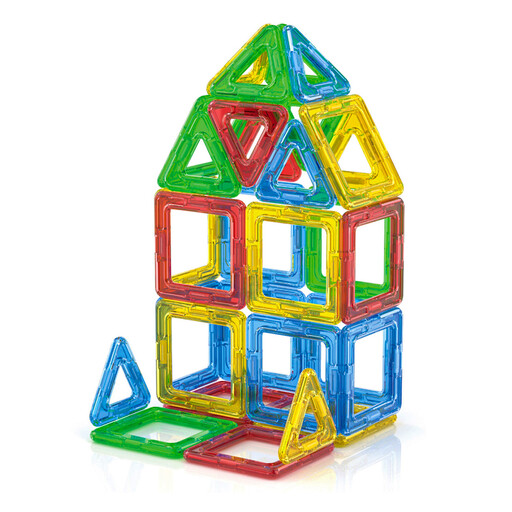
Why it suits this profile: According to the product listing, this set of 36 mini pieces is intended as an introductory set for children aged 3 and over. The pieces can be used straight out of the box.
The stated number of pieces, mini size and recommended age are clearly specified. This makes it easier to set realistic expectations for a first set.
36 magnetic tiles, ABS material according to the product listing and colourful gift packaging.
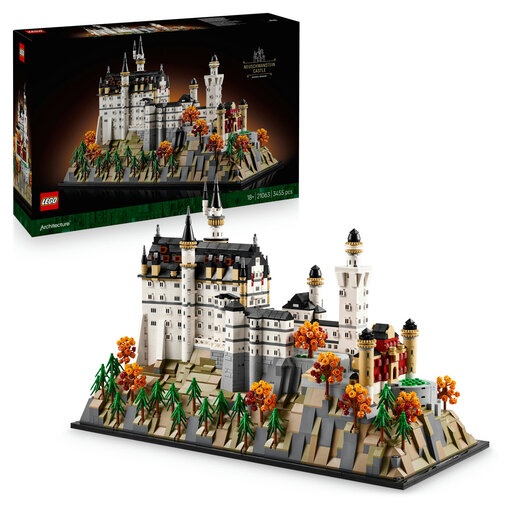
Why it suits this profile: This building set for adults is aimed at fans of architecture, travel and decorative models. According to the product description, the model contains 3455 pieces.
This is not a free-form magnetic set, but a clearly themed model with building instructions and stated finished dimensions of 37,8 × 55,5 × 13,2 cm.
3455 pieces, an architectural theme and a design that can be displayed as home or office décor once built.
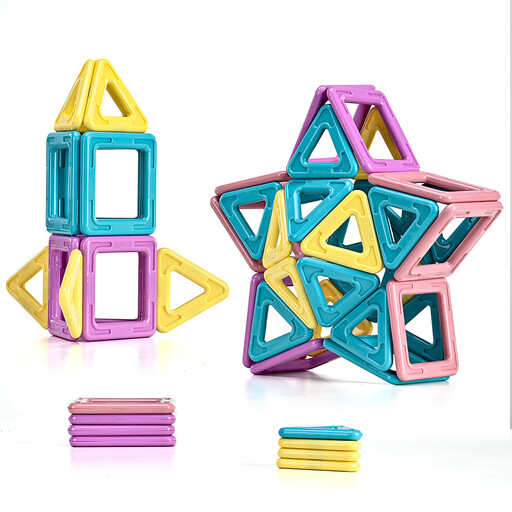
Why it suits this profile: This creative building set is designed for free-form construction using squares, triangles and other basic shapes. The product information states that it contains 50 pieces, each measuring 5 cm, and is suitable for children aged 3 and over.
The larger tile size and the specified types of shapes make it clearer in advance what you can build with the set. However, check the magnets and edges regularly.
50 pieces, pastel colours, ABS plastic according to the product listing and gift packaging.
We have put together a complete, up-to-date list of products that fully meet these strict selection criteria and the applicable European safety regulations.
The choice depends on the type of play you are looking for:
For children aged 3 and over, supervision is advisable, particularly with mini pieces and strong magnets. After playing, store the complete set in the original box or a sealable storage container.
That depends on the specific set. Always follow the age recommendation on the product page. Supervision by an adult is important when small pieces and magnets are involved. Stop using the set as soon as a piece breaks or a magnet becomes visible or comes loose.
Their lifespan depends on the material, use and storage conditions. ABS pieces with smooth edges may be suitable for repeated building, but drops, high temperatures and pressing too hard can cause damage. Store them in a dry place, check the connections regularly and clean them according to the manufacturer’s instructions.
Not always. Compare the price per piece, but also consider the size, variety of shapes, theme and potential for expansion. A small introductory set can be good value for occasional use. For intensive building, a larger set or an expansion set may provide more scope for play.
