
Vandaag of morgen in huis

Kwaliteit gegarandeerd

Welkomstaanbiedingen ontgrendelen: GRATIS bezorging | Tot 80% korting | Gratis 30 dagen JoyPlus-proefperiode
Download de app
Magnetic building blocks may seem simple at first glance: a box of tiles, magnets and colours. In reality, sets vary considerably in size, magnetic connections, age guidance and finish. A low price may look appealing, but a set with too few pieces or loose magnets quickly becomes less useful.
Marketing terms such as “strong magnets”, “STEM toys” and “safe materials” only mean something when the product specifications are clear. This guide helps you compare magnetic tiles, classic construction toys and foam building blocks based on factors that genuinely make a difference in a UK household.
A set of 120 small tiles may appear more extensive than a set of 36 larger pieces. In practice, the size determines how many structures a child can build and how easily small hands can hold the pieces. So don’t just check the number of pieces – look at the dimensions and the distribution of shapes too.
A strong connection can help when building 3D structures, but it says nothing about how the magnets are enclosed. Check whether the product information mentions enclosed or ultrasonically welded magnets. Inspect magnetic construction toys regularly. Stop using them immediately if a magnet comes loose or the casing is damaged.
Swallowing magnets can pose a serious danger. Magnetic building blocks are therefore not suitable for children younger than the stated age, even with supervision.
Toys marked as suitable from age 3 often contain small parts. That does not make them suitable for toddlers who still put toys in their mouths. A classic building set with small bricks may also have a higher age limit than magnetic tiles. Always check the warning on the product page and choose toys based on the child’s behaviour, not just their age.
Many magnetic building blocks are made from ABS plastic. This is a commonly used material for construction toys. Look for:
A statement such as “non-toxic” or “safe” should not be assessed in isolation. Read the full product information and check whether safety standards such as EN 71 are mentioned. A reference to a standard is product information, not a reason to stop supervising children during play.
For beginners, larger, lightweight tiles are generally easier to pick up. According to the product description, the Tokky starter set contains 36 mini magnetic tiles made from ABS plastic. The set is intended for children from age 3 and comes in a colour box.
A more extensive set can offer greater variety, but only when the shapes suit the intended building activities. Squares and triangles are useful for basic structures. Themed pieces, wheels or special shapes can make play more appealing, but may sometimes limit the possibilities for free-form combinations.
Not every tile has the same dimensions or magnet placement. The product information for the XINQIYUAN set lists tiles measuring 2.5 cm and states that they are compatible with other sets in the same mini format. So don’t simply combine different brands. Check the size, shape and magnet placement before buying an extension set.
Magnetic tiles are suitable for quick, instruction-free construction. Children can create flat patterns and three-dimensional shapes. This makes them a good choice for creative toys and educational construction toys that focus on shapes, colours and balance.
A LEGO building set works differently. Classic building bricks click together, making detailed models possible. According to the product information, the LEGO Classic Medium Creative Brick Box 10696 contains 484 pieces, 35 colours, wheels, eyes and a storage box. The recommended age is from 4 years.
For active indoor play, foam building blocks are a different type of choice. They are soft and designed for climbing, crawling and creating simple play structures. According to the product information, the BanaSuper sets have removable, washable covers and a non-slip base. Note that play balls are not included with the ball-pit version.
Supervision remains important when small parts are involved. Even a product described as a STEM toy or Montessori toy does not replace checking the age guidance, materials and safety warnings.
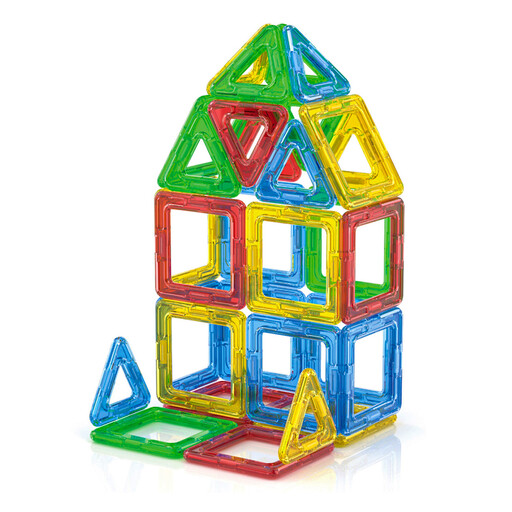
Why it suits this profile: According to the product description, this starter set contains 36 pieces and is designed as an introduction to magnetic construction for children from age 3. The colour box makes it easy to store and give as a gift.
The number of pieces, ABS material and age warning are clearly stated. Before buying, check that the mini format is suitable for the child.
36 magnetic pieces, smooth edges according to the product information, and ready to play with straight away without assembly.
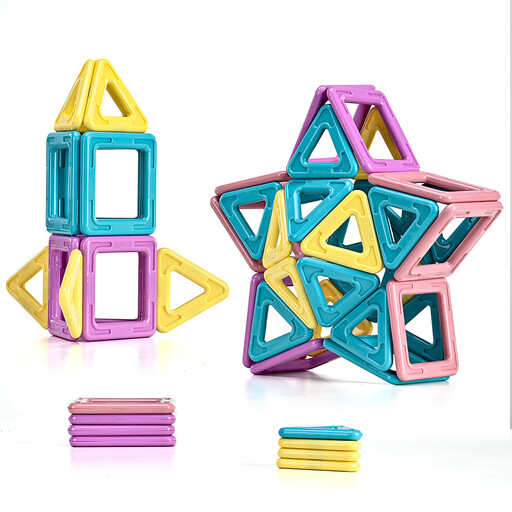
Why it suits this profile: The set contains 50 pieces measuring 5 cm in pastel shades. According to the product information, the magnets are ultrasonically welded and the set is intended for children from age 3.
The product information specifies the magnet casing, age limit and inspection warning. Even so, check the tiles before every use.
50 pieces, 5 cm tiles, basic shapes such as triangles and squares, and a gift box.
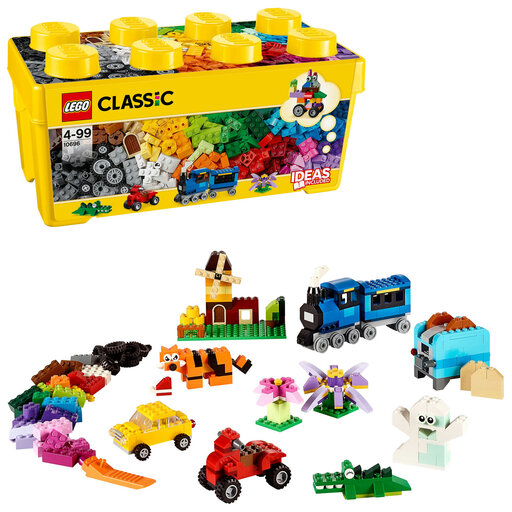
Why it suits this profile: For families who prefer classic building bricks, this set offers 484 pieces, 35 colours and a storage box. According to the product information, it is suitable from age 4.
This is not a magnetic toy, so it uses click connections instead. The age limit and warning about small parts are clearly stated.
484 pieces, 35 colours, 18 wheels and compatibility with LEGO creative playsets according to the product information.
We’ve put together a complete, up-to-date list of products that fully meet these strict selection criteria and the applicable European safety regulations.
Start with simple challenges: build a tower, house or vehicle, then let the child experiment independently. Name the shapes and colours without taking over the construction. This keeps play creative and suitable for different ability levels.
Store the pieces in the original box or container. Magnetic tiles can be damaged by heavy pressure, drops, heat or moisture. Follow the manufacturer’s care instructions; several products recommend cleaning with a dry cloth.
For adult builders and collectors, themed sets are a different type of purchase. The LEGO Marvel Iron Man Mark 3 Collectors' Edition contains 1,297 pieces and is intended for fans aged 18 and over. The LEGO Harry Potter Hogwarts Castle and Grounds set contains 2,660 pieces and, according to the product information, is primarily intended as a building and display model for adults. These sets are not toys for children from age 3.
That depends on the specific product. Sets with an age recommendation from 3 contain small parts and require supervision. Also check regularly that the magnets are still fully enclosed in the tiles. This type of toy is not suitable for younger children or children who put pieces in their mouths.
Their lifespan depends on how they are used, stored and on the quality of the casing. Avoid dropping, applying heavy pressure, using water or exposing them to high temperatures when the care instructions advise against it. Throw pieces away as soon as a tile cracks or a magnet becomes visible or comes loose.
That depends on what you want to achieve. Magnetic tiles connect quickly and are suitable for large, simple 3D shapes. A LEGO building set offers more possibilities for detailed models and step-by-step construction. With both systems, pay attention to the age limit, number of pieces and the storage space available.
