
Vandaag of morgen in huis

Kwaliteit gegarandeerd

Welkomstaanbiedingen ontgrendelen: GRATIS bezorging | Tot 80% korting | Gratis 30 dagen JoyPlus-proefperiode
Download de app
Magnetic building blocks for children may seem simple at first glance: a box of tiles, rods or shapes that click together. However, sets vary considerably in size, magnetic connection, material, age recommendation and play duration. A low price does not always indicate how useful a set will be, while a large box does not automatically offer greater play value.
As a Joybuy Product Recommendation Officer, I focus mainly on verifiable product specifications. This helps you avoid buying a set that ends up unused in the cupboard after just a few play sessions.
A set with 150 pieces sounds appealing, but the number alone tells you little without information about their shape and dimensions. Lots of small tiles may be suitable for detailed constructions, but more difficult for young children to pick up. A smaller set with larger pieces may provide a more enjoyable starting point.
So check:
A strong connection can help create stable constructions, but magnets must be securely enclosed inside the pieces. Check whether the product information refers to welded or sealed housings. Any loose or damaged pieces should be taken out of use immediately.
Magnets must never be swallowed. Swallowing multiple magnets can cause serious injury. Keep magnetic tiles out of reach of children who put pieces in their mouths, even when the packaging states that the product is suitable from 3 years.
“Toys from 3 years” is not a general guarantee that every child can play independently. Magnetic building blocks often contain small parts and may require supervision. Consider the warnings, the size of the pieces and the child’s motor skills.
For older children, teenagers and adults, a 3D puzzle for children, a wooden DIY puzzle or a decorative model may sometimes be more suitable than a basic set of magnetic tiles.
Many magnetic building sets are made from ABS plastic. This is a widely used material for toys, but the material name alone does not tell you everything. Also look for:
Safety information should be distinguished from marketing language. For example, if a product states that it complies with EN71, check that this is explicitly mentioned in the product details. According to the product information provided, the XINQIYUAN set lists EN71, CPC and ASTM F963. This is a product declaration; if in doubt, check the current information on the product page.
Larger tiles are generally easier for beginners to handle and understand. Mini tiles measuring 2.5 cm, on the other hand, may be suitable for adding detail, travelling and creating compact constructions. The right choice depends on the child’s age and how the set will be used.
For a child who mainly builds houses, vehicles and towers, a variety of geometric shapes is important. For a child who enjoys creating themed worlds, animal prints, unicorns or a Ferris wheel may provide extra inspiration.
A magnetic building set becomes more interesting when you can use it to create several different types of construction. Check whether a project book, example cards or storage box is included. Also check whether the tiles connect with other sets in the same size. Compatibility is not guaranteed, even when products look similar.
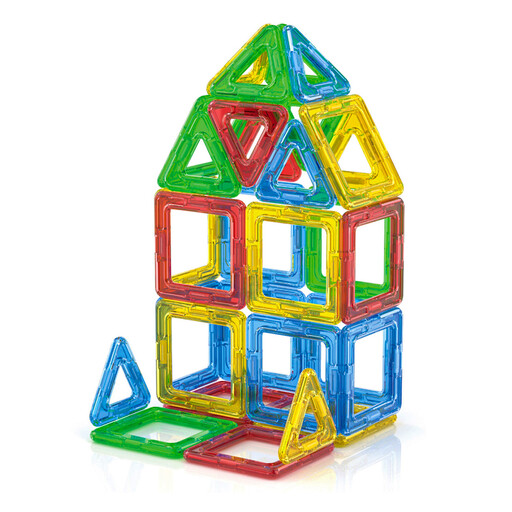
Why it suits this profile: The set contains 36 mini magnetic tiles and is designed as an entry-level option for children from 3 years. Its compact contents make it an easy-to-manage choice for home use.
With fewer pieces, it is quicker to see exactly what is in the box. However, the warnings about small parts and magnets mean that supervision is still required.
36 pieces, ABS material according to the product description and gift packaging.
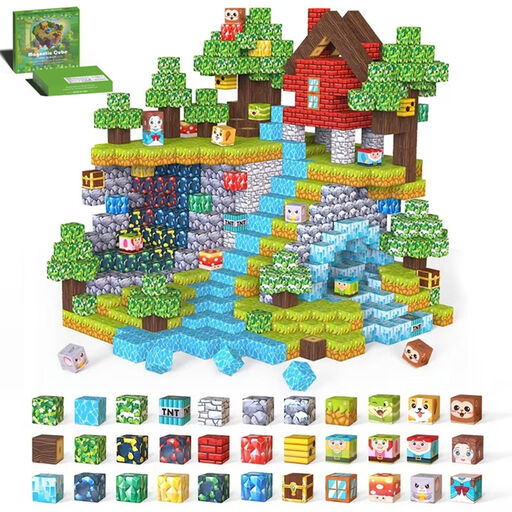
Why it suits this profile: With 150 pieces, this magnetic building set is aimed at users who want to create a variety of constructions over a longer period, either alone or together.
The larger number of pieces offers more variety than a small starter box. Before buying, however, check the exact shapes, dimensions and age warnings.
150 pieces; the product name mentions ABS and a STEM application.
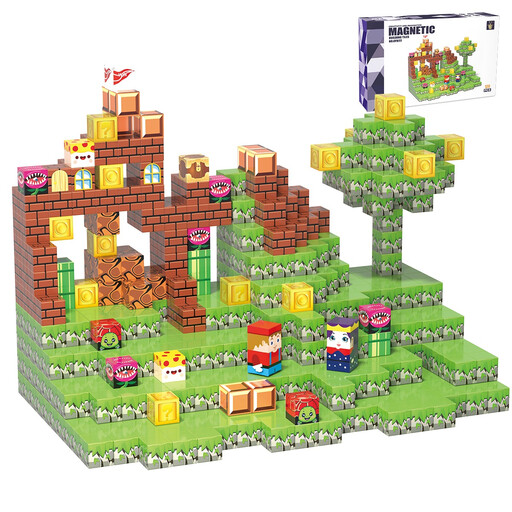
Why it suits this profile: According to the product information, this 120-piece themed set is compact and comes with a storage box and project guide. This makes it suitable for travelling or building detailed forest worlds.
The 2.5 cm size and the supplied warnings make it clear that these are mini pieces. Store them away after use and regularly check that the magnets have not come loose.
120 mini tiles, forest theme, storage container and sealed magnets according to the product information.
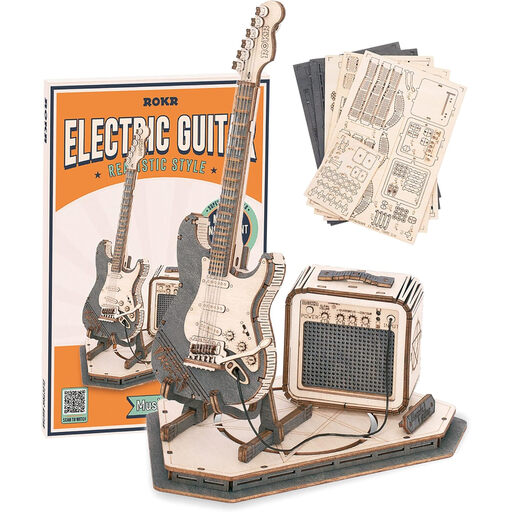
Why it suits this profile: This is not a toy for children from 3 years, but a wooden DIY puzzle for teenagers and adults from 14 years who want to build a decorative model.
The age limit of 14 years and the warnings about small and sharp parts are clearly stated. This makes it less likely that the set will be mistakenly chosen for young children.
Interlocking design without glue according to the product description; finished model measuring approximately 22 cm.
We have put together a complete, up-to-date list of products that fully meet these strict selection criteria and the applicable European safety regulations.
Let children build on a flat surface to begin with. This helps keep constructions more stable and makes it less likely that pieces will fall onto the floor. Building together is a practical way for young children to discover shapes, colours and simple patterns. Do not use any pieces that are cracked or have a loose magnet.
Store the set in the supplied box or container. Wipe ABS building blocks with a soft, dry cloth and do not use harsh cleaning products if the product information advises against them. Check the seams, edges and magnetic connections before every use.
That depends on the specific product. According to the product information, some sets are suitable from 3 years, but may still contain small parts and strong magnets. Always take the warnings and the child’s behaviour into account. If in doubt, adult supervision is advisable.
Their lifespan depends on use, storage and the quality of the casing. Do not let children bite the tiles, avoid dropping constructions heavily and stop using any pieces with a loose magnet. Regular checks can help you spot signs of wear at an early stage.
They can help children practise shapes, balance, spatial awareness and problem-solving through play. This makes them suitable as educational construction toys or STEM toys. However, the educational value depends on how the child plays with them: free building, following instructions and looking for solutions together each provide a different experience.
