For photographing wooden toys in window light, choosing a lens with the right mount is the first thing to get right. Then, choose 0.5x for larger details if that’s enough, or 1:1 and above when you want small wood grains or joints to fill the frame. Close-ups reduce depth of field, so a tripod or other support can be important for still subjects, alongside any image stabilisation.
Which macro lens is right for you?
Photographers sticking with their existing camera
The mount and camera model determine which lens version will fit. If you’re using an adapter, check the specific combination too. For example, Canon says that EF-S lenses automatically produce cropped images on EOS R cameras.
Photographers looking to highlight wood grain and joints
If you want to make small textures appear larger in the frame, you need to consider maximum magnification alongside the focusing distance and the space in front of the lens.
Home photographers working with window light
For macro shots of still subjects, Canon recommends using a tripod or other support. Nikon points out that depth of field decreases significantly when shooting close-up.
What should you look for when choosing?
Start with the mount and sensor size, then compare magnification and working distance. Finally, check that your table space and window light work for the framing you want.
| What to consider |
What should you check? |
Who is this most important for? |
| Mount and sensor size |
Note your camera model and mount. Check the exact lens version and, if needed, which adapter you’ll need. |
If I want to keep using my existing camera body, the lens version needs to fit before I compare other features. Around 36% of consumers prioritise compatibility. |
| Magnification for wood details |
Compare the maximum magnification with the smallest grain, edge or joint you want to photograph. |
If I want small wood textures to fill the frame, maximum magnification is a key factor. Around 29% of consumers give magnification for detail the highest priority. |
| Sharpness in window light |
Take test shots to try out the depth of field you want, and see whether you can fit a tripod or other support on the table. |
If I’m using only available window light, I want to be able to judge which parts of the toy will stay in focus. Around 21% of consumers prioritise a practical setup for window light. |
| Framing and shooting distance |
Measure or test the distance for both the largest toy and a close-up. Check the focusing distance of the exact model. |
If I switch between photographing the whole toy and a close-up, I need to be able to position the lens comfortably in my table setup. Around 14% of consumers prioritise this flexibility in framing. |
Common buying mistakes
-
Assuming all macro lenses offer the same magnification
Canon specifies a maximum magnification of 0.5x for the Canon RF 85mm F2 MACRO IS STM, while Nikon says the Nikon Z MC 50mm f/2.8 reaches 1:1. This difference can matter if you want a small patch of wood grain to fill the frame.
Check the maximum magnification of the exact lens version and match it to the smallest detail you want to photograph.
-
Confusing focusing distance with the free space in front of the lens
Nikon lists a closest focusing distance of 0.16 m for the Z MC 50mm f/2.8, with around 5 cm between the front of the lens and the subject. These are not the same distance.
Consider how much room your window-light setup leaves for the toy and the light.
-
Relying on image stabilisation to prevent all blur
Image stabilisation is no substitute for accurate focusing. Canon recommends a tripod or other support for still macro subjects. For the RF 100mm F2.8L, Canon also gives a different stabilisation figure at 1:1 from its general maximum figure.
Take test shots to assess the depth of field you want, and use support if needed rather than relying on image stabilisation alone.
Brands and relevant macro lenses
The features listed apply to specific models and versions; they are not a general ranking of the brands.
Canon
For EOS R cameras, Canon offers, among other options, an RF 85mm close-up lens with a maximum magnification of 0.5x and an RF 100mm macro lens with a maximum magnification of 1.4x.
- The two models offer different maximum magnifications for compatible RF cameras.
- The RF 85mm does not reach 1:1. For the RF 100mm, Canon lists 5 stops as the general figure and 2 stops at 1.0x magnification, based on Canon’s test standards.
Nikon
The NIKKOR Z MC 50mm f/2.8 reaches a maximum magnification of 1:1 and offers a 50mm angle of view on full-frame Z cameras, according to Nikon.
- The stated maximum magnification is 1:1.
- At the closest focusing distance, the front of the lens is around 5 cm from the subject, according to Nikon. Check that this works with your table setup.
Sigma
According to Sigma, the 105mm F2.8 DG DN MACRO | Art is a 1:1 lens for Sony E and L mounts.
- Sigma specifies a maximum magnification of 1:1.
- The stated closest focusing distance is 29.5 cm; this is not the free space in front of the lens.
Tamron
According to Tamron, the 90mm F/2.8 Di III MACRO VXD, model F072, is available in Sony E and Nikon Z versions, with 1:1 magnification.
- Tamron specifies a maximum magnification of 1:1.
- The stated minimum object distance is 0.23 m. Check the mount and exact version for your camera.
Laowa
According to the manufacturer, the 65mm f/2.8 2x Ultra Macro APO is designed for APS-C cameras and offers up to 2:1 magnification.
- The higher magnification may be useful when you’re photographing very small details, such as wood grain or joints.
- A maximum magnification of 2:1 does not automatically mean you can frame an entire toy as desired. Check that you have the right mount and version.
Sony
According to Sony, the FE 90mm F2.8 Macro G OSS is a 1:1 macro lens with built-in image stabilisation for compatible E-mount cameras.
- According to Sony, the model combines 1:1 magnification with built-in image stabilisation.
- Image stabilisation does not overcome the shallow depth of field of close-ups.
Joybuy lenses for this photography setup
The products shown are Sony E lenses with different stated focal lengths and types. When choosing a lens for wood details, also consider the magnification you need for your shot and check the specific lens version.
 No image available
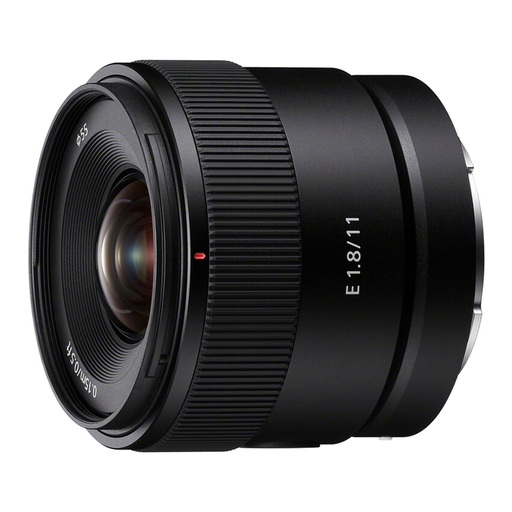
Sony E 11mm F1.8 APS-C ultra-wide-angle prime lens (SEL11F18)
The product name describes an APS-C ultra-wide-angle prime lens. Check that its angle of view suits your toy and the framing you want.
11mm; F1.8; APS-C; Sony E mount.
Check the magnification you need before choosing this lens for small wood details.
View on Joybuy
 No image available
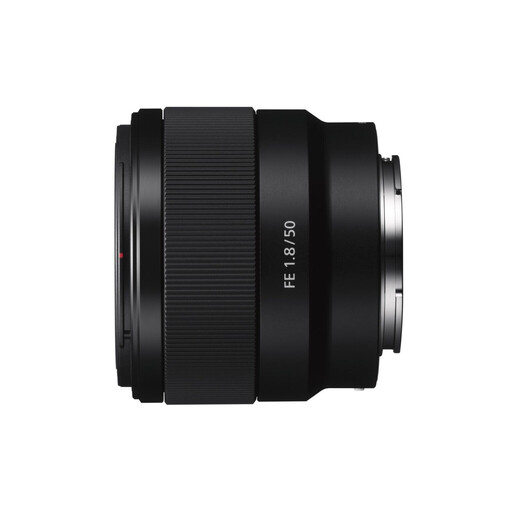
Sony E 50mm f/1.8 OSS Black
This lens may be an option if a Sony E-mount version with a 50mm focal length and OSS suits the framing you want. Check the magnification for close-ups of wood details.
50mm; f/1.8; OSS; Sony E mount.
View on Joybuy
 No image available
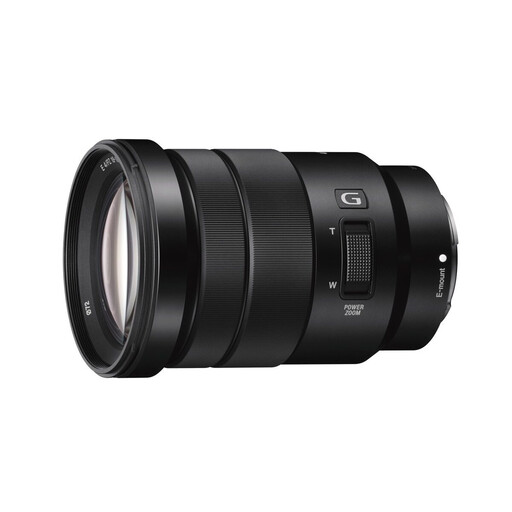
Sony E PZ 18-105mm f/4 G OSS
The zoom range may suit you if you want to switch between different framings of the toy and its surroundings. Check that the magnification is enough for the macro details you want to capture.
18–105mm; f/4; OSS; Sony E mount.
View on Joybuy
Frequently asked questions
Do I really need 1:1 to photograph an entire toy?
Not necessarily; it depends on the smallest detail you want to fill the frame. Canon specifies a maximum of 0.5x for the RF 85mm F2 MACRO IS STM, while Nikon lists 1:1 for the Z MC 50mm f/2.8. Also check whether you can get the framing you want from your position at the table.
How can I avoid parts of my window-lit macro photos being out of focus?
Take test shots at different aperture settings and decide which parts of the toy need to be in focus. Canon recommends a tripod or other support for still macro subjects. Changing daylight can also alter the shadows.
Can I use a Canon EF macro lens on an EOS R camera?
Canon describes using EF and EF-S lenses on EOS R cameras with a compatible EF-EOS R mount adapter. With EF-S lenses, the image is automatically cropped, according to Canon. Check the specific combination before you buy.
What are my rights when buying a lens online in the Netherlands?
According to ACM ConsuWijzer, a standard online consumer purchase generally comes with a statutory 14-day cooling-off period from delivery, although exceptions apply. The statutory guarantee is separate from any manufacturer’s warranty: if a product breaks too soon during normal use, the seller must put things right free of charge, according to ACM ConsuWijzer.


