Who is this for?

Full-dial photographer

You want to capture the whole dial clearly and control reflections on the glass with a repeatable home set-up. The Laowa / Venus Optics guide covers magnification, reflections and focus stacking for watch and macro photography.

Watch-detail photographer

You want to bring small lettering, a date window or parts of the movement closer. Compare the magnification you need and bear depth of field in mind. Laowa / Venus Optics notes that the right magnification depends on the detail you want to show.

Photographer with an existing camera body

You’re looking for a lens for your current camera and want to check the exact mount and version before comparing optical features. Canon Europe, Nikon Netherlands, Sigma and Sony Netherlands list versions for different camera systems.

What should you look for?

What to consider What should you check? Who is it important for?
Full dial Compare the maximum magnification with the framing you want, and check that you’ll have room for diffused lighting and cards. If you want to show the dial with some of the case around it, you’ll need to balance framing with space for lighting. Around 29% of consumers prioritise being able to read the full dial.
Small details Check the maximum magnification of the exact lens, and consider whether 1:1 is enough before choosing a version that goes beyond 1:1. If you want to capture lettering, a date window or small components in greater detail, the size of the detail you want to show will guide your choice. Around 29% of consumers prioritise magnifying small watch details.
Mount and camera Check your camera model, lens mount and sensor format. Don’t rely on the brand name or focal length alone. If you want to keep using your existing camera body, you’ll need a lens version that fits it. Around 24% of consumers prioritise compatibility with their current camera.
Lighting and focus Assess the space available for lighting and reflection cards, and check whether your set-up allows for focus stacking. If you want to control reflections and sharpness yourself in a home studio, space and preparation are part of the decision. Around 18% of consumers prioritise a manageable studio set-up.

Common buying mistakes

  • Assuming every macro lens reaches 1:1

    According to Canon Europe, the Canon RF 35mm F1.8 Macro IS STM has a maximum magnification of 0.5×. Small details will take up less of the frame than they would with a lens offering 1:1 or more.

    Check the maximum magnification of the exact model and choose according to the framing you want.

  • Confusing minimum focusing distance with working distance

    Minimum focusing distance doesn’t tell you how much clear space there is in front of the lens. For lighting and reflection cards, it’s the working distance at the magnification you’ll actually use that matters.

    Try the lens in your intended set-up and check that you have enough room for your lights, cards and watch.

    A cramped set-up may take extra time to get the lighting and cards positioned properly.

  • Choosing a lens with a similar name but the wrong mount

    The Sigma 105mm F2.8 DG DN MACRO and the older MACRO 105mm F2.8 EX DG OS HSM are different lenses with different mounts. Sigma lists the EF and F versions of the older lens as discontinued.

    Before buying, check the full model name, mount and version against your camera body and the product information.

  • Expecting magnification to solve reflections by itself

    Reflective watch glass, dust and limited depth of field remain separate photography challenges. Extra magnification or stabilisation won’t solve them automatically.

    Clean the watch carefully, use diffused light and keep the camera steady. Consider focus stacking if a single plane of focus isn’t enough, and check in advance which camera features and software you’ll need.

    Focus stacking requires extra preparation and post-processing.

Brands to consider

Canon

Canon offers RF lenses with different maximum magnifications. According to Canon, the RF 35mm F1.8 Macro IS STM reaches a maximum of 0.5×, while the RF 100mm F2.8L Macro IS USM reaches 1.4×.

  • That difference gives you a choice between a wider close-up and filling more of the frame with small details.
  • The RF 35mm isn’t a 1:1 macro lens, and neither lens on its own prevents reflections on watch glass.

Nikon

According to Nikon Netherlands, the NIKKOR Z MC 105mm f/2.8 VR S is a 1:1 lens for Nikon Z cameras. Nikon lists manual focusing and built-in vibration reduction.

  • Its 1:1 magnification is suited to photographing smaller details at life size.
  • This lens is designed for the Z system. Manufacturer claims about coatings don’t mean reflections on watch glass will disappear.

Sony

For the FE 90mm F2.8 Macro G OSS, model SEL90M28G, Sony lists a 1:1 lens with an E mount and optical stabilisation.

  • The stated minimum focusing distance is 0.28 m.
  • That distance isn’t the same as the clear space in front of the lens. Check that you have the E-mount version and enough room in your set-up.

Sigma

Sigma lists the 105mm F2.8 DG DN MACRO | Art in versions with Sony E and L-Mount fittings. The older MACRO 105mm F2.8 EX DG OS HSM is available in Canon EF and Nikon F versions.

  • According to Sigma, the DG DN versions offer 1:1 magnification.
  • DG DN and EX DG OS HSM are different products with different mounts. Sigma lists the older EF and F versions as discontinued, so check the version carefully.

Tamron

Tamron lists the 90mm F/2.8 Di III MACRO VXD as a 1:1 lens range for Sony E and Nikon Z.

  • Tamron cites flat-field correction as a design feature for flat subjects.
  • This is a manufacturer claim, not an independent test of watch dials. Check that you have the right mount and enough room for lighting.

Laowa

Laowa lists a maximum magnification of 2:1 for the 90mm f/2.8 2x Ultra Macro APO.

  • This level of magnification may be useful if a very small detail still doesn’t fill enough of the frame at 1:1.
  • More magnification isn’t automatically suitable for a full dial. Check the exact version and how it works.

OM SYSTEM

OM SYSTEM specifies 1:1 magnification, a weight of 185 g and a minimum focusing distance of 0.19 m for the M.Zuiko Digital ED 60mm F2.8 Macro.

  • It’s a 1:1 option for the Micro Four Thirds system.
  • Minimum focusing distance isn’t the same as the clear space in front of the lens. This version isn’t for Canon RF, Nikon Z or Sony E.

Joybuy products

This Joybuy selection includes two Sony E lenses whose product information mentions close-up photography. Use the stated magnification and the framing you want to decide whether they’re right for your watch photos. The selection doesn’t include a confirmed 1:1 macro lens.
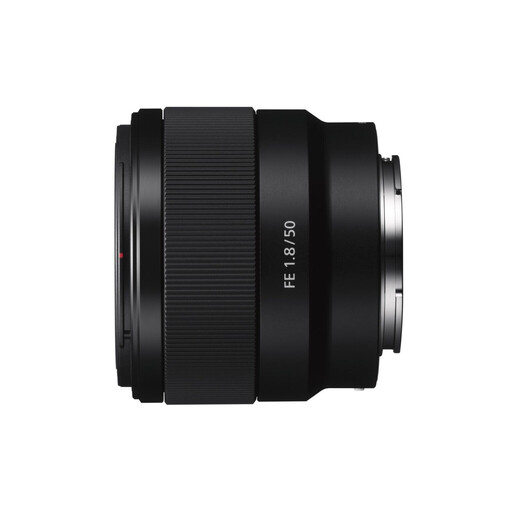
Sony E 50mm f/1.8 OSS Black

Sony E 50mm f/1.8 OSS Black

This may suit you if you use a Sony E camera and want to take close-ups of a watch dial. For small details that need to fill more of the frame, the stated magnification of 0.16× is more limited than 1:1. Check whether it can achieve the framing you want.

The product name lists a fixed focal length of 50 mm and OSS.

Joybuy
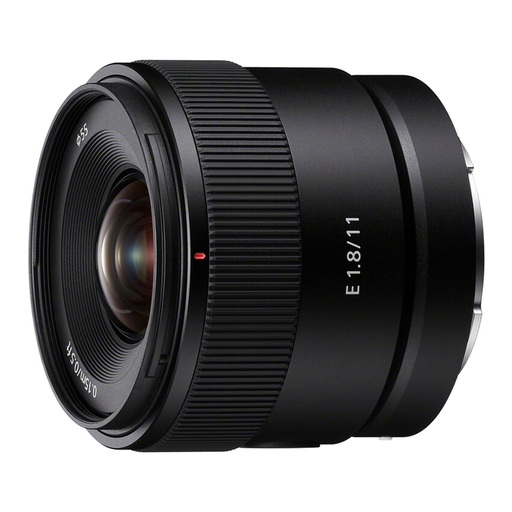
Sony E 11mm F1.8 APS-C Wide Angle Prime Lens SEL11F18

Sony E 11mm F1.8 APS-C Wide Angle Prime Lens (SEL11F18)

The product information mentions close-up photography, but this ultra-wide-angle lens is only a partial match for a macro lens. The stated magnification is 0.13× with AF and 0.20× with MF, so check carefully whether it’s enough for the details on your watch dial.

The product name lists 11 mm, F1.8 and APS-C.

Joybuy

Frequently asked questions

Do you always need a 1:1 macro lens to photograph a full dial?

No, it depends on the size of the dial, your sensor and the framing you want. A wider close-up may be enough for a full dial, while 1:1 or more may be more useful for a small date window.

Is minimum focusing distance the same as the distance between the lens and the watch?

No. Check how much space is left in front of the lens at the magnification you want to use. You may also need room there for your lights and reflection cards.

How can you keep the hands, markers and dial in focus together?

Keep the camera and watch steady. If one shot doesn’t give you enough depth of field, you can combine shots taken at different focus points. Check in advance which camera features and software you’ll need.

How can you reduce reflections and visible dust?

Clean the watch carefully and shape reflections using diffused light and cards. The Laowa / Venus Optics guide covers this as part of the photography set-up; a lens specification alone won’t remove reflections from watch glass.

What are your rights when buying online in the Netherlands?

According to the Dutch government, when you buy online from a business, you’re entitled to a 14-day cooling-off period in many cases, although exceptions apply and the type of seller matters. You’re also entitled to a product that is fit for purpose. The Netherlands has no fixed statutory guarantee period; if a product is faulty, the seller must provide a solution.
