
Photographer with an existing camera
You’re looking for a macro lens that fits your current camera and want to check the exact mount and version before ordering.


First, choose a lens with the right mount, then decide whether you mainly want to photograph the whole wallet or capture small details. A short macro lens may leave little room for lighting. With a longer lens, check the working distance for the specific model and make sure you have enough room to frame the wallet. A tripod and a suitable white balance can help you take consistent photos, but this is not a comparative hands-on lens test.
You’re looking for a macro lens that fits your current camera and want to check the exact mount and version before ordering.
You want to capture the grain of the leather, edges or stitching individually, and need magnification suited to the framing you have in mind.
You take repeatable product photos under artificial light and want enough room for lighting, a stable setup and control over colour.
A good fit if: you have a compatible Fujifilm X or Nikon Z camera and want to keep the distance between the camera and wallet short. Fujifilm specifies 1:1 magnification for the XF30mm at a minimum focus distance of 10 cm; Nikon specifies around 5 cm of clearance in front of the lens for close-ups with the Z MC 50mm.
Bear in mind: at such a short working distance, the lens may take up space you need for a light or diffuser. Fujifilm warns that when shooting close up, the subject may almost touch the front element.
A good fit if: your camera has the correct Sony E, Canon RF, Nikon Z or L-mount, and you want to photograph small details while leaving room for lighting. Sony specifies a working distance of around 13 cm for the FE 90mm at its minimum focus distance.
Bear in mind: check that your tabletop setup gives you enough room to frame the whole wallet as well. You won’t need the maximum magnification for every product photo.
| What to consider | What should you check? | Who is this important for? |
|---|---|---|
| Mount and version | Check your camera’s mount and the lens’s full model designation. | If I want to use the lens on my existing camera, I’ll first check that the mount matches. Around 33% of consumers put compatibility first. |
| Magnification for details | Compare the exact model’s maximum magnification with the framing you want for leather grain or stitching. | If I want to fill the frame with a small detail, maximum magnification is an important selection criterion. Around 27% of consumers prioritise detail magnification. |
| Working distance and lighting | Check the working distance at your desired magnification and the space available on your table. | If I want to position a light or diffuser close to the wallet, I’ll check how much clearance there is in front of the lens. Around 20% of consumers prioritise this space. |
| Colour and sharpness | Test focus and white balance with the artificial light you use; consider a tripod for consistent framing. | For repeatable product photos, I want to assess sharpness and colour in my own setup. Around 20% of consumers prioritise a consistent workflow. |
Minimum focus distance is measured from the sensor, while working distance runs from the front of the lens to the subject. Sony Netherlands explains the difference, which determines how much room your lighting takes up.
Check the working distance at the magnification you want to use, and test where to position your lamp or diffuser.
A maximum macro ratio describes the largest image formed on the sensor. It doesn’t tell you whether the whole wallet will fit well in the frame in your tabletop setup.
Decide in advance which overall and detail shots you need, then compare them with the magnification and available working distance.
Artificial light can affect colour reproduction, and accurate focusing can be difficult in close-up photography. Changing lenses won’t automatically solve these shooting conditions.
Test white balance and focus in your own setup. A tripod can help you keep the framing consistent across product photos.
According to Ondernemersplein, the Dutch government’s business information service, the statutory cooling-off period for consumers does not automatically apply to business purchases.
Before ordering, check whose name you’re buying in and which terms the seller applies to that purchase.
The FE 90mm F2.8 Macro G OSS is a Sony E option for detail work where clearance in front of the lens matters.
The RF 100mm F2.8L Macro IS USM is a Canon RF option for close-up photography.
The Z MC 105mm f/2.8 VR S and Z MC 50mm f/2.8 give Nikon Z users a choice of focal lengths.
The XF30mmF2.8 R LM WR Macro is a shorter macro option for Fujifilm X cameras.
The 105mm F2.8 DG DN Macro | Art is a 1:1 macro option available in several mounts.
The Lumix S 100mm F2.8 Macro S-E100 is an L-mount option for detail photography.
These two Sony E lenses have stated maximum magnifications below 1:1. They’re therefore not equivalent replacements for a macro lens if you want to fill the frame with details such as leather grain or stitching.
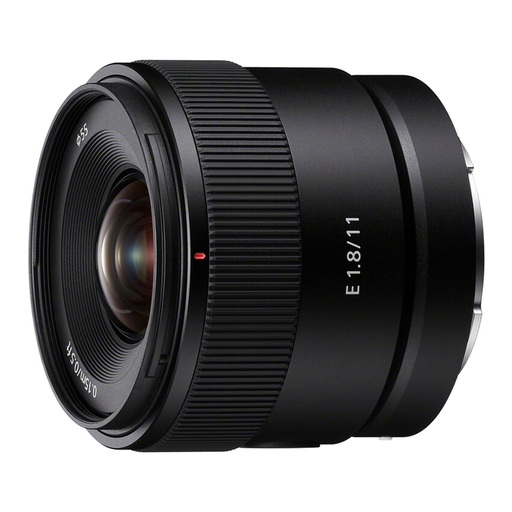 Image unavailable
This Sony E wide-angle lens is an option if you’re after a broad composition, not for filling the frame with macro details.
The stated maximum magnification is 0.13× with autofocus and 0.20× with manual focus; the minimum focus distance is 15 cm.
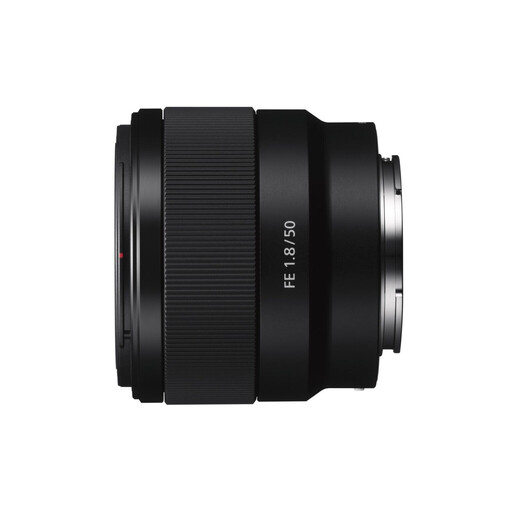 Image unavailable
This Sony E lens is described as suitable for product photography and close-ups, but its stated magnification is not 1:1 macro magnification.
Maximum magnification is 0.16× and the minimum focus distance is 39 cm.
No, 1:1 isn’t necessary for an overall shot. The ratio describes the maximum life-size image on the sensor and is mainly relevant if you want small details to fill the frame. First, decide on the framing you want and how much space you have on your table.
Working distance runs from the front of the lens to the subject and can be much shorter than the focus distance measured from the sensor. Check both distances at the magnification you want to use, and test where to position your lighting.
Use a tripod for consistent framing, check sharpness with test photos and set the white balance for the light you’re using. Canon Netherlands describes focus stacking as a way to combine images taken at different focus points. It requires multiple shots and post-processing, and isn’t automatically a feature of every camera.
For an eligible online consumer purchase, a statutory 14-day cooling-off period generally applies, according to Ondernemersplein, the Dutch government’s business information service. This cooling-off period doesn’t automatically apply to a business purchase. Statutory warranty rights are separate from any commercial warranty; before ordering, check whose name you’re buying in and which terms apply.