Who is this for?

Tool detail photographer

You want to capture small stamps, engravings, cutting edges or traces of wear in close-up. Compare the maximum magnification of a lens that fits your camera, rather than relying on the word ‘macro’ alone. Canon, Nikon and Sony quote different magnifications for their individual models.

Maker with a tabletop setup

You photograph both whole items and close-ups in a limited workspace. The space in front of the lens, along with a repeatable lighting and tripod setup, all play a part. For example, Nikon specifies around 5 cm of space in front of the NIKKOR Z MC 50mm f/2.8 at its closest focusing distance; this measurement applies to that model.

Portfolio creator capturing multiple views

You want both wide shots and sharp images of three-dimensional details. Canon describes a tripod as a tool for taking consistent product photos. Nikon describes focus stacking—combining shots taken at different focus points—as a way to extend depth of field in macro photography.

What should you look for when choosing?

Start with the mount. Then you can weigh up magnification, working space and the portfolio shots you want to take.

What to consider What should you check? Who is this most important for?
Mount and camera Check your camera model and the lens’s exact mount variant. I don’t want to choose a lens that won’t fit my camera. Compatibility is the top priority for around 31% of consumers.
Room for lighting Compare the working distance at the magnification you want, and leave room for lights, a diffuser and a tripod. I want to position lights on a small table without losing my framing. This is the main priority for around 25% of consumers.
Detail magnification Check the maximum magnification of the exact model and the size of the details you want to show. If engravings or traces of wear need to fill the frame, I want to know what magnification I’ll need. Around 25% of consumers prioritise small details.
Overall shots and sharpness Decide on the framing and depth of field you want; check whether your shooting and editing workflow supports focus stacking. For a cohesive portfolio, I want to show whole shapes as well as enough sharpness in three-dimensional details. Around 19% of consumers prioritise this combination.

Common pitfalls

  • Assuming ‘macro’ guarantees 1:1

    Maximum magnification varies by model. Canon quotes up to 0.5x for the RF 85mm F2 MACRO IS STM and up to 1.4x for the RF 100mm F2.8L Macro IS USM.

    Compare the quoted maximum magnification with the smallest detail you want to show in your portfolio.

  • Confusing minimum focusing distance with clear space in front of the lens

    For the NIKKOR Z MC 50mm f/2.8, Nikon specifies around 5 cm between the front of the lens and the subject at the closest focusing distance. This can affect where you’re able to position your lights.

    Check the working distance at the magnification you need, and make sure your lighting setup will fit.

  • Focusing only on magnification and forgetting your portfolio setup

    A tripod can help you keep framing and backgrounds consistent. Focus stacking involves taking multiple shots at different focus points; Nikon describes combining them as a way to extend depth of field in macro photography.

    Plan an overall shot and a detail shot of the same tool, taking lighting and available table space into account.

Relevant brands to consider

Canon

For compatible EOS R cameras, the RF 100mm F2.8L Macro IS USM and RF 85mm F2 MACRO IS STM offer two different options. Canon quotes maximum magnifications of 1.4x and 0.5x respectively for these models.

  • The two models offer different maximum magnifications, so you can match one to the detail framing you want.
  • Check the EOS R mount and the exact model. The word ‘Macro’ alone won’t tell you whether the magnification is right for your subject.

Nikon

For compatible Z cameras, Nikon lists the NIKKOR Z MC 50mm f/2.8 as a 1:1 lens for detail and more general photography. The Z MC 105mm f/2.8 VR S is a medium telephoto macro lens.

  • For the Z MC 50mm f/2.8, Nikon specifies around 5 cm of clear space in front of the lens at the closest focusing distance.
  • This clearance applies to the 50mm at that focusing distance and isn’t a specification for the 105mm. Assess the room available for lighting for each model.

Sony

The FE 90mm F2.8 Macro G OSS, model SEL90M28G, is designed for compatible Sony E cameras. Sony quotes up to 1:1 magnification and optical image stabilisation.

  • The quoted maximum magnification is 1:1.
  • Sony quotes a minimum focusing distance of 0.28 m. This isn’t the same as the clear working distance in front of the lens, and doesn’t on its own tell you how much room you’ll have for lighting.

Sigma

According to Sigma, the 105mm F2.8 DG DN MACRO | Art is available for Sony E and L-Mount and offers 1:1 magnification.

  • Sigma quotes a working distance of around 141 mm at 1:1 for this model.
  • Choose the right mount. Sigma’s statements about image quality are manufacturer claims, not independent measurements for tool photography.

OM SYSTEM

The M.Zuiko Digital ED 60mm F2.8 Macro is a Micro Four Thirds lens. OM SYSTEM quotes a maximum magnification of 1:1 and lists product photography as a possible use.

  • The quoted maximum magnification is 1:1.
  • The manufacturer quotes a minimum focusing distance of 0.19 m; this doesn’t measure the clear space in front of the lens. Also check that the framing suits your subject.

Tamron

According to Tamron, the 90mm F/2.8 Di III MACRO VXD, model F072, is a 1:1 option for compatible Sony E and Nikon Z cameras.

  • Tamron presents flat-field correction as a feature of this model for flat subjects.
  • This is a manufacturer claim. Check separately whether the mount, framing you want and available working space suit your tools.

Joybuy products

The Sony E lenses below are described as suitable for close-up or product photography. Their quoted maximum magnifications are below 1:1, so check whether the framing will be sufficient if you want to show very small tool details.
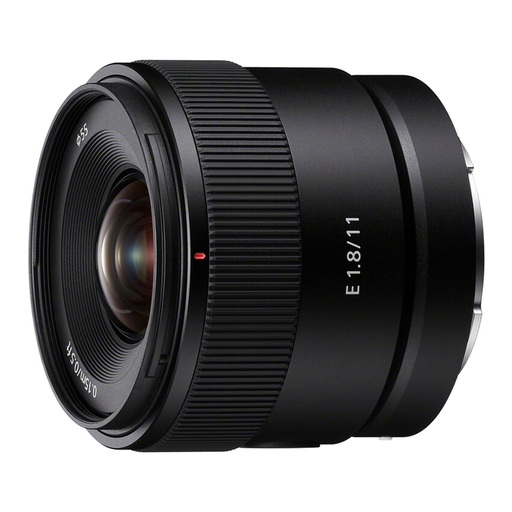
Sony E 11mm F1.8 APS-C wide-angle lens (SEL11F18)

Sony E 11mm F1.8 APS-C wide-angle lens (SEL11F18)

The product description mentions close-up photography; check whether a wide-angle lens suits the framing you want for your tools.

Quoted maximum magnification: 0.13x with AF and 0.20x with MF. This is not 1:1 magnification.

View at Joybuy

Sony E 50mm f/1.8 OSS Black

Sony E 50mm f/1.8 OSS Black

The product description mentions product and close-up photography; compare the framing you want with the details you need to capture.

Quoted maximum magnification: 0.16x. Check whether this will be enough before choosing it for very small details.

View at Joybuy

Frequently asked questions

Do I need 1:1 magnification for every portfolio photo?

No. For a photo of the whole tool, decide on the framing you want first; 1:1 becomes most relevant when you want a small detail to appear larger in the frame. Check the maximum magnification of the exact model: Canon quotes up to 0.5x for the RF 85mm and up to 1.4x for the RF 100mm.

How can I keep different tool photos consistent?

Where possible, use a fixed table and tripod setup, and keep your framing, background and exposure consistent. Canon describes a tripod as a tool for taking consistent product photos.

What can I do if only a narrow strip of a three-dimensional detail is in focus?

You could see whether focus stacking would suit your workflow. This involves combining shots taken at different focus points. Nikon describes the technique as a way to extend depth of field in macro photography; check that your camera and software support the steps involved.

What warranty and return rights apply when buying online in the Netherlands?

For many distance sales to consumers by a business, a 14-day cooling-off period applies, according to the Dutch government; check which exceptions apply. You’re also covered by the statutory guarantee if a product used normally doesn’t meet what you could reasonably expect from it, as explained by ACM ConsuWijzer. This answer doesn’t automatically confirm that the same rights apply to a business purchase.
