
Detail seeker
You want to capture fine web strands or dewdrops in close-up, so you compare magnification, working distance and focusing options.


First, choose a lens that fits your camera mount. Then decide whether you want to photograph the whole web in its surroundings or focus on fine strands and droplets. A longer macro focal length can help you keep your distance from the web, while a lighter lens may be more comfortable to carry on a long walk. Neither choice automatically makes a lens resistant to salt water or sand.
You want to capture fine web strands or dewdrops in close-up, so you compare magnification, working distance and focusing options.
You carry your camera for long periods and want a manageable macro lens without compromising on the close-up capability you need.
You want a useful lens for your current camera body. When shooting outdoors, you also consider moisture, dust and the rules of the area you’re visiting.
| What to consider | What should you check? | Who is this most important for? |
|---|---|---|
| Compatibility | Note down your exact camera model and check the mount. If the lens comes in several versions, make sure you choose the right one. | If I want to use the lens with my existing camera, I check the mount first; around 36% of consumers put compatibility first. |
| Detail and working distance | Compare the maximum magnification with the framing you want. If necessary, check the working distance in front of the lens, not just the minimum focusing distance. | If I want a fine strand or droplet to fill the frame, magnification and where I can shoot from both matter; around 29% of consumers prioritise web detail and working distance. |
| Weight to carry | Compare the stated weight of the exact lens version with the weight of your camera. | If I have to carry my kit for the whole coastal walk, a lighter lens matters more to me; around 21% of consumers make portability their main priority. |
| Outdoor use and focusing | Read the weather-sealing information for the lens and camera, and consider whether you want to use manual focus or focus stacking. | When outdoor conditions are changeable, I want to know how to use my equipment carefully and focus on the web; around 14% of consumers prioritise manageable outdoor use. |
A close-up lens may be suitable for photographing a whole web, but it may offer less maximum magnification for small droplets. For example, Canon lists 0.5x for the RF 85mm F2 Macro.
Compare the stated maximum magnification ratio with the framing you want, rather than relying on the product name alone.
The minimum focusing distance and the space between the front of the lens and the web are two different distances. So the first figure alone doesn’t tell you how much room you’ll have at maximum magnification.
Check the working distance for the exact model if you can only approach the web from a footpath.
A weather-sealing specification or an IPX1 rating does not prove general resistance to salt water or sand.
Read the care instructions for both your lens and camera, and limit their exposure to spray and sand.
If you have a compatible Canon RF camera, the RF 100mm F2.8L and RF 85mm F2 are two different options for close-up photography.
The NIKKOR Z MC 105mm f/2.8 VR S is designed for a compatible Nikon Z camera.
The FE 90 mm F2.8 Macro G OSS is a 1:1 option for a compatible Sony E camera.
The M.Zuiko ED 60mm F2.8 Macro is an option for a compatible Micro Four Thirds camera.
The 90mm F/2.8 Di III MACRO VXD is available in separate versions for Sony E and Nikon Z.
This selection includes Sony E lenses for close-ups, wider framing or zoom range. Their stated magnification ratios are limited if you want to capture fine web strands filling the frame.
 No image available
The product description mentions close-up and macro photography. Check whether the maximum magnification ratio of 0.16 is sufficient for the web details you want to capture.
Maximum magnification ratio: 0.16. Weight: 202 g.
 No image available
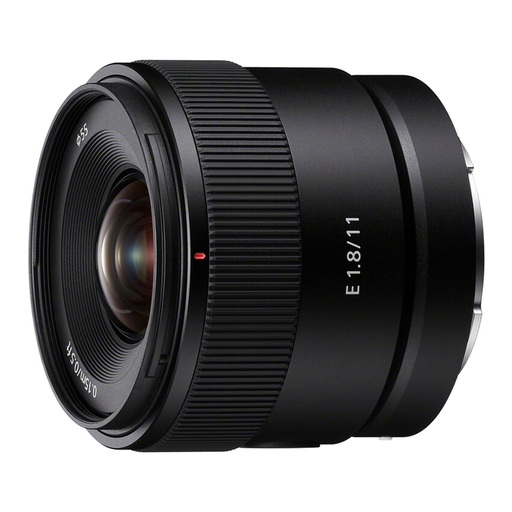
This ultra-wide-angle lens may suit you if you want to frame the web with more of its surroundings, but not if you want to magnify fine details significantly.
Angle of view: 104°. Minimum focusing distance: 0.15 m. Maximum magnification ratio: 0.13 with AF and 0.20 with MF. Weight: 181 g.
 No image available
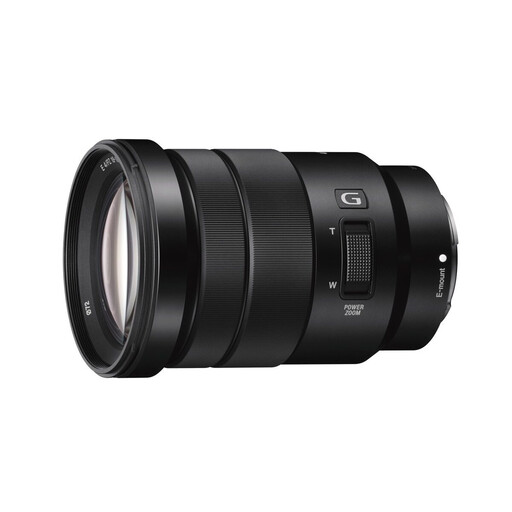
The zoom range may be useful if you want to frame the web with more of its surroundings. Check whether the maximum magnification ratio of 0.11 is enough for the details you’re looking for.
Zoom range: 18–105 mm. Maximum magnification ratio: 0.11. Weight: 427 g. The product description mentions optical image stabilisation.
No, not if you want to show the whole web and its surroundings. Maximum magnification may be more relevant for a small section of the web, so decide first how you want to frame the shot.
Choose your focus plane deliberately, using manual focus if needed. Focus stacking combines separate shots taken with different focus points to increase depth of field. Consider whether the web will stay still enough during those shots.
In the Netherlands, consumers who buy online generally have a statutory 14-day cooling-off period after delivery, subject to exceptions, according to ACM ConsuWijzer. The statutory guarantee is separate from any manufacturer’s warranty: if a product does not perform as you could reasonably expect under normal use, the retailer is your point of contact.
It depends on the area you’re visiting. Staatsbosbeheer generally allows walking in the Schoorlse Duinen only on official paths, with specific exceptions; check the signs and local rules where you are. According to the Dutch government, provinces set the rules for their areas, so the rule for Schoorl does not automatically apply to all coastal areas.