
Dewdrops and fine details
If you want to capture individual drops and fine threads in close-up, focus on magnification, working distance and precise focusing. Zoom.nl and Canon Nederland offer advice on macro photography and focusing.


Start by deciding whether you want to photograph the whole web in its surroundings or capture dewdrops and fine threads in close-up. Then check the camera mount, maximum magnification and working distance in front of the lens. A short minimum focusing distance doesn’t tell you how much room you’ll have between the lens and the web.
If you want to capture individual drops and fine threads in close-up, focus on magnification, working distance and precise focusing. Zoom.nl and Canon Nederland offer advice on macro photography and focusing.
If you want the spider’s web to stand out in its surroundings, choosing the right composition matters more than the highest possible magnification. Canon Nederland and Fujifilm X Nederland outline options for different compositions.
If you also photograph other subjects while out walking, weigh up a lens’s weight and versatility against its extreme close-up capabilities. Canon Nederland and Fujifilm X Nederland provide examples of these different lens choices.
First decide whether you want to frame the whole web or isolate small details. Working distance, magnification, portability and suitability for other subjects will then help you decide which trade-offs work for you.
Best for: compositions that show the web and its holiday surroundings together, or if you want one lens for several subjects.
Trade-off: working close to the web can limit the room available for framing and lighting. Also check that the magnification is enough to capture individual drops.
Best for: picking out threads, dew or part of the web, while leaving more room in front of the lens.
Trade-off: you may need to step further back to capture the whole web in a wider shot. The minimum focusing distance alone doesn’t tell you how much working distance you’ll have in front of the lens.
Best for: photographing individual drops or very small structures. Canon lists 1.4x magnification for the RF 100mm, while OM SYSTEM lists 2x actual magnification for the 90mm.
Trade-off: this level of magnification isn’t essential for photographing a whole web, and precise focusing becomes more important. The OM SYSTEM lens mentioned is for Micro Four Thirds.
| What to consider | What to check before buying | Who it matters to |
|---|---|---|
| Working distance and composition | Check the mount, angle of view on your sensor and working distance at the magnification you want. The minimum focusing distance doesn’t measure the clear space in front of the lens; Zoom.nl explains the difference. | I want to capture the whole web in its surroundings and have enough room to frame the shot; around 33% of consumers prioritise working distance and composition. |
| Dewdrops and fine threads | Check the maximum magnification of the exact model. Canon lists 1.4x for the RF 100mm; OM SYSTEM lists 2x actual magnification for the 90mm. | If I want to capture dewdrops or individual threads in close-up, I look for magnification and precise focusing; around 27% of consumers prioritise fine details. |
| Weight and damp weather | Compare the weight of the version with the correct mount and check the weather-sealing conditions. Sigma stresses that being resistant to light rain is not the same as being waterproof. | When out walking, I want to consider the weight I’ll be carrying and the morning damp; around 20% of consumers prioritise portability and moisture protection. |
| Use for other subjects | Think about what other subjects you’ll want to photograph on holiday and check that the lens mount is compatible with your camera. | I want to use the lens for other subjects on the same holiday, not just extreme close-ups; around 20% of consumers prioritise versatility. |
The macro label doesn’t tell you how much magnification a lens offers. A 1:2 ratio may be enough for a wider shot of a web, but could be less suitable if you want to capture fine details in close-up.
Check the maximum magnification of the exact lens model and make sure it suits the composition you want to create.
If a lens doesn’t offer the magnification you need, you may end up buying a second one for detail shots.
The minimum focusing distance doesn’t tell you how much clear space there’ll be in front of the lens. Fujifilm lists a minimum focusing distance of 10 cm for the XF30mm and explains that, at maximum magnification, the subject is almost touching the front of the lens.
Ask about the working distance at the magnification you want to use, especially if you need room around the web or for lighting.
Sigma distinguishes between using its 105mm lens in light rain and waterproofing. Canon also warns that sealing doesn’t completely prevent moisture from getting inside.
Read the conditions for using the lens and camera together, and protect your equipment in wet weather.
Moisture can damage equipment and lead to a repair bill.
Canon offers RF macro lenses for compatible EOS R cameras, including the RF 85mm F2 and RF 100mm F2.8L.
The FE 90mm F2.8 Macro G OSS is a 1:1 macro lens for compatible Sony E cameras.
The 105mm F2.8 DG DN MACRO | Art is available in separate Sony E-mount and L-mount versions, and offers 1:1 magnification.
The NIKKOR Z MC 105mm f/2.8 VR S is a 1:1 option for compatible Nikon Z cameras.
The M.Zuiko Digital ED 90mm F3.5 Macro IS PRO is a macro lens for Micro Four Thirds.
The XF30mmF2.8 R LM WR Macro is a 1:1 macro lens for compatible X cameras.
The 90mm F/2.8 Di III MACRO VXD, model F072, offers 1:1 magnification in separate versions for Sony E and Nikon Z.
This product selection is aimed at capturing a wider view of the web and its surroundings. The wide-angle lens shown has limited macro magnification, making it less suitable for close-up shots of dewdrops or individual threads.
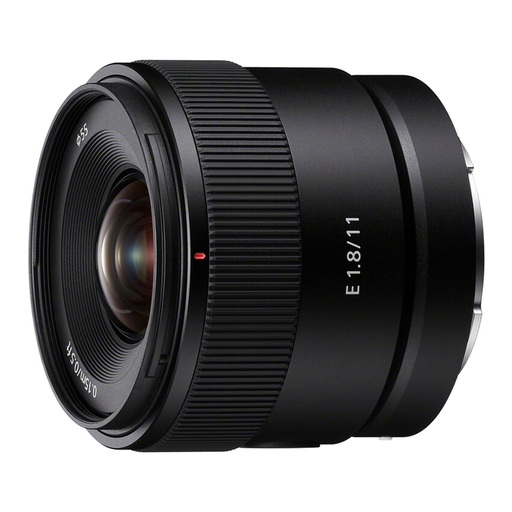 No image available
For those who want to frame the web and its surroundings together in a wide shot. Its limited magnification makes this lens less suitable for close-up detail shots of drops or individual threads.
No, not if you want to capture the whole web. A 1:1 magnification ratio describes how large a small subject can appear on the sensor. Decide on the composition you want first, then check what magnification you need for detail shots.
Focus stacking can help you get more depth in focus in a close-up. Canon describes focus bracketing, which takes a series of shots at different focusing distances. Check whether your camera has this feature, and use a sturdy surface to keep the images aligned.
Follow your lens’s care instructions and protect your equipment from moisture. Sigma explicitly distinguishes between its 105mm macro lens being resistant to light rain and being waterproof.
No, you shouldn’t assume that you can. According to the Rijksoverheid, provinces also set rules for what is allowed in their nature reserves. Check the rules for the specific location and land manager, and avoid disturbing wildlife.
Contact the retailer. According to ACM ConsuWijzer, if a lens doesn’t perform as you could reasonably expect under normal use, the retailer must resolve the issue free of charge in line with the applicable terms.