
Photographers with an existing camera
You’re looking for a lens that fits your camera’s mount, then comparing magnification and handling. Canon Netherlands and Nikon Netherlands describe their lenses for specific camera systems.


Start with your camera’s mount and sensor size: a macro lens needs to be compatible with your camera body. For a full spider web with the garden around it, a wider close-up may be enough. Tiny drops of dew are more likely to call for 1:1 magnification or higher; compare the working distance in front of the lens, too. A tripod keeps the camera steady, but it won’t stop a web moving, and high magnification calls for precise focusing.
You’re looking for a lens that fits your camera’s mount, then comparing magnification and handling. Canon Netherlands and Nikon Netherlands describe their lenses for specific camera systems.
You want to photograph a web between plants without the front of the lens touching the strands or foliage. For the FE 90mm f/2.8 Macro G OSS, Sony Netherlands gives an approximate working distance of 13 cm at the close-up setting discussed.
You want to capture individual drops or fine strands at a large size, and are prepared to focus precisely. Canon Netherlands points out that depth of field is generally shallow in close-up photography.
Choose this if: you want to capture the whole web with the garden around it.
Bear in mind: tiny drops of dew won’t automatically fill the frame.
Choose this if: you want a small part of the web to appear large on the sensor.
Bear in mind: depth of field is shallow, and a stationary camera won’t freeze a moving web.
Choose this if: you want to magnify a very small detail, such as an individual drop.
Bear in mind: the Laowa version mentioned here uses manual focus; you don’t need this level of magnification for every shot of a whole web.
| What to consider | What should you check? | Who is this important for? |
|---|---|---|
| Compatibility | Check your camera model, mount, sensor size and the mount of the exact lens version. | If I want to keep using my existing camera, the mount needs to be right before I compare magnification. Around 31% of consumers put camera compatibility first. |
| Working distance | Compare the space in front of the lens at the magnification you want to use; allow for plants and tripod legs. | If my web is between plants, I want room to frame the shot without touching the strands. Around 25% of consumers prioritise the space available to set up around the web. |
| Magnification | Decide whether you need a wider view of the web, 1:1 or more than 1:1, and check the specifications of the exact version. | If I mainly want to capture a drop of dew or a fine strand at a large size, I look at the maximum magnification. Around 25% of consumers prioritise details this small. |
| Focusing and stability | Check the focusing controls and any stabilisation on the exact lens; consider whether the web moves. | If I’m focusing outdoors, I want to keep my camera steady while also accounting for movement in the web itself. Around 19% of consumers prioritise handling and dealing with movement. |
Not every lens with ‘macro’ in its name offers a 1:1 reproduction ratio. A wider close-up may actually be a better fit for photographing a whole web.
Check the maximum reproduction ratio of the exact version, and first decide whether you want to photograph the whole web or a small detail.
Focusing distance is measured from the sensor and doesn’t tell you directly how much clear space is left in front of the lens. Sony Netherlands makes this distinction for the FE 90mm f/2.8 Macro G OSS, too.
Look up the working distance at your chosen magnification and check there’s room for the camera, tripod and any lighting.
Canon quotes up to 5 stops for the RF 100mm F2.8L Macro IS USM, but specifies 2 stops at 1.0× according to Canon’s testing standards. Stabilisation won’t keep a moving web still, either.
Read the conditions attached to model-specific stabilisation figures, and consider both camera movement and subject movement.
For EOS R cameras, Canon lists RF lenses for macro photography, among other options.
The NIKKOR Z MC 105mm f/2.8 VR S is a 1:1 option for a compatible Nikon Z camera.
Sony lists the FE 90mm f/2.8 Macro G OSS as a 1:1 lens for a compatible Sony E-mount camera.
According to Sigma, the 105mm F2.8 DG DN MACRO | Art is a 1:1 lens available in Sony E and L mounts.
The FFⅡ 90mm F2.8 CA-Dreamer Macro 2X is a manual-focus option for anyone looking for more than 1:1.
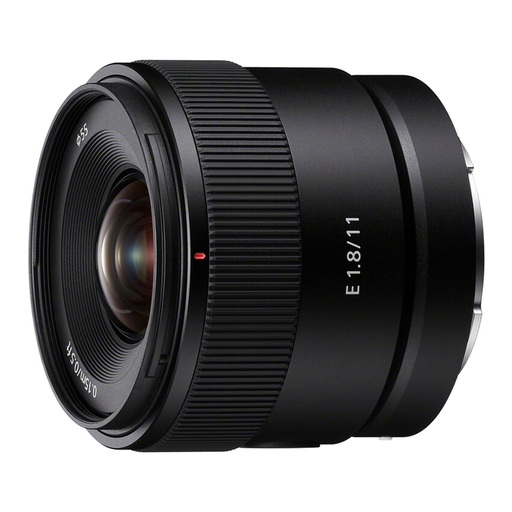
This Joybuy option is best suited to a wider view of the web with the garden in the frame; it isn’t a 1:1 lens for tiny drops of dew.
 No image available
The ultra-wide angle and close-up capability are designed for a wider shot of the web and its surroundings; this model isn’t a 1:1 lens for small details.
The stated angle of view is 104°. Magnification is 0.13× with autofocus and 0.20× with manual focus; the close-up capability starts from 0.15 m.
No. A tripod reduces camera movement, but it won’t keep the web itself still. Check whether the subject is moving and assess the sharpness of your test shots.
No. At 1:1, a subject is reproduced on the sensor at its actual size. For a whole web, you can choose a wider composition; use the maximum magnification when you want a small detail to appear large in the frame.
It depends on how you want to frame the shot: a wider close-up may be enough for a web with the garden around it, while an individual drop or fine strand is more likely to call for 1:1 magnification or higher. Also check that the working distance leaves enough room between the lens, the web and the plants.
According to ACM ConsuWijzer, online purchases generally come with a statutory cooling-off period of up to 14 days after delivery, subject to exceptions. Your statutory rights under the guarantee are separate from any manufacturer’s warranty; if a product is faulty, the seller must offer a solution under the applicable conditions.