
Maker of highly detailed miniatures
You want to photograph engravings, brushstrokes or material textures individually, and choose your magnification based on the smallest detail that matters for selling your work.


Start by checking your camera’s mount and deciding how small a detail you want to capture; maximum magnification is a more useful guide than the ‘macro’ label alone. Then compare the space between the lens and the sculpture with your lighting setup, and consider whether you can keep the entire relief in focus. A tripod and, where needed, focus stacking can make a real difference, whatever lens you choose.
You want to photograph engravings, brushstrokes or material textures individually, and choose your magnification based on the smallest detail that matters for selling your work.
You want both the front and back of a three-dimensional piece to look reasonably sharp. So consider a stable camera setup and, if necessary, focus stacking, which combines images taken at different focus points.
You need enough room for your camera and lighting, so the lens doesn’t inadvertently block the light when you’re photographing a glossy figurine.
First check your camera mount and the framing you want. Then consider the room available for lighting and how much of the figurine’s depth will be in focus.
| What to consider | What should you check? | Who is this most important for? |
|---|---|---|
| Magnifying small details | Compare the maximum magnification of the exact lens model with the smallest framing you want; check the mount too. | If I want to capture engravings or fine surface textures clearly, I look at magnification first. Around 31% of consumers prioritise magnifying details. |
| Room for lighting | For the framing you want, measure the distance from the front of the lens to the figurine; don’t look only at the minimum focusing distance. | On a small table, I want to be able to position lights or reflectors without the lens blocking them. For around 25% of consumers, room for lighting is the top priority. |
| Sharpness across the relief | Take a test shot from front to back, and check whether your camera supports focus bracketing if you want to use multiple focus points. | With a sculpture that has deep details, I want both raised and recessed areas to remain reasonably sharp. Around 25% of consumers prioritise sharpness across the depth of the subject. |
| Lens and setup working together | Check the exact mount and model version; also consider whether you have suitable support and lighting for both wider shots and close-up details. | If I’m looking for one lens for the shots I want to take, I also want to know whether it will work with my overall setup. Around 19% of consumers prioritise versatility and their setup as a whole. |
Minimum focusing distance is measured from the image sensor. The space between the front of the lens and the subject is therefore smaller, and affects how much room you have for lighting.
Compare the working distance at the magnification you actually need, and check that your lighting setup will fit.
Macro photography has a shallow depth of field. Higher magnification won’t automatically keep the foreground and background in focus.
Check a test shot of the entire relief before choosing a lens mainly for its highest magnification. Use a tripod and focus stacking if needed.
The macro lenses mentioned are made for different camera systems, and model names can refer to different versions.
Compare the full model name and mount with your camera body, and check which version is on offer.
The ACM explains the statutory guarantee for consumer purchases. According to the KVK, business customers have different protections, and whether consumer protection may apply by analogy depends on the circumstances.
Before ordering, check whether you’re buying as a consumer or a business, and find out which returns and service terms apply to your purchase.
The FE 90mm F2.8 Macro G OSS is a Sony E-mount option for close-up detail shots, with a medium telephoto focal length.
The RF 100mm F2.8L Macro IS USM is a macro option for Canon RF cameras.
The XF30mmF2.8 R LM WR Macro is a 1:1 macro lens for the Fujifilm X system.
The 105mm F2.8 DG DN MACRO | Art is available in separate versions for Sony E and L-Mount.
The NIKKOR Z MC 50mm f/2.8 is a Nikon Z option for detail shots and general photography.
The M.Zuiko Digital ED 90mm F3.5 Macro IS PRO is an option for the Micro Four Thirds system.
These Joybuy picks are two Sony E-mount lenses whose product information mentions close-up or product photography. Their stated magnifications don’t make them equivalent options for high-magnification macro photography, so compare them with the framing you need.
 No image available
Could suit you if you mainly take close-up and product photos, and don’t need to fill the frame with the tiniest details.
The stated maximum magnification is 0.16×, which may limit your ability to capture very small details. Check whether it will give you the framing you want.
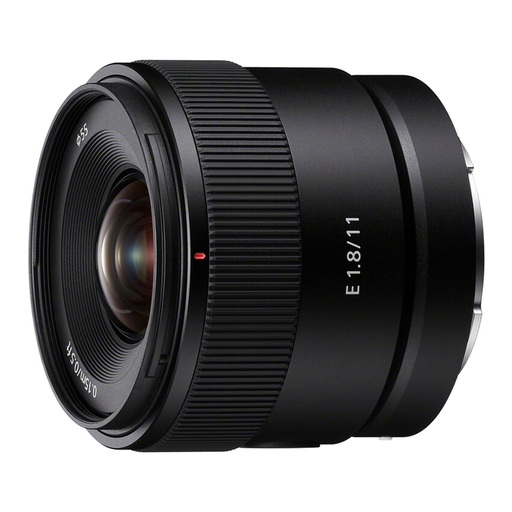 No image available
Relevant only if you specifically want an ultra-wide-angle lens for the shots you have in mind. The product information mentions close-up photography, but positions the lens as an ultra-wide-angle option.
The stated maximum magnification is 0.13× with autofocus and 0.20× with manual focus. These figures may limit its suitability for high-magnification detail shots.
No, it depends on what you want the photo to show. At 1:1, the subject is reproduced at life size on the image sensor. First decide whether you want the whole figurine or a small detail to fill the frame.
At short focusing distances, depth of field is shallow. Keep the camera steady, try different apertures and use multiple focus points if needed. Check separately whether your camera supports focus bracketing.
Follow the manufacturer’s cleaning instructions and keep the lens cap on when the lens isn’t in use. Sony recommends, among other things, a reusable synthetic-fibre cleaning cloth. Check the guidance for your lens and camera.
For consumer purchases, the ACM explains the statutory guarantee you have against the seller. If you’re buying as a business, don’t assume you’ll automatically have the same consumer protection: according to the KVK, whether consumer protection may apply by analogy depends on the circumstances. Before paying, check whether you’re ordering as a consumer or a business, and which service terms apply.