
Photographers capturing shell details
You want to bring ridges and textures into sharp focus. Think about the magnification you need, the depth of field and how much room you’ll have left for lighting.


First, choose a lens with the right mount, then decide whether you want to capture an entire shell or focus on tiny details. For still-life photography, the space available for lighting, a stable setup and the depth of field you want are also important. A macro lens won’t make the background dark by itself: that also depends on your lighting and setup.
You want to bring ridges and textures into sharp focus. Think about the magnification you need, the depth of field and how much room you’ll have left for lighting.
You want the whole shell to stand out against a dark background. Framing, lighting and a stable setup matter just as much as the lens.
You have a camera with interchangeable lenses and want to choose a lens that fits its mount.
| What to consider | What should you check? | Who is this important for? |
|---|---|---|
| Camera mount | Check the exact camera model, mount, sensor size and full lens specification. | I want to check that the lens fits my camera before comparing other features. Around 36% of consumers put camera compatibility first. |
| Lighting and background | Assess the space between the lens and the shell, and test the lighting on the subject and background together. | I want to light the shell without brightening the dark background. Around 29% of consumers give control over lighting their top priority. |
| Magnification | First decide whether you want to frame the whole shell or a small detail, then compare the maximum reproduction ratio. | I want to capture tiny ridges in detail, so I’m considering how much magnification I need. Around 21% of consumers put magnification for small details first. |
| Depth of field | Check the focusing options available on your camera and with your chosen technique; try the framing you want with a stationary shell. | I want as much of the curved shell as possible to be in focus, so I’m considering the setup and focusing method. Around 14% of consumers give depth of field their top priority. |
Maximum magnification varies between lenses, even within the same brand. For example, Canon specifies a maximum of 0.5× for the RF 85mm F2 Macro IS STM and 1.4× for the RF 100mm F2.8L Macro IS USM.
Compare the maximum reproduction ratio with the size of the shell details you want to capture.
Minimum focusing distance is measured from the camera’s sensor. It doesn’t tell you how much space there is between the front of the lens and the shell.
Check how much room you’ll have with your intended framing, including where you can position a light source.
A cramped setup can make it harder to position and direct your lighting.
The lens alone doesn’t determine how dark the background looks in your shot. The lighting on both the shell and the background also plays a part.
Take some test shots and assess the lighting on the subject and background separately.
For the RF 100mm at 1.0×, Canon states a stabilisation effect of 2 stops under its specified test conditions. The general maximum figure therefore won’t necessarily apply in every situation.
Read the conditions attached to stabilisation figures and, if needed, use a stable support for still-life photography.
Canon offers macro lenses for the RF mount, including models with different maximum magnifications.
Nikon offers macro lenses for Z cameras with different focal lengths.
The Sony FE 90mm F2.8 Macro G OSS, model SEL90M28G, is a full-frame lens with a Sony E mount.
The Sigma 105mm F2.8 DG DN MACRO | Art is available in Sony E and L mount versions.
The Laowa 90mm f/2.8 2x Ultra Macro APO is an option if you want to magnify tiny shell details significantly.
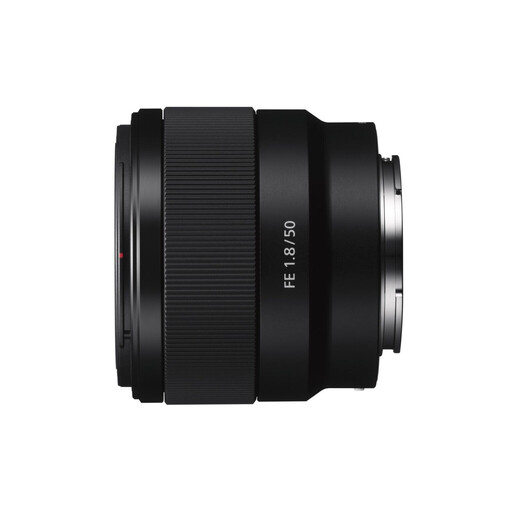
This selection includes a Sony E lens for shell close-ups. Check whether the specified magnification suits the framing you want.
 No image available
The product description mentions close-up and macro photography. Check whether the specified magnification of 0.16× is enough for the shell details you want to capture.
Sony E mount; f/1.8; OSS.
No, you don’t automatically need 2:1 magnification to photograph an entire shell. Choose your framing to suit the size of the shell and what you want to show. Laowa specifies 2:1 as the maximum magnification for the 90mm f/2.8 2x Ultra Macro APO, making it particularly useful for capturing small details.
A macro lens won’t make the background black by itself, and when you focus at close range, only part of the shell may be in focus. Set up the shell and camera securely and assess the lighting on the subject and background separately. Focus stacking may be an option if your camera and technique support it.
No. Sony Netherlands explains that minimum focusing distance is measured from the camera’s sensor, while working distance is the space between the front of the lens and the subject.
According to ACM ConsuWijzer, when you make a standard online purchase as a consumer, you generally have up to 14 days after delivery to change your mind, subject to legal exceptions. The product must also meet what you could reasonably expect of it. If it’s faulty, the seller is responsible for providing an appropriate solution. This doesn’t mean that every lens comes with a fixed warranty period.