
Detail seeker
You want to capture individual seeds or fine structures in close-up, and weigh up magnification, focusing and working distance. Canon Netherlands and Nikon Netherlands highlight that close-up photography may require precise focusing.


Start by checking your camera’s lens mount, then decide whether you want to capture individual seeds in close-up or show the whole seed head against the park surroundings. For individual details, look for 1:1 magnification or higher; for a shot that includes the surroundings, less magnification may be enough. Nikon Netherlands points out that lens stabilisation can help reduce camera shake, but it won’t stop a seed head from moving.
You want to capture individual seeds or fine structures in close-up, and weigh up magnification, focusing and working distance. Canon Netherlands and Nikon Netherlands highlight that close-up photography may require precise focusing.
You want to switch between photographing a seed head and a composition that shows more of the surroundings as you go. Nikon Netherlands explains how stepping back a little can help keep the background and atmosphere in the frame.
You value portability and stabilisation when shooting without a fixed setup. Stabilisation can reduce camera shake, but it won’t automatically solve movement from your subject.
Choose this when: you want to isolate small structures and keep the lens some distance from the seed head, provided the mount is compatible with your camera.
Bear in mind: precise focusing remains important at high magnifications; specifications don’t guarantee results in windy conditions.
Choose this when: very small individual details are your priority and you’re happy to focus manually. Laowa lists a maximum of 2x magnification for the 65mm lens reviewed.
Bear in mind: manual focusing takes extra precision; the stated 17 cm for this model is measured from the subject to the sensor, not from the front of the lens.
Choose this when: you want to show the whole seed head and some of the park, rather than filling the frame with small structures alone.
Bear in mind: magnification below 1:1 gives you less scope to enlarge individual small details. So decide first how much of the surroundings you want in the frame.
| Point to consider | What should you check? | Who is this important for? |
|---|---|---|
| Magnification | Compare the maximum magnification of the exact lens variant with the size of the detail you want to photograph. | If I want to capture individual seeds in close-up, I start with the magnification ratio. Around 37% of consumers prioritise magnifying fine details. |
| Portability and handling | Check the weight and any lens or camera stabilisation of the specific combination; stabilisation won’t automatically prevent subject movement. | For a walk, I want a lens that’s comfortable to carry and use. Around 27% of consumers mainly take handheld photos while on the move. |
| Working distance and composition | Check how much room there is in front of the lens at your desired magnification; don’t assume this is the same as the minimum focusing distance. | If I also want to show the background, I consider the distance at which I can frame the seed head. Around 18% of consumers prioritise working distance and composition. |
| Mount and purchase terms | Check your exact camera model, the precise lens mount, whether an adapter is compatible, the seller and the warranty terms. | Before buying, I want to be sure the lens variant fits my camera and know which terms apply. Around 18% of consumers prioritise compatibility and clarity about their purchase. |
The stated distance may be measured from the image sensor. So, for the Laowa 65mm reviewed, 17 cm doesn’t mean there’s 17 cm between the lens and the seed head.
Check the working distance at the magnification you plan to use, and ask where the stated distance is measured from and to.
Stabilisation can help reduce camera shake, but it won’t solve movement from a seed head. Canon also notes that the stated stabilisation rating may vary at different magnifications.
Distinguish between camera shake and subject movement, and check the stabilisation specifications at the magnification you’ll be using.
The Sigma model reviewed is available in L-Mount and Sony E versions, among others. So the model range alone doesn’t tell you which variant is compatible with your camera.
Before buying, compare your exact camera model with the precise lens mount, and check adapter compatibility separately if needed.
The RF 100mm F2.8L Macro IS USM is worth considering if you have a compatible RF camera and want more than 1:1 magnification.
The NIKKOR Z MC 105mm f/2.8 VR S is designed for users of a compatible Nikon Z camera who want 1:1 magnification and VR.
The 105mm F2.8 DG DN MACRO | Art is for photographers who need the Sony E or L-Mount version.
The M.Zuiko Digital ED 90mm F3.5 Macro IS PRO is an option for a compatible Micro Four Thirds system.
The 65mm F2.8 CA-Dreamer Macro 2X is relevant for APS-C users who want to focus manually, provided the mount is compatible.
This selection features Sony E lenses for close-ups that keep both a seed head and its surroundings in the frame; their stated magnification ratios are below 1:1.
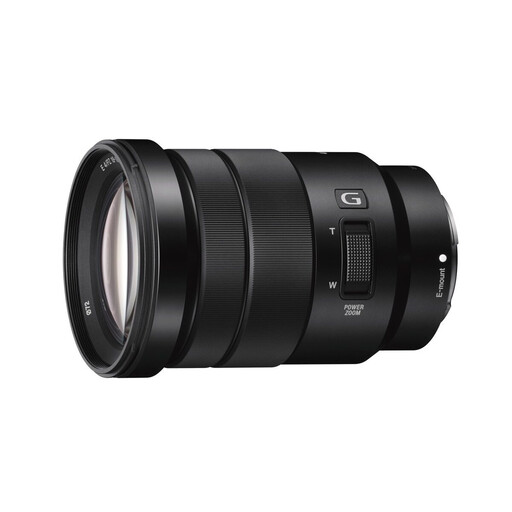 No image available
A good fit if you want to vary the angle of view to frame a seed head with more of the park around it; its stated magnification is less suited to individual small details than 1:1.
Zoom range: 18–105mm; maximum magnification: 0.11; minimum focusing distance: 45 cm; OSS.
 No image available
An option if you want to take close-ups and need a lens with a stated weight of 202 g for taking out and about; its magnification remains below 1:1, so it’s less suited to individual small seed details.
Focal length: 50mm; maximum magnification: 0.16; minimum focusing distance: 39 cm; weight: 202 g; OSS.
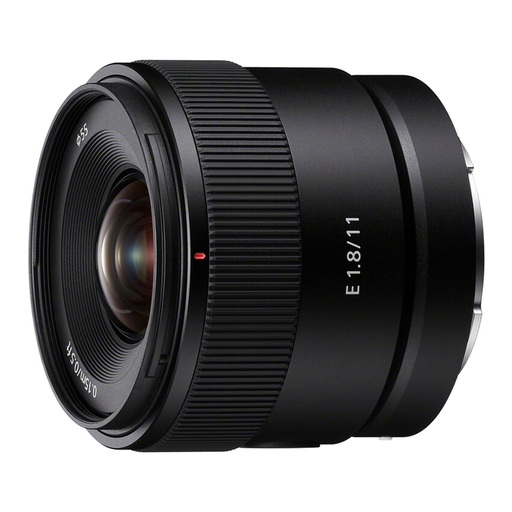 No image available
A good fit if you want to frame a seed head with plenty of its surroundings; its stated magnification is below 1:1, so it isn’t designed to enlarge individual small details.
Angle of view: 104°; minimum focusing distance: 0.15 m; weight: 181 g; maximum magnification: 0.13 with autofocus and 0.20 with manual focus.
No, not always: less magnification may work better for a composition that includes the background. First decide how large you want the seed head to appear in the frame; Nikon Netherlands explains how stepping back a little can help include the background and atmosphere.
Depth of field is shallow when you’re shooting close up, so check your focus plane and adjust the aperture to suit the shot. Focus stacking combines images taken at different focus points, but requires a suitable shooting and editing workflow.
For a standard online consumer purchase, you usually have a statutory cooling-off period of up to 14 days after delivery, subject to legal exceptions, according to the Netherlands Authority for Consumers and Markets. The seller must also supply a product that meets legal requirements; a limited manufacturer’s warranty does not replace your statutory rights against the seller.
This depends, among other things, on how and with whom you share the photo. The Dutch Data Protection Authority notes an exception for use that remains personal and private or is shared with a very limited group. That exception does not apply to wider publication of identifiable people, so you should assess the applicable legal basis for privacy.