Start by checking your camera’s mount, then decide whether you mainly want to photograph a whole stamp or capture small printed details. A suitable close-up lens may be enough for an overall view. For fine details, a higher maximum magnification matters, but a longer lens requires a different set-up, and greater magnification makes focusing more critical. Check sharpness right into the corners, and test the lighting and camera stability on your own table.
Who is this buying guide for?
Collector with an existing camera
You’re looking for a lens that fits your camera and captures whole stamps at a suitable size, without more magnification than you need. Canon Netherlands says that RF and RF-S lenses are designed for EOS R System cameras.
In search of printed details
You want to make fine lines or small features appear larger in the frame, so compare the maximum reproduction ratio of the exact lens model rather than relying on the word ‘macro’ alone. Nikon Netherlands lists 1:1 for the NIKKOR Z MC 50mm f/2.8.
Photographing a collection
You photograph flat stamps repeatedly and pay attention to sharp edges, a stable camera and lighting that isn’t blocked by the lens. Nikon Netherlands recommends using a stable set-up for macro photography.
What should you look for when choosing?
First check your camera mount, then choose based on the framing you want, the space available and the details you need to capture.
| What to consider |
What to look for when buying |
Who is this important for? |
| Compatibility |
Check your camera model, mount and the exact lens version. |
I want to keep using my existing camera and avoid choosing a lens that won’t fit. Around 36% of consumers prioritise compatibility with their current camera body. |
| Framing the whole stamp |
Check the framing with your sensor and measure how much space is available in front of the lens. |
I want to photograph the whole postage stamp on a small table without unnecessary magnification. Around 29% of consumers prioritise this wider view. |
| Fine printed details |
Compare the maximum reproduction ratio of the exact lens and check whether your set-up can keep close-ups stable. |
I want to make small print or paper features appear larger, even if that means focusing more carefully. Around 21% of consumers prioritise magnifying details. |
| Consistent results |
Take a test shot of a flat stamp and check both the centre and the corners. Also make sure there’s room for supports and lighting. |
I want to photograph my collection consistently, so even sharpness and lighting matter to me. Around 14% of consumers prioritise consistent collection images. |
Common buying mistakes
-
Assuming ‘macro’ always means 1:1
According to Canon Netherlands, the Canon RF 35mm F1.8 MACRO IS STM has a maximum magnification of 1:2, while Nikon Netherlands lists 1:1 for the NIKKOR Z MC 50mm f/2.8. So the ‘macro’ label alone doesn’t tell you what reproduction ratio a specific model can achieve.
Compare the stated maximum reproduction ratio with the framing you want and the dimensions of your stamps.
-
Confusing minimum focusing distance with working distance
Minimum focusing distance doesn’t necessarily tell you how much space is left in front of the lens for lighting. OM SYSTEM lists a minimum focusing distance of 0.19 m for the M.Zuiko Digital ED 60mm F2.8 Macro, measured from the sensor plane.
Check the space available in your own set-up, especially if you want to light the stamp from close by.
-
Judging a test photo by the centre alone
The edges and corners can matter when photographing a flat postage stamp. Nikon mentions field curvature correction for the NIKKOR Z MC 105mm f/2.8 VR S. This is a claim about that model, not a guarantee for every camera set-up.
Photograph a flat stamp using your intended settings and check sharpness across the whole image.
-
Assuming the manufacturer’s warranty covers all your legal rights
The Dutch government explains that there is no fixed statutory warranty period in the Netherlands. A manufacturer’s warranty is separate from your rights if a product doesn’t meet expectations.
Keep your proof of purchase and contact the seller about your rights if something goes wrong.
Relevant brands to consider
Canon
Canon offers RF lenses with different focal lengths and maximum magnifications for EOS R System cameras.
- Canon Netherlands lists a maximum of 1:2 for the RF 35mm F1.8 MACRO IS STM and a maximum of 1.4× for the RF 100mm F2.8L Macro IS USM.
- Check that the RF version is compatible with your camera, and choose 1.4× only if that level of magnification suits your subject.
Nikon
The NIKKOR Z MC 50mm f/2.8 and NIKKOR Z MC 105mm f/2.8 VR S are options for Nikon Z cameras.
- Nikon lists a maximum magnification of 1:1 for both models.
- Nikon mentions field curvature correction for the 105mm, including for printed documents. This is the manufacturer’s claim for that model, not an independent comparison.
OM SYSTEM
The M.Zuiko Digital ED 60mm F2.8 Macro is an option for the Micro Four Thirds system.
- OM SYSTEM specifies an actual maximum magnification of 1:1; 2× is the stated full-frame equivalent ratio.
- These ratios aren’t interchangeable. The minimum focusing distance of 0.19 m is measured from the sensor plane, not the front of the lens.
Sigma
The 105mm F2.8 DG DN MACRO | Art is a model in the longer macro lens category.
- This model is worth considering if you’re looking for a longer macro lens.
- Check the specific mount version for your camera.
Tamron
According to Tamron Europe, the 90mm F/2.8 Di III MACRO VXD, model F072, is available in Sony E and Nikon Z versions.
- Tamron describes this model as a 1:1 macro lens.
- The Sony E and Nikon Z versions aren’t interchangeable, so check your camera’s mount.
Joybuy products
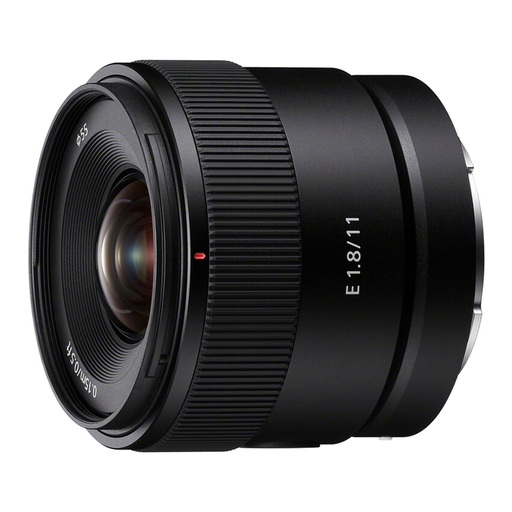
The Joybuy lenses below are two Sony E lenses described as suitable for close-ups. Their stated maximum magnification is below 1:1, so check whether it’s enough for your stamps and the framing you want.
 No image available
Sony E 11mm F1.8/APS-C Wide Angle Prime Lens (SEL11F18)
The product information mentions close-up photography with a compatible Sony E camera. The maximum magnification is 0.13× with AF and 0.20× with MF, so it’s below 1:1.
11 mm, F1.8, APS-C and Sony E mount.
View at Joybuy
 No image available
Sony E 50mm f/1.8 OSS Black
The product information mentions close-up and macro photography with a compatible Sony E camera. Its stated maximum magnification of 0.16× is below 1:1.
50 mm, f/1.8 and Sony E mount.
View at Joybuy
Frequently asked questions
Do you need a 1:1 macro lens for every postage stamp?
No, not if you mainly want to capture a whole stamp and your current lens gives you the framing and sharpness you need. For fine details, compare the maximum reproduction ratio of the exact lens model. Nikon Netherlands describes 1:1 as a life-size ratio on the sensor.
How can you avoid blur and shadows on a small table?
Keep the camera steady, check the plane of focus with test shots and position the light so the camera or lens doesn’t cast an unwanted shadow. Canon Netherlands explains that depth of field decreases when you photograph from closer up. Only check for focus bracketing if your camera and lens combination supports it.
What extra costs and after-sales support should you check before buying?
Check that your camera support and lighting are suitable for the set-up you have in mind, and that any adapter is compatible with your camera and lens. The Dutch government says there’s no fixed statutory warranty period in the Netherlands. A manufacturer’s warranty is separate from your rights if a product doesn’t meet expectations.
What applies to an online purchase in the Netherlands?
For many distance purchases made by consumers, there is a 14-day cooling-off period. The Dutch government points out that the rules and exceptions can vary by purchase, so check the terms for your specific order.


