
Online shop owner with an existing camera
You want to choose a lens that fits your camera and has the right mount. Canon, Nikon, Sony, Sigma and Tamron offer researched models for a range of camera mounts.


First, choose a lens with the right mount for your camera. Then decide whether you mainly want to photograph the whole pocket watch or capture small details. A longer macro focal length can give you more room in front of your subject. Nikon explains how focal length affects working distance, although this distance varies by model and magnification. To keep more of the dial, case and chain in focus, you may need focus stacking: Canon Europe describes this as combining several shots taken at different focus points.
You want to choose a lens that fits your camera and has the right mount. Canon, Nikon, Sony, Sigma and Tamron offer researched models for a range of camera mounts.
You want to capture engravings and details on the dial separately. Compare the maximum magnification of the specific model: Canon, Nikon, Sony, Sigma and Tamron publish different figures for the lenses reviewed.
You want room for lighting and a repeatable workflow when photographing reflective watches. Nikon explains the relationship between focal length and working distance, while Canon Europe describes focus stacking using multiple shots.
First, check that the lens fits your camera. Then compare magnification and working space with what you want to photograph and how you use your lighting setup.
| Consideration | What to look for when buying | Who is this important for? |
|---|---|---|
| Mount and camera compatibility | Check your camera model, its mount and the exact version of the lens. | If I want to keep using my existing camera, the lens version must fit it. Around 31% of consumers give camera compatibility their highest priority. |
| Magnification for details | Compare the maximum magnification with the smallest engraving or dial detail you want to show. | For a close-up of small lettering, I want to know how large those details will appear in the image. Around 25% of consumers put detail magnification first. |
| Working space and reflections | Check the working distance at the magnification you use; it is not the same as the minimum focusing distance. | When photographing a reflective watch, I want room to position my lighting and frame the shot. Around 25% of consumers give this working space their highest priority. |
| Sharpness across the whole watch | Check whether your camera or software supports focus bracketing and image stacking. | If I want the dial, case and chain to appear sharp in a product series, I need a suitable focusing workflow. Around 19% of consumers put sharpness across the whole product and a repeatable approach first. |
According to Canon, the reviewed Canon RF 85mm offers up to 0.5× magnification, while the RF 100mm offers up to 1.4×. These figures mean the lenses can capture small details at different sizes.
Compare the maximum magnification of the exact lens version with the smallest detail you want to photograph.
The minimum focusing distance does not, on its own, tell you how much clear space there will be between the lens and the watch. For your lighting setup, the working distance at your chosen magnification is what matters.
Check the working distance at the magnification you want to use, then test it with your own setup.
Focus stacking is a separate shooting and editing technique. Uw-ProductFotograaf describes macro photography and focus stacking for watches and jewellery; the technique involves combining several shots.
Consider the lens, lighting and focusing workflow together before photographing an entire stock of products.
The RF 100mm F2.8L Macro IS USM and RF 85mm F2 MACRO IS STM are options for cameras with a compatible RF mount.
The NIKKOR Z MC 50mm f/2.8 and NIKKOR Z MC 105mm f/2.8 VR S are macro options for cameras with a Nikon Z mount.
The FE 90 mm F2.8 Macro G OSS is a 1:1 macro option for cameras with a Sony E mount.
The 105mm F2.8 DG DN MACRO | Art is available with either a Sony E or L mount.
The 90mm F/2.8 Di III MACRO VXD, model F072, is available for Sony E and Nikon Z mounts.
This Joybuy lens is designed for product photography and close-ups with a Sony E camera. It is not a 1:1 macro lens, so choose it only if you do not need that level of magnification to show the details you have in mind.
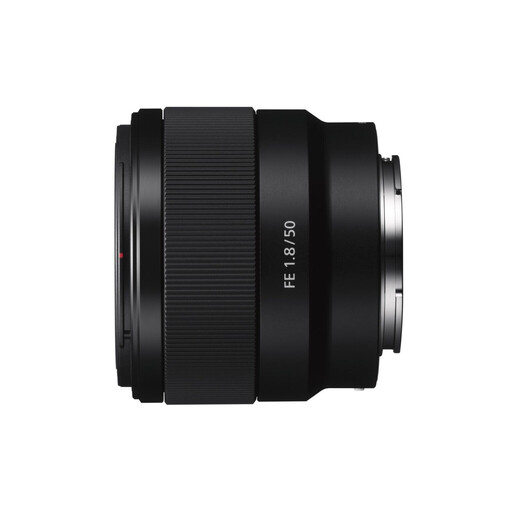 No image available
Could be suitable for product photography and close-ups if you do not need 1:1 magnification.
50 mm; f/1.8; OSS; black finish.
Check that the mount fits your camera and that the magnification is sufficient for the smallest details you want to photograph.
No. 1:1 is mainly useful when you want to fill the frame with small details. For a photo of the whole watch, first check whether you can frame it properly. Canon lists maximum magnification of 0.5× for the RF 85mm F2 MACRO IS STM; several Nikon, Sony, Sigma and Tamron models reviewed are specified as 1:1.
If a single shot does not provide enough depth of field, you can combine several shots taken at different focus points. Canon Europe describes this technique as focus stacking; check that your camera and software support the required shots and image stacking.
Check the working distance at the magnification you want to use; the minimum focusing distance does not, on its own, tell you how much clear space there will be in front of the lens. Sigma lists a working distance of 141 mm at 1:1 for the 105mm F2.8 DG DN MACRO | Art.
Before ordering, check your camera’s mount and the exact mount version of the lens. Nikon lists the NIKKOR Z models reviewed for Z mount; Sony lists the FE 90 mm for E mount, while Sigma and Tamron offer the models mentioned in separate mount versions.