
Detail hunter on a woodland trail
Wants to capture the scales of an accessible pine cone in close-up and compare magnification with the space in front of the lens.


Start by choosing a lens with the right mount. A shorter lens can be practical for photographing an entire pine cone and other subjects on a walk, while a 90–105 mm macro lens may suit you if you want to capture scale details with more space in front of the lens. Compare the working distance, weight and stabilisation of each model; the minimum focusing distance doesn’t tell you how much space there is between the front of the lens and your subject.
Wants to capture the scales of an accessible pine cone in close-up and compare magnification with the space in front of the lens.
Wants to photograph close-ups and other subjects on the same walk, and pays attention to weight and focusing distance.
Takes photos in changing woodland light and compares stabilisation and ease of focusing, without assuming either guarantees sharp photos.
Choose this if: you have a compatible Nikon Z or Micro Four Thirds camera, want to walk with one lens and also photograph an entire pine cone or other subjects.
Bear in mind: at high magnification, the front of a short lens can come close to your subject; Nikon describes this for the Z MC 50mm.
Choose this if: you want to isolate scale details and the lens mount is compatible with your camera.
Bear in mind: compare the working distance, weight and stabilisation of the exact version; Sigma lists a working distance of 141 mm at 1:1 for its 105mm model.
Choose this if: you mainly want to show the whole pine cone in its surroundings and don’t need the scales to fill the frame.
Bear in mind: check the maximum magnification of the exact lens; its name alone doesn’t tell you how much of the subject will fill the frame.
| What to consider | What should you check? | Who is this important to? |
|---|---|---|
| Compatible camera mount | Check the exact camera, mount and lens version; don’t assume Sony E, Nikon Z, Canon RF and Micro Four Thirds are interchangeable. | I want to make sure the lens fits my camera before anything else, so I don’t choose an incompatible mount. Around 33% of consumers prioritise a compatible camera mount. |
| Magnification and working distance | Compare the maximum magnification with the working distance at that magnification. Sigma lists a working distance of 141 mm at 1:1 for its 105mm model; Nikon describes photographing with the front of the Z MC 50mm just centimetres from the subject. | If I want to capture the scales in close-up, I want to know how much space I’ll have in front of the lens. Around 27% of consumers prioritise magnification and working distance for detailed shots. |
| Weight and use on the go | Check the weight of the exact version and consider whether you can achieve your desired framing from the path. OM SYSTEM lists its M.Zuiko Digital ED 60mm F2.8 Macro at 185 g; Nikon also describes the Z MC 50mm as suitable for everyday photography. | I don’t want to take a macro lens on a walk only to photograph one type of subject. Around 20% of consumers prioritise portability and versatility. |
| Focusing and stabilisation | Check whether the exact model has optical stabilisation and read the conditions attached to the stated figures. Canon lists up to five stops for the RF 100mm, but two stops at 1.0× under its own test conditions; Sony lists Optical SteadyShot for the FE 90mm. | When shooting handheld in woodland light, I want to take camera shake into account without treating stabilisation as a guarantee. Around 20% of consumers prioritise handling and control of camera shake. |
The product name doesn’t automatically tell you what magnification or working distance you’ll get for the framing you want.
Compare the maximum magnification of the exact lens with your subject: an entire pine cone or the details of a single scale.
Lenses may come in different mounts or versions. A model name similar to that of your current lens doesn’t prove that it will fit your camera.
Before buying, check the full camera and lens details and compare the mounts.
Canon lists up to five stops of optical stabilisation for its RF 100mm, but two stops at 1.0× under its own test conditions.
Read the conditions attached to the stabilisation figure, and assess stabilisation and precise focusing separately.
Rules can vary from one area to another. Natuurmonumenten does not allow foraging in its areas; other land managers may have different rules.
Check the signs and rules for the area, and photograph an accessible subject from a place where this is permitted. Natuurmonumenten says you don’t need to ask permission to take photos for your own recreational use, as long as you follow its site rules.
The NIKKOR Z MC 50mm f/2.8 is a Nikon Z lens for anyone looking to combine macro with everyday photography.
The FE 90 mm F2.8 Macro G OSS is a Sony E option to consider for handheld 1:1 close-ups.
The RF 100mm F2.8L Macro IS USM is a Canon RF option for anyone looking for more than 1:1 magnification.
The 105mm F2.8 DG DN MACRO | Art is a mid-telephoto macro lens; choose the version with the right mount.
The M.Zuiko Digital ED 60mm F2.8 Macro is a Micro Four Thirds option for anyone who keeps an eye on lens weight when out walking.
These Joybuy picks are aimed at close-ups with less than 1:1 magnification. They’re for anyone who wants to capture a pine cone with more of its surroundings, or as part of a walking shot—not for scale details that fill the frame.
 No image available
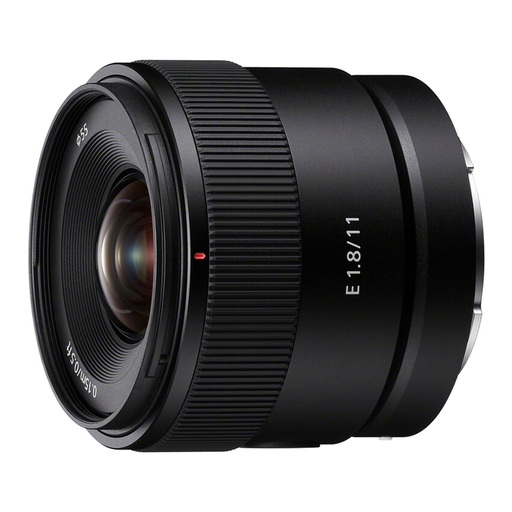
Worth considering if you want to include more of the surroundings when photographing a pine cone. Check that the Sony E mount is compatible with your camera. Magnification is below 1:1, so this model is less suited to scale details that fill the frame.
 No image available
An option for close-ups on a walk if the Sony E mount is compatible with your camera. OSS is included in the model name; magnification is below 1:1, so this isn’t the same choice as a 1:1 macro lens for capturing scale details in close-up.
No. Start with the framing you want; 1:1 is mainly relevant if you want small details to appear large on the sensor. The Nikon Z MC 50mm and OM SYSTEM 60mm both offer 1:1, but each requires a compatible camera mount.
No, you need to check the working distance for that. Sigma lists a working distance of 141 mm at 1:1 for its 105mm macro lens; Nikon describes photographing with the front of the Z MC 50mm just centimetres from the subject.
Keep your lens caps handy and consult the manual for your chosen lens for advice on use and cleaning. Check weather-sealing claims for the exact model; a claim about a lens doesn’t automatically guarantee that the complete camera-and-lens combination is waterproof.
The Dutch government outlines statutory guarantees alongside any manufacturer’s or retailer’s guarantee. For distance purchases, you generally have a 14-day cooling-off period; check the applicable terms and exceptions for your order.
It depends on the area and its access rules. Natuurmonumenten says you don’t need to ask permission to take photos for your own recreational use, as long as you follow its site rules; this land manager does require permission for professional or commercial productions and photography workshops. Check the signs on site and stay on the paths where required; this isn’t a general permit for all Dutch woodlands.