
Photographer with an existing camera
Wants to find a lens that fits their camera’s mount and sensor before letting magnification or brand sway their decision. The Consumentenbond points out that the mount can vary between camera systems.


First, check that the lens mount and sensor coverage are compatible with your camera. Then choose a lens to suit the photo you want to take: a shorter, wider lens can show more of the garden, while a macro lens with 1:1 magnification reproduces tiny details life-size on the sensor. Also consider the space in front of the lens and how precisely you can focus. The Consumentenbond explains why choosing the right mount matters, while Cameranu outlines the difference between a shot that includes the surroundings and a close-up.
Wants to find a lens that fits their camera’s mount and sensor before letting magnification or brand sway their decision. The Consumentenbond points out that the mount can vary between camera systems.
Wants to photograph a mushroom close to the ground while showing some of the garden around it. Cameranu describes the choice between including the surroundings and capturing tiny details.
Wants to capture features such as gills or surface textures at a large size, and is happy to take the time to focus carefully and keep the camera steady. DIGIFOTO Pro explains what 1:1 magnification means; Nikon highlights the shallow depth of field in macro photography.
Start with compatibility, then decide whether you need to capture more of the garden, fine details or enough room in front of the lens. The Consumentenbond, Cameranu and DIGIFOTO Pro explain the differences that can guide your choice; the percentages below do not represent measured preferences.
| Factor to consider | What to look for | Who is it for? |
|---|---|---|
| Compatibility | Check the camera model, lens mount and sensor coverage for the exact lens version. | If I’m looking for a lens for my existing camera, I want to be sure the mount and sensor format are compatible. Around 36% of consumers put compatibility first. |
| Including the surroundings | Compare the angle of view with the framing you want and check the maximum magnification. | If I want to photograph the mushroom with leaves and garden around it, the framing I want matters more than the highest magnification. Around 29% of consumers prioritise this kind of garden scene. |
| Fine details | Check the maximum magnification of the exact model; the word ‘macro’ alone doesn’t tell you how much detail you can capture. | For an image that shows tiny features such as gills at a large size, I look at the magnification and how precisely I can focus. Around 21% of consumers make detail magnification their main consideration. |
| Working space and set-up | Compare the working distance at your preferred magnification with the space in front of the lens, the available light and the need for a stable, low camera position. | If leaves or the ground are close to the mushroom, I want to leave enough room for the camera and light. Around 14% of consumers prioritise space for setting up their shot. |
Despite the brand name or macro label, a lens may have a different mount or lower maximum magnification than you need.
Check the exact camera model, mount, sensor coverage and maximum magnification of the version you want to buy.
Minimum focusing distance is measured from the camera’s sensor. The clear space between the front of the lens and the subject is shorter. Nikon gives a working distance of around 5 cm for the NIKKOR Z MC 50mm f/2.8 at its closest setting.
Compare the working distance at your preferred magnification to make sure you have room for light and a low camera position.
You don’t always need the highest possible magnification to photograph a whole mushroom with its surroundings. Macro photography can also have a very shallow plane of focus, as Nikon explains.
First decide whether you want to capture the surroundings or get a close-up of tiny details. Then choose a set-up that lets you focus precisely and keep the camera steady.
For Nikon Z cameras, options include 50mm and 105mm macro lenses with 1:1 magnification. Nikon also says the 50mm is suitable for everyday photography.
For compatible EOS R cameras, the models mentioned range from the wider RF 24mm with a close-up function to the RF 100mm macro lens.
Sony describes the FE 90 mm F2.8 Macro G OSS as an E-mount lens with 1:1 magnification and optical image stabilisation.
Sigma offers the 105mm F2.8 DG DN MACRO | Art as a 1:1 macro lens, in separate versions for Sony E and L-Mount.
According to the manufacturer, the Laowa 65mm f/2.8 2x Ultra Macro APO is designed for APS-C cameras and offers up to 2:1 magnification.
These Joybuy options are Sony E lenses for capturing a wide garden scene or taking limited close-ups. If your main aim is to photograph tiny mushroom details, check the magnification carefully.
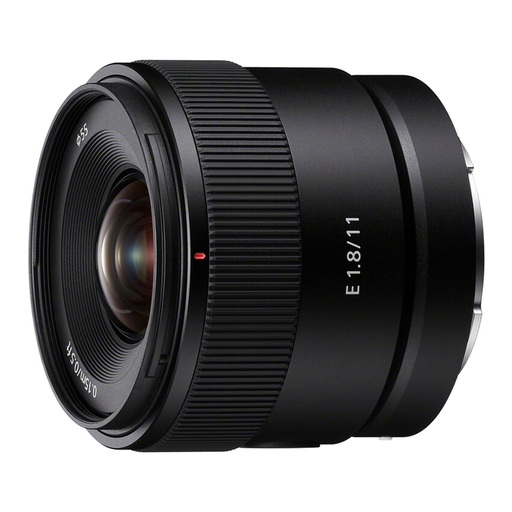 No image available
This wide-angle version could suit a shot that needs to include some of the garden. Check that the E mount and APS-C format are compatible with your camera. Its close-up capabilities are limited, so it may not be the right choice for greatly magnifying tiny details.
In the product name: 11mm, F1.8, Sony E and APS-C.
 No image available
The product description lists close-up and macro photography among its possible uses. Its stated magnification is limited compared with 1:1, so check whether it’s enough for the tiny details you want to photograph.
In the product name: Sony E, 50mm, f/1.8 and OSS.
No, not necessarily. A wider lens with a close-up function could work well if you want to include some of the garden with the mushroom. Check what framing you can achieve from the available distance; 1:1 is most relevant when you want to capture tiny details at a large size on the sensor.
Macro photography can have a very shallow plane of focus. Nikon recommends keeping the camera steady; focus stacking is a technique for increasing depth of field in a composite image. Check that your camera and photography technique support this.
No. Protection does not automatically mean a lens is waterproof. Canon says the sealing on the RF 100mm does not completely prevent dust or droplets from getting inside; Sigma does not describe the splash protection on its 105mm as waterproofing. Follow the instructions for using and maintaining the exact lens and camera.
According to the Dutch government, when you buy at a distance you usually have a 14-day cooling-off period; this does not apply to purchases from private individuals. You are also entitled to a product that works as it should, and the seller must provide a solution if there is a fault. The Dutch government states that the Netherlands does not have one fixed statutory guarantee period for all products.