What to look for in a macro lens
Start by checking your camera’s mount. Then decide whether you mainly want to capture the whole mushroom and its surroundings, or focus on tiny details. Finally, compare the working distance, stabilisation and weight.
| What to consider |
What to look for when buying |
Who is this more important for? |
| Lens mount |
Check your camera’s mount and the exact version of the lens. Versions with different mounts are not interchangeable. |
If I’m looking for a lens for my existing camera, I want to make sure it’s compatible first. Around 26% of consumers prioritise compatibility. |
| Magnification for detail |
Compare the stated maximum magnification of the exact lens version and think about how small your subject is. |
If I want to fill the frame with gills or surface texture, magnification is my main consideration. Around 21% of consumers prioritise magnification for detail. |
| Space in front of the lens |
Look up the working distance at the magnification you want to use. The minimum focusing distance is not the same as the distance from the front of the lens to the subject. |
If I want to photograph a mushroom from a low angle, I need room to position myself and my lighting. Around 21% of consumers prioritise this setup space. |
| Photographing in low light |
Check whether the lens has stabilisation, the conditions under which the manufacturer makes its claim, and whether it works with your camera. |
On shady paths, I want to compose my close-ups carefully and minimise camera shake. Around 16% of consumers start by considering low-light photography. |
| Weight and moisture |
Compare the weight of the exact lens version and read what the manufacturer does and doesn’t promise about dust and moisture protection. |
For a long walk, I want to keep the weight of my kit manageable and know how to protect it in the rain. Around 16% of consumers prioritise ease of carrying and protection from moisture. |
Joybuy product picks
The Sony E lenses below are partial options for close-ups on a woodland walk. Their stated magnification limits their suitability for very small mushroom details, so check that your chosen lens is right for your camera and the shot you want to take.
 No image available
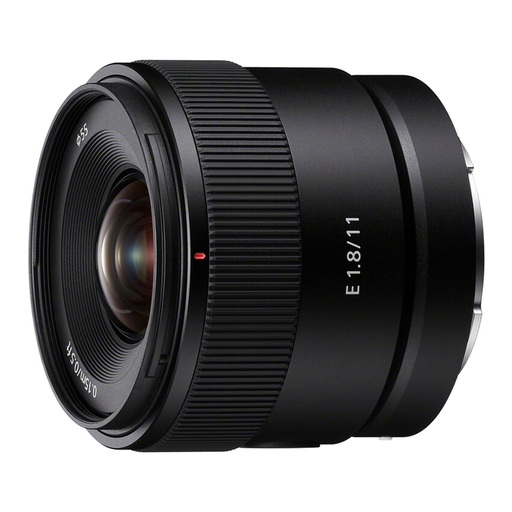
Sony E 11mm F1.8 APS-C Wide Angle Prime Lens (SEL11F18)
This ultra-wide prime lens could be a partial option for close-ups, but its stated magnification is limited for capturing tiny details. Check that your camera has a Sony E mount and that an ultra-wide lens will give you the composition you want.
View at Joybuy
 No image available
Sony E 50mm f/1.8 OSS Black
This 50mm lens could be a partial option for close-ups, but its stated magnification is limited for very small details. Check that it has a Sony E mount and that its angle of view suits the mushroom and surroundings you want to photograph.
View at Joybuy
Frequently asked questions
Can I use one macro lens to photograph both a whole mushroom and tiny details?
That depends on the composition you want and the space available. Nikon describes the NIKKOR Z MC 50mm f/2.8 as a 1:1 macro lens that can also be used for everyday photography. A wider angle of view may work better for a mushroom in its surroundings, so decide which type of shot you’re most likely to take.
What can I do if the whole mushroom isn’t in focus?
First, choose which part you want in focus. Focus stacking can help if you want greater depth of field. This technique combines shots taken at different focus positions, so check that your camera and workflow are suitable.
Is a splash-resistant macro lens waterproof?
No. Don’t assume that splash resistance means a lens is waterproof. Sigma says the 105mm F2.8 DG DN MACRO | Art is not waterproof. Canon states that the RF 100mm’s sealing does not completely prevent water droplets from getting in.
What are my rights if a lens is faulty or I buy one online in the Netherlands?
If a product is faulty, the seller must provide a solution, according to the Dutch government. There is no fixed time limit for statutory guarantees in the Netherlands. For distance purchases, you’ll often have a 14-day cooling-off period, with some exceptions. Check which terms apply to your specific purchase.
Can I leave the woodland path to take a photo?
That depends on the rules for the nature reserve. Staatsbosbeheer asks visitors to follow the access signs and stick to designated paths, so check the local rules before choosing where to take your photo.


