
Hiker with a mirrorless camera
You want to photograph moss details on the go without carrying unnecessarily heavy equipment. First check the lens mount, then compare the weight and the space you’ll need around the moss.


First, check that the lens mount is compatible with your camera. Then decide whether you want to capture fine moss details or show more of the surroundings. High magnification is useful for individual details, while a wide-angle close-up can capture more of the woodland around moss growing beside a path. Also consider working distance and the limited depth of field. For example, Sony Netherlands distinguishes between the minimum focusing distance and the FE 90mm’s working distance of around 13 cm, while Canon Europe describes focus stacking as a way to combine several focus points.
You want to photograph moss details on the go without carrying unnecessarily heavy equipment. First check the lens mount, then compare the weight and the space you’ll need around the moss.
You want to capture small moss structures at a larger scale and can take the time to focus precisely or shoot a series with different focus points.
You want to show not only the texture of the moss, but also where it grows. Compare a wide-angle close-up with a telephoto macro lens, and consider how much of the surroundings you want to keep in the frame.
Start by checking which lens mount is compatible with your camera. Then choose between a frame-filling detail and a close-up that also shows the woodland path and its surroundings.
| What to consider | What to look for | Who should pay particular attention? |
|---|---|---|
| Lens mount | Check your camera’s model name, lens mount and the exact lens version. | If I’m looking for a lens for my existing camera, I want to be sure it’s compatible. That’s why camera compatibility comes first for around 33% of consumers. |
| Magnification and working distance | Compare the maximum magnification and working distance of the exact model. The minimum focusing distance is not the same as the free space in front of the lens. | If I want to photograph fine moss structures at a larger scale, I consider both magnification and how much space I’ll have to position the lens and lighting. Around 27% of consumers prioritise this level of detail. |
| Sharpness across the moss | Check whether your camera has a suitable focus bracketing function and whether a stable setup is practical where you’ll be shooting. | If I want more of a three-dimensional clump of moss to appear sharp, I consider whether combining several focus points would work. Depth of field is a top consideration for around 20% of consumers. |
| Showing the surroundings | Compare focal length and maximum magnification together. The word ‘macro’ alone doesn’t tell you how much of the surroundings will remain visible. | If I want to show the moss alongside the woodland floor or path, I look for an angle of view that suits the composition. For around 13% of consumers, capturing the woodland setting is the main priority. |
| Weight and room to position the lens | Compare the stated weight with the working distance at the magnification you want to use. | For a long walk, I want to keep my equipment light while still having enough room to position the lens near the moss. Around 7% of consumers prioritise portability. |
A model name may refer to different versions. For example, Sigma offers the 105mm F2.8 DG DN MACRO | Art in separate Sony E and L-Mount versions.
Before ordering, compare the exact lens mount with your camera’s mount. Don’t assume an adapter will automatically provide the same functionality.
According to Canon Europe, the Canon RF 24mm F1.8 MACRO IS STM has a maximum magnification of 0.5×, while the RF 100mm F2.8L Macro IS USM reaches 1.4×. These lenses are therefore suited to different types of shot.
First decide whether you want to capture a small detail at a larger scale or keep more of the surroundings in the frame. Then compare the maximum magnification of the exact model.
The minimum focusing distance is measured from the sensor and doesn’t tell you how much free space there is in front of the lens. Sony Netherlands lists a minimum focusing distance of 28 cm and a working distance of around 13 cm for the FE 90mm.
Look up the working distance for the lens you’ve chosen too, especially if you’re photographing moss up close or need room for lighting.
Sigma describes the 105mm F2.8 DG DN MACRO | Art as dust- and splash-resistant in light rain. This doesn’t mean the lens is waterproof.
Check the description for the exact version and protect your camera and lens appropriately for the conditions.
Sony’s FE 90mm F2.8 Macro G OSS is worth considering if you have a compatible Sony E-mount camera and want to weigh up magnification and working distance.
Canon’s RF range includes both a telephoto macro lens and a wide-angle close-up lens for you to compare.
The XF30mmF2.8 R LM WR Macro is designed for photographers with a compatible Fujifilm X camera who are comparing compact lenses for walks and close-ups.
The M.Zuiko Digital ED 90mm F3.5 Macro IS PRO is a specialist option for a compatible Micro Four Thirds camera.
The 105mm F2.8 DG DN MACRO | Art is available in separate versions for Sony E and L-Mount.
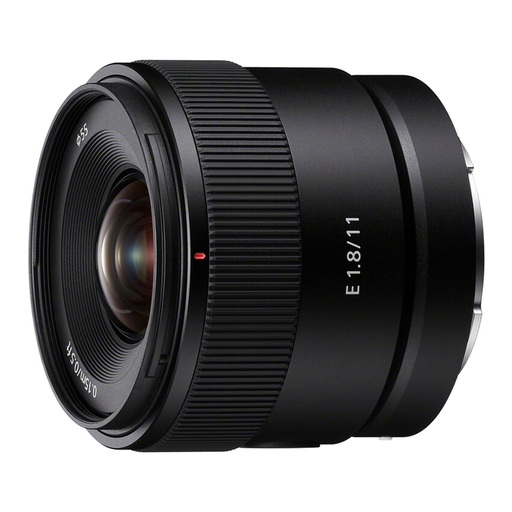
This selection focuses on wide-angle close-ups that keep the woodland surroundings in the frame too. For frame-filling moss details, look for a lens that meets your desired magnification.
 No image available
A good fit for close-ups where you want to show the surroundings as well as the moss. Check that the Sony E mount is compatible with your camera.
This isn’t a 1:1 solution for small moss details. Check the stated maximum magnification if you want to capture those details at a larger scale.
Check the maximum magnification of the exact model. At 1:1, the subject is reproduced at life size on the sensor. Canon Europe lists a maximum magnification of 0.5× for the RF 24mm F1.8 MACRO IS STM.
No. The minimum focusing distance is measured from the sensor plane; the working distance is the space in front of the lens. For the FE 90mm, Sony Netherlands lists 28 cm and around 13 cm respectively. Don’t apply these figures to a different model.
Combining a series of photos taken with different focus points can bring more depth into focus. Check which functions your camera supports. Canon Europe recommends using sturdy support to keep the series properly aligned.
According to the Netherlands government, when you buy from a business online as a consumer, you’ll often have a 14-day cooling-off period. This is separate from your statutory rights if a product is faulty: according to the Netherlands Authority for Consumers and Markets, the seller is responsible. The applicable terms depend on the circumstances.
That depends on the nature reserve and local rules. Staatsbosbeheer advises visitors to check the signs and stay on the paths designated for them. Choosing a particular lens doesn’t give you permission to leave the path.