
Walker with a camera
You want to photograph moss and other holiday scenes as you go, without carrying lots of extra kit. Compare the weight and check that the exact lens version has a mount compatible with your camera.


First, check that the lens mount is compatible with your camera. Then choose a magnification that suits the moss detail you want to capture. A compact 1:1 lens could work well on walks; with a different magnification or focal length, you’ll also need to consider how much space there is in front of the lens and your setup. For very small details, precise focusing and a steady camera can make all the difference.
You want to photograph moss and other holiday scenes as you go, without carrying lots of extra kit. Compare the weight and check that the exact lens version has a mount compatible with your camera.
You want to fill the frame with tiny textures. Pay attention to the actual reproduction ratio, focusing and how much of your subject can be in focus.
When you’re photographing moss close to the ground or among plants, allow room for your camera, lens and lighting. And always stay on permitted paths.
| What to consider | What should you check? | Who should prioritise this? |
|---|---|---|
| Mount | Check your camera model, the lens mount and the full version name. Don’t assume that a different mount version or an adaptor will fit. | If I want to keep using my current camera, the lens version needs to be compatible before I compare magnification or weight. Around 33% of consumers put camera compatibility first. |
| Magnification | Compare the actual maximum reproduction ratio on the sensor. A full-frame equivalent isn’t the same as the actual ratio. | If you want to fill the frame with tiny moss structures, focus on the reproduction ratio and control over depth of field. Around 27% of consumers prioritise this level of detail. |
| Portability | Compare lens weights on a like-for-like basis, and factor in the camera and any support you plan to take with you. | If I’m carrying my complete photography kit on a walk, total weight matters as well as magnification. Around 20% of consumers make travelling light their main consideration. |
| Working distance and sharpness | Look up the working distance at the magnification you want, not just the focusing distance from the camera. Also check where you’re allowed to stand. | For moss close to the ground, I want space for the front of the lens and the light, as well as a steady place to set up my camera. Around 20% of consumers prioritise this setup space and getting a sharp shot. |
Maximum magnification varies between lenses. For example, Canon lists 0.5× for the RF 85mm and 1.4× for the RF 100mm F2.8L. So a lens with ‘Macro’ in its name won’t necessarily fill the frame with a very small detail.
Compare the maximum actual reproduction ratio with the size of the moss detail you want to photograph.
For the NIKKOR Z MC 50mm, Nikon gives a distance of around 5 cm between the front of the lens and the subject at the minimum focusing distance. This clear space can affect whether you can position your lighting and find a useful camera angle.
Check the working distance for the exact lens at the magnification you want to use.
For the RF 100mm at 1.0×, Canon gives a different stabilisation rating from its general rating. Canon and Sigma also make clear that protection against moisture does not mean a lens is waterproof.
Check stabilisation separately at the macro magnification you want, and follow your camera and lens instructions for use in wet weather.
The RF options reviewed range from 0.5× for the RF 85mm to a maximum of 1.4× for the RF 100mm F2.8L, which is compatible with selected EOS R cameras.
For Nikon Z cameras, the Z MC 50mm is a 1:1 option, while the Z MC 105mm f/2.8 VR S gives you a longer 1:1 option.
The 105mm F2.8 DG DN MACRO | Art is a 1:1 lens available separately for Sony E and L-Mount.
The M.Zuiko Digital ED 60mm F2.8 Macro is a 1:1 option for Micro Four Thirds.
According to Sony, the FE 90mm F2.8 Macro G OSS offers 1.0× magnification and optical stabilisation for a compatible Sony E camera.
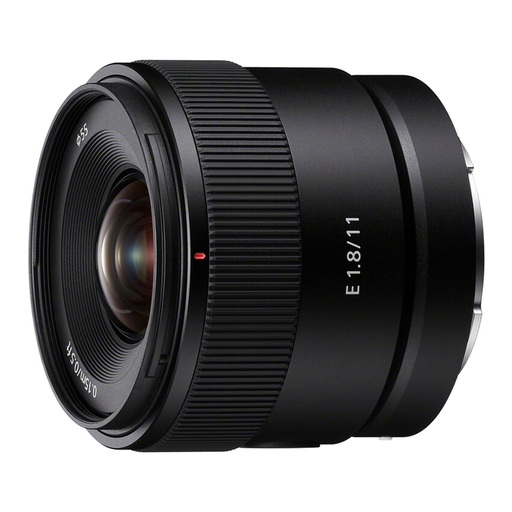
These Joybuy products are Sony E lenses for close-ups on the go and wider shots that include more of the surroundings. Their stated magnification is not 1:1.
 No image available
This Sony E wide-angle lens is designed for close-ups that include plenty of the surroundings; its stated magnification is limited for very small moss details.
Specifications: 11 mm, F1.8; minimum focusing distance 15 cm; maximum magnification 0.13× with AF and 0.20× with MF; weight 181 g.
 No image available
This Sony E lens is described as suitable for close-up and macro photography; its stated magnification is below 1:1 for very small details.
Specifications: 50 mm, F1.8; stated magnification 0.16; weight 202 g.
No. Check the maximum reproduction ratio. Canon lists 0.5× for the RF 85mm and 1.4× for the RF 100mm F2.8L. Choose based on the size of the detail you want to show, not just the product name.
For a stationary subject, you can combine shots taken at different focusing distances. Canon describes this technique as focus stacking and recommends a sturdy tripod to keep the shots properly aligned. Check whether your camera has this feature or whether you’ll need software.
Don’t treat splash resistance as waterproofing. Canon and Sigma make this distinction for their lenses. Follow the instructions for your own camera and lens when drying and cleaning them.
When you buy from a business online, you’ll usually have a 14-day cooling-off period, although there are exceptions. According to the Dutch Government, there is no fixed term for the statutory warranty: if a product is faulty, the seller is your point of contact. A manufacturer’s warranty is in addition to this.
It depends on the location. Staatsbosbeheer says visitors are generally expected to stay on roads and paths in its areas, although local exceptions may apply; check the signs at the entrance. The Dutch Government says that provinces also help determine what is permitted in their areas. Different rules may apply outside the Netherlands.