
Miniature painter with a camera body
You want to check that the lens mount is compatible, then capture your painted figures in full, with realistic colours against a white background.


First, check that the lens mount is compatible with your camera. Then decide whether you mainly want to photograph an entire miniature or capture tiny paint details. A shorter macro lens can be useful for a wider composition, while the working distance of a longer lens may leave more room for lighting; compare the working distance of the exact model to find out. Lighting, white balance and sometimes focus stacking also affect how white the background looks, how true-to-life the colours are and how sharp the whole figure appears.
You want to check that the lens mount is compatible, then capture your painted figures in full, with realistic colours against a white background.
You photograph individual brushstrokes or textures, weighing up magnification, working distance and limited depth of field.
You have limited room for your camera, tripod and lighting. That makes the space in front of the lens important, as well as the minimum focusing distance.
Start by checking the mount, then work out what composition and working space you need. Lighting and white balance matter too when photographing miniatures against a white background.
| What to consider | What should you check? | Who is this most important for? |
|---|---|---|
| Lens mount | Check the mount on the exact lens version and whether any adapter you need is compatible with your camera body. | If I first want to know whether the lens will fit my camera, I check the mount before comparing models. Around 29% of consumers put compatibility first. |
| Sharpness throughout the depth | Check the maximum magnification and see what focusing or focus bracketing features your camera offers. | If I want both the front and details that stick out further back on a stationary figure to look sharp, I look beyond maximum magnification alone. Around 23% of consumers prioritise sharpness throughout the depth. |
| Framing and working space | Compare the composition you want with the working distance from the front of the lens, and the space available for lights and a tripod. | With a small tabletop setup, I want to frame my miniature without the lens getting in the way of the light. Around 18% of consumers prioritise framing and the space in front of the lens. |
| White background and paint colours | Check that your lighting setup leaves room for a white background, then test the white balance under those lighting conditions. | If I want the paint colours to stand out against a neutral white, I start with the lighting and white balance. Around 18% of consumers make colour and background their first consideration. |
| Equipment you need | Check whether your current lens can achieve the composition you want and which accessories or adapter you actually need. | If my existing lens can already achieve the composition I want, I don't want to buy more optics than necessary. Around 12% of consumers focus mainly on the total equipment they need to buy. |
Minimum focusing distance is measured from the sensor; working distance is the space between the front of the lens and the subject. So these measurements don't tell you the same thing about the room available for your lights.
Compare the working distance at the magnification you want to use, and make sure it suits your tabletop setup with its lighting and tripod.
According to Canon, the Canon RF 35mm F1.8 MACRO IS STM offers a maximum magnification of 1:2, while the RF 100mm F2.8L Macro IS USM offers up to 1.4×.
Check the maximum magnification of the exact model and compare it with the smallest detail you want to photograph.
A macro lens won't automatically correct your white balance or make the whole figure sharp when you're shooting at close range.
Test your lighting, white balance and focus first. For a stationary miniature, you could try focus stacking, which combines shots taken at different focus points.
The FE 90mm F2.8 Macro G OSS is an option for a compatible Sony E-mount camera, for close-ups where space in front of the lens matters.
The RF 100mm F2.8L and RF 35mm F1.8 are different options for compatible RF cameras, with different maximum magnifications.
The XF30mmF2.8 R LM WR Macro is designed for compatible Fujifilm X cameras and could suit a compact setup for photographing whole figures.
The M.Zuiko Digital ED 90mm F3.5 Macro IS PRO is a macro option for compatible Micro Four Thirds cameras.
The 105mm F2.8 DG DN MACRO Art is available in L-mount and Sony E-mount versions.
The NIKKOR Z MC 50mm f/2.8 is a compact option for a compatible Z camera; the Z MC 105mm f/2.8 VR S is a separate, longer model.
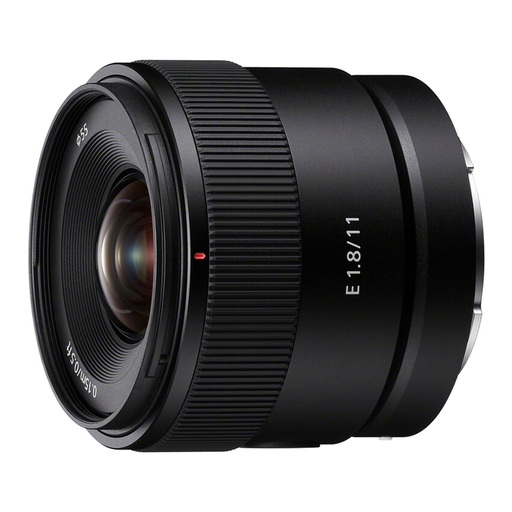
These Sony E-mount lenses are included here as options for close-ups, not as replacements for a macro lens. Their stated maximum magnifications limit them when photographing very small paint details, so check that they suit the composition you need.
 No image available
According to the product information, this wide-angle lens is suitable for close-ups, but it isn't a macro lens for very small paint details.
Minimum focusing distance: 0.15 m. Stated magnification: 0.13× with autofocus and 0.20× with manual focus. Weight: 181 g.
 No image available
The product information mentions close-up photography, but the stated maximum magnification is limited for very small paint details.
Maximum magnification: 0.16×. Weight: 202 g.
No. 1:1 describes the maximum image size of a subject on the sensor; it's not a setting you need to use for every photo. Decide on the composition you want first. For example, Canon specifies a maximum of 1:2 for the RF 35mm F1.8 MACRO IS STM.
Depth of field is limited when you're shooting at close range. Try adjusting your aperture and focus point. For a stationary figure, focus stacking – combining shots taken with the focus shifted between them – can help bring more of its depth into focus.
White balance affects how white and other colours appear under the lighting you're using. Check your lighting setup and set the white balance for those conditions, or correct it when editing. A different macro lens won't automatically remove a colour cast.
Canon explains that EF and EF-S lenses can be used on EOS R cameras with an EF-EOS R adapter. Check the exact lens and camera body, and whether you need the adapter. EF and RF are different mounts.
According to the Dutch government, when you buy at a distance from a business, you generally have 14 days to change your mind; this doesn't automatically apply to an online purchase from a private seller. You're also entitled to a product that meets reasonable expectations, and the seller is your point of contact. The Dutch government says there is no fixed statutory warranty period in the Netherlands.