First, choose a lens with the right mount for your camera, then decide how large you want the details to appear on the sensor. A close-up lens offering up to 1:2 magnification is suitable if you also want to photograph the surroundings, while 1:1 or higher makes small structures appear larger. When photographing lichens on tree bark, working distance and room for light matter too. Higher magnification does not automatically give you greater depth of field. Verspreidingsatlas covers lichens on trees, while Canon Nederland explains focus stacking for macro shots taken at multiple focus points.
Who is this guide for?
Detail seeker
You want to capture the tiny structures of lichens in isolation. Compare the actual magnification, focusing options and your camera’s mount. Verspreidingsatlas covers lichens on trees, while Sony Nederland and Canon Nederland discuss relevant macro and close-up features.
Tree-bark photographer
You photograph lichens that stay in place and want enough space between the lens and the bark for framing and light. Sony Nederland’s explanation of working distance can help you understand the difference.
Camera-carrying park walker
You want to photograph both details and the surroundings on the same walk. It’s worth weighing portability and versatility against maximum magnification. Canon Nederland and Nikon Nederland describe models for different types of close-up and general photography.
What should you look for when choosing?
Start with the image size you want on the sensor, then check whether the working distance, camera mount and focusing method suit photographing lichens on tree bark.
| What to consider |
What should you check? |
Who is this important for? |
| Magnification |
Check the maximum actual magnification and whether the version is compatible with your camera. |
If I want to fill more of the frame with small structures, I choose based on magnification rather than relying on the word ‘macro’ alone. Around 33% of consumers put magnification first. |
| Working distance |
Find out the distance between the subject and the front of the lens at the magnification you want to use; this is not the same as the minimum focusing distance. |
When photographing lichens on bark, I want enough room to frame the shot and let light in. Around 27% of consumers mainly need room to work. |
| Using it on a walk |
Compare focal length, portability, maximum magnification and the exact camera mount. |
If I want to photograph both the park and close-ups on one walk, I weigh versatility against detail. Around 20% of consumers prioritise this combination. |
| Depth of field |
Check which focusing methods your camera body supports and whether you want to combine multiple shots if needed. |
When I want a lichen to look sharp from front to back, I factor in multiple focus points and extra processing. Around 20% of consumers consider depth of field their main purchasing priority. |
Macro photography pitfalls
-
Confusing minimum focusing distance with working distance
Minimum focusing distance is measured from the sensor. Working distance is the space between the subject and the front of the lens; it partly determines how much room you have around the bark.
Check the working distance at the magnification you want to use, and don’t compare it directly with the minimum focusing distance alone. Sony Nederland explains the difference between these distances.
-
Comparing magnification figures that use different definitions
OM SYSTEM lists 2× actual magnification for the M.Zuiko Digital ED 90mm F3.5 Macro IS PRO, as well as 4× in 35mm equivalent terms. These are not two figures measured on the same basis.
Compare reproduction ratios on the same basis and check the actual magnification on the sensor.
-
Expecting higher magnification to make the whole lichen look sharp
When shooting close-ups, a single image may have limited depth of field. Higher magnification won’t solve this on its own.
Decide in advance whether one plane of focus is enough or whether you want to combine shots taken at different focus points. Canon Nederland describes focus stacking as a way to combine these images.
Taking a series of shots and combining them adds time to both photography and post-processing.
Brands to consider
Canon
The Canon RF models reviewed range from a versatile close-up lens to a lens offering higher magnification, for use with a compatible Canon RF camera.
- Canon Nederland specifies a maximum of 1:2 for the RF 35mm F1.8 MACRO IS STM and 1.4× for the RF 100mm F2.8L Macro IS USM.
- The RF 35mm offers less maximum magnification than the RF 100mm; check whether each model’s working distance suits the way you photograph.
Nikon
The NIKKOR Z MC 50mm f/2.8 is a 1:1 option for a compatible Nikon Z camera.
- Nikon Nederland also describes the model as suitable for more general photography.
- For close-up work, Nikon gives a distance of around 5 cm between the subject and the front of the lens. Check whether this leaves enough room to position your camera and let in light.
Sony
The FE 90mm F2.8 Macro G OSS, model SEL90M28G, is a 1:1 lens with a Sony E mount.
- Sony Nederland specifies optical stabilisation and a working distance of around 13 cm for this model.
- The stated focusing distance of 28 cm is measured from the sensor; it is not the same as the working distance.
OM SYSTEM
The M.Zuiko Digital ED 90mm F3.5 Macro IS PRO is designed for use with a compatible Micro Four Thirds camera.
- OM SYSTEM specifies 2× actual magnification, autofocus and an IP53 rating for this model.
- The additional 4× figure is a 35mm equivalent. Also check which features are available with your camera body.
Laowa
The CF 65mm F2.8 CA-Dreamer Macro 2X is a manual-focus option for APS-C.
- Laowa lists 2× magnification for this model.
- Check the mount on the specific version, the manual controls and how much room you’ll have around your subject.
Joybuy lenses for these situations
This selection features Sony E lenses for close-ups, general framing and wide park views. The stated magnifications are limited if you want to capture tiny lichen details large on the sensor.
 No image available
Sony E 50mm f/1.8 OSS Black
An option to take with you for close-ups on a walk, if you don’t need high macro magnification.
The stated maximum magnification is 0.16×; bear this in mind if you want to make small details appear larger.
Joybuy
 No image available
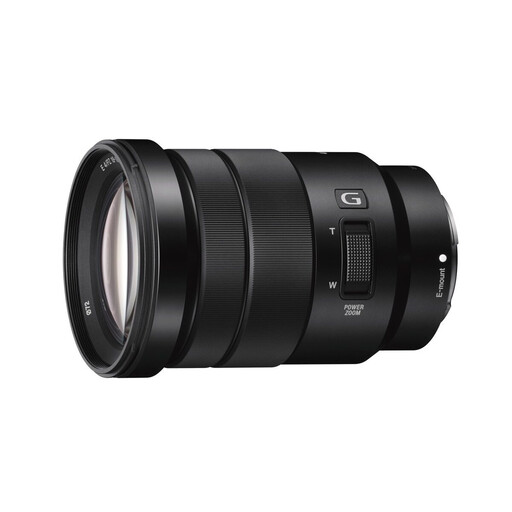
Sony E PZ 18-105mm f/4 G OSS
The 18–105 mm zoom range could suit you if you want to switch between wider and tighter framing on a walk.
The stated maximum magnification is 0.11×, so this isn’t the right choice for making tiny lichen details appear large.
Joybuy
 No image available
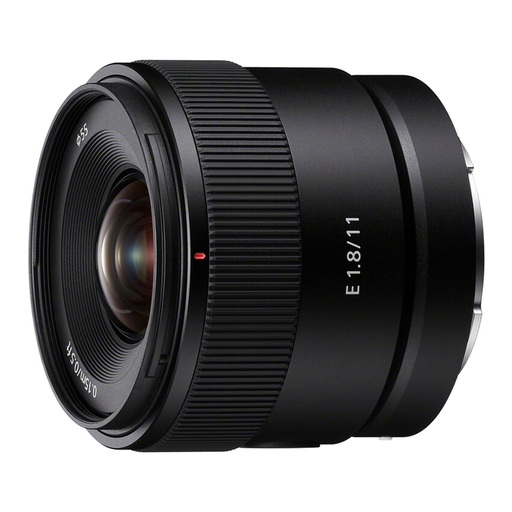
Sony E 11mm F1.8 APS-C Wide Angle Prime Lens (SEL11F18)
The stated 104° angle of view suits park scenes where you want to capture the surroundings too.
Maximum magnification is listed as 0.13× with autofocus or 0.20× with manual focus. That’s limited for capturing tiny lichen details.
Joybuy
Frequently asked questions
Is every lens with ‘macro’ in its name suitable for capturing the tiniest lichen details?
No. Check the maximum actual magnification and the camera mount. Canon Nederland specifies a maximum of 1:2 for the RF 35mm F1.8 MACRO IS STM; Nikon Nederland lists 1:1 for the NIKKOR Z MC 50mm f/2.8, while Laowa gives 2× for the CF 65mm F2.8 CA-Dreamer Macro 2X.
How can I get more of a lichen in focus?
If one shot doesn’t provide enough depth of field, you can take several shots with successive focus points and combine them using focus stacking. Check which features are available on your camera body; the lens alone doesn’t guarantee an automatic sequence of shots.
What should I check after using a lens in a damp park?
Check the moisture protection on the exact lens model and keep the front element clean without touching the lichen. Canon warns that the sealing on the RF 100mm F2.8L Macro IS USM does not completely prevent water droplets from getting inside.
What are my rights if a lens I bought online turns out to be faulty?
According to ACM ConsuWijzer, the seller is responsible for the statutory guarantee if a product proves faulty under normal use; a solution may be a repair, replacement or refund. For distance purchases, you’ll usually also have a 14-day cooling-off period, although exceptions apply.
Can I photograph lichens in any Dutch city park without permission?
Don’t assume the same rules apply in every park: check the local manager’s rules and any entrance signs. Staatsbosbeheer sets out access rules for its own nature reserves; the photography conditions at Elswout do not automatically apply to other city parks.


