What should you look for in a macro lens?
First check the camera mount, then work out how much magnification you need. Finally, test whether there’s enough room for lighting and a practical focusing method.
| What to consider |
What should you check? |
Who is this important for? |
| Magnification and detail |
Compare the maximum magnification of the exact lens with the framing you need for the clasp. |
If I want to show the mechanism of a small clasp clearly, I look at how large it appears in the frame. Around 33% of consumers prioritise magnification for small details. |
| Camera mount |
Compare your camera body’s mount with the full model name and the specific lens version. |
With a camera I already own, I want to avoid choosing a lens with a different mount. Around 27% of consumers give compatibility with the camera body top priority. |
| Depth of field |
Take a test shot of the clasp and see whether a single plane of focus is enough or whether you need focus stacking. |
If a clasp needs to be clear from front to back, I want to know in advance whether one shot will be enough. Around 20% of consumers focus mainly on getting the whole item in focus. |
| Working space and lighting |
Check the working distance at your chosen magnification and test where you can position the camera, jewellery and lighting. |
In a small set-up, I need room to position the lighting and control reflections. Around 20% of consumers prioritise this working space. |
Sony, Nikon, Canon and Tamron publish lens specifications for individual models, so check the version you’re actually considering. Sony also distinguishes between the focusing distance measured from the sensor and the working distance in front of the lens. Adobe describes focus stacking as a way to combine planes of focus from several shots.
Joybuy products
The Joybuy products shown are Sony E lenses described in their product information as suitable for close-up and product photography. Their stated magnification is below 1:1, so compare it with the level of detail you need from a macro lens for clasps.
 No image available
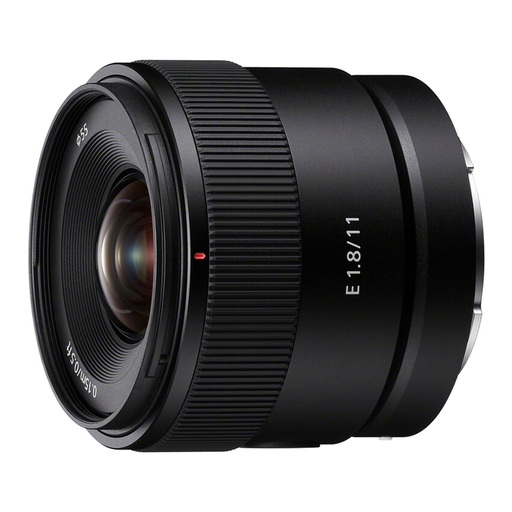
Sony E 11mm F1.8/APS-C wide-angle lens (SEL11F18)
The product information mentions close-up and product photography. The stated magnification may be worth considering if you want to show very small clasp details.
11 mm; Sony E mount; autofocus and manual focus. The stated magnification is 0.13× with autofocus and 0.20× with manual focus. The minimum focusing distance is 0.15 m.
Joybuy
 No image available
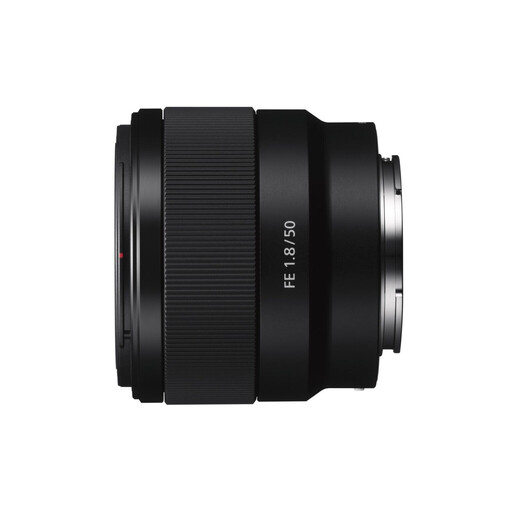
Sony E 50mm f/1.8 OSS Black
The product information describes this lens as suitable for close-up and product photography. Assess its magnification against the size of the clasp you want to capture.
50 mm; Sony E mount; autofocus. The stated magnification is 0.16×.
Joybuy
Frequently asked questions
Does a minimum focusing distance of 28 cm also mean you have 28 cm of space for your light?
No. Sony measures this distance from the sensor. For the FE 90mm f/2.8 Macro G OSS, Sony states a working distance of around 13 cm in front of the lens. Don’t assume another model will give you the same clear space.
How can you get a clasp sharp from front to back?
Set up your camera and jewellery securely, then assess a test shot first. If a single plane of focus isn’t enough, you can combine shots taken at different focus points using focus stacking. This also requires post-processing.
How can you avoid distracting reflections on metal?
Check for reflections and marks in test shots, then adjust the positioning and lighting before relying on a different lens alone. Shopify Netherlands highlights reflections, marks and lighting control as things to consider when photographing jewellery.
Are you always entitled to a 14-day cooling-off period by law when buying a lens online?
Not always. According to Ondernemersplein, consumers generally have a statutory 14-day cooling-off period for online purchases. The guidance distinguishes between sales to consumers and sales to businesses. If you’re buying for your online shop, check whether you’re contracting as a private individual or as a business, and which terms apply.
Are there Dutch rules about photos in your online shop?
The Netherlands Authority for Consumers and Markets says sellers must not mislead consumers with inaccurate or unclear information about what they offer. Make sure your photo doesn’t give a misleading impression of the jewellery for sale; this isn’t a requirement to use a particular lens.


