
Clasp detail photographer
Wants to capture springs, hooks or joints clearly, and starts by working out the magnification needed.


Start with your camera’s mount and the size of the clasp detail you want to capture. Then compare the working distance at the magnification you need, rather than looking only at the minimum focusing distance. More space in front of the lens can make it easier to position lights on a shared workbench, while a short working distance can make your setup feel cramped. When photographing shiny metal or a clasp that needs to be sharp throughout its depth, controlling the light and, if needed, taking a focus-stacked series remain important.
Wants to capture springs, hooks or joints clearly, and starts by working out the magnification needed.
Is looking for a macro lens that fits their camera mount and sensor, without mistaking a suitable product name for proven compatibility.
Needs enough room to position the camera and lights around a small, reflective subject.
First, check that the lens mount and sensor format are compatible with your camera. Then compare the magnification needed for the smallest component with the working distance left for lighting and positioning.
| What to consider | What to look for when buying | Who should consider this? |
|---|---|---|
| Detail magnification | Compare the maximum magnification of the exact model with the smallest clasp detail you want to photograph. | If I want to capture small hooks or springs clearly, I start with magnification. Around 33% of consumers prioritise detail magnification. |
| Mount and sensor format | Check the full lens variant against your camera’s mount and sensor format. | If you’re looking for a lens for your existing camera body, you’ll want to know first whether the version will fit. Around 27% of consumers are primarily concerned about camera compatibility. |
| Working distance and lighting | Check the working distance at your chosen magnification and test your setup with your light source and any lens hood. | On a shared workbench, I want to position the camera and lights without touching the clasp or causing unwanted reflections. Around 27% of consumers prioritise working space and lighting. |
| Sharpness across the clasp | Check whether your camera supports focus bracketing and whether you can photograph a stationary subject steadily. | If a clasp has depth, I don’t want just the front to be sharp. Around 13% of consumers prioritise sharpness across the whole clasp. |
Maximum magnification varies by model. Canon Europe specifies up to 1.4× for the RF 100mm F2.8L Macro IS USM; Laowa specifies 2:1 for the 65mm f/2.8 2X Ultra Macro APO.
Compare the reproduction ratio of the exact lens with the smallest detail you want to show.
Minimum focusing distance is measured from the sensor, whereas working distance describes the space between the subject and the front of the lens. Nikon specifies around 5 cm from the front of the lens for the Z MC 50mm at its closest focusing distance.
Check the working distance at the magnification you want to use, and test it with your own lighting and any lens hood.
A short working distance may mean spending extra time repositioning the camera and lights.
Shiny metal calls for careful lighting, and part of a deep clasp may fall outside the plane of focus.
Try a setup with lighting you can control. If the clasp isn’t sharp throughout, test a stable series of shots with slightly different focus points.
Focus stacking may take extra shooting time and require a stable camera setup.
Canon Europe lists the RF 100mm F2.8L Macro IS USM as an RF lens with up to 1.4× magnification.
The Nikon Z MC 50mm f/2.8 and Z MC 105mm f/2.8 VR S offer options for Nikon Z cameras.
The Sony FE 90mm F2.8 Macro G OSS is an E-mount lens with a stated magnification of 1.0×.
The Sigma 105mm F2.8 DG DN MACRO | Art is a 1:1 lens that Sigma says is available in Sony E and L mounts.
The M.Zuiko Digital ED 60mm F2.8 Macro is a 1:1 lens for a compatible Micro Four Thirds camera.
Laowa specifies maximum magnification of 2:1 for APS-C for the 65mm f/2.8 2X Ultra Macro APO.
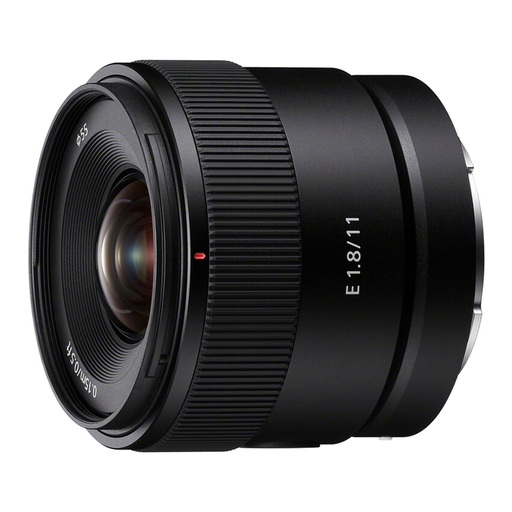
These Joybuy products are Sony E lenses for APS-C cameras, described in the product information as suitable for close-ups. Their stated magnification is limited for filling the frame with very small clasp details, so check whether it’s right for your subject.
 No image available
This wide-angle lens is described as suitable for close-ups with a Sony E camera featuring an APS-C sensor, but its maximum magnification is limited for small clasp details.
The stated maximum magnification is 0.20× with manual focus and 0.13× with autofocus.
The product name specifies a focal length of 11 mm and an aperture of F1.8.
 No image available
The product information describes this lens as suitable for close-up and macro photography with a Sony E camera featuring an APS-C sensor. Its stated magnification is limited for very small clasp details.
Maximum magnification is 0.16×.
The product name specifies a focal length of 50 mm, f/1.8 and OSS.
No. Sony distinguishes between the minimum focusing distance, measured from the sensor, and the working distance between the subject and the front of the lens. Check the working distance at the magnification you want to use, and take your whole setup into account.
Adjust the position of the clasp, camera and lights, then check the results in test shots. Nikon describes a light tent as one way to soften the light when photographing shiny jewellery; changing lenses won’t prevent reflections on its own.
For a stationary subject, you can combine shots taken with slightly different focus points. Canon describes focus stacking as a way to combine these shots and recommends using a sturdy tripod to align the series. Check whether your camera supports focus bracketing, or adjust the focus manually between shots.
According to the Dutch Data Protection Authority, business use or publication of images in which people are recognisable requires an applicable lawful basis under the GDPR. Keep colleagues out of shot or establish that lawful basis before taking or publishing such images; different rules apply to purely private use.