
Card maker with limited space for photography
You mainly want to photograph whole cards on a small table, so you need to balance your framing, camera height and space for lighting.


Start by choosing a lens that fits your camera and lets you frame the whole card from the distance available. Greater magnification matters mainly for small details. Also check the working distance for your light: the minimum focusing distance is measured from the sensor, not the front of the lens.
You mainly want to photograph whole cards on a small table, so you need to balance your framing, camera height and space for lighting.
You want to capture the texture of paper, stamps or small embellishments in close-up, and are considering both magnification and the space between the lens and the card.
You’re looking for a lens to use with the camera you already own. The mount, sensor crop and any adapter will determine which combinations are suitable.
First, check whether you can frame the whole card from the camera height available. Then choose magnification and lighting clearance to suit the details you want to photograph.
| What to consider | What to look for when buying | Who should pay particular attention? |
|---|---|---|
| Fitting the whole card in the frame | Test the framing at the camera height you actually have available; consider focal length and sensor size together. | If I want to photograph the whole card on a small table, it needs to fit entirely in the frame from my fixed setup. Around 29% of consumers are most concerned about framing the whole card. |
| A compatible camera mount | Check the exact camera model and lens mount. Canon says EF lenses can be used on EOS R cameras with a suitable EF–EOS R adapter. | If I want to keep using my current camera body, I first check whether the lens fits directly or needs an adapter. Around 29% of consumers prioritise compatibility with their existing camera. |
| Magnification for details | Compare the maximum magnification of the exact lens model and decide whether it suits the close-up framing you want. | For paper texture or small embellishments, I want to know how large the subject can appear on its own. Around 24% of consumers prioritise magnification for details. |
| Room for lighting | Compare the working distance from the front of the lens with the position of your light. Sony distinguishes this from the minimum focusing distance, which is measured from the sensor. | If I want to light raised details without the lens getting in the way of my light, I consider the space between the lens and the card. Around 18% of consumers are most concerned about room for lighting. |
According to Canon, the RF 35mm F1.8 MACRO IS STM and RF 85mm F2 MACRO IS STM both offer maximum magnification of 0.5×. On its own, that doesn’t tell you whether you can fit a whole card in the frame from your setup.
First decide whether you’ll usually photograph a whole card or focus on small details. Then compare the magnification of the exact lens model with the framing you need.
Minimum focusing distance is measured from the sensor. Sony gives the working distance of the E 30mm F3.5 Macro at its closest focusing point as approximately 2.4 cm from the front of the lens.
Check separately where the lens and light will sit for the framing you want, and leave enough room to direct the light.
Canon says EF lenses can be used on EOS R cameras with a suitable EF–EOS R adapter; they do not attach directly as RF lenses.
Before buying, check the combination of camera body, lens and adapter, then consider how much space you have above the table.
A suitable adapter is a separate part of your setup and may take up extra space.
Canon offers macro lenses for EOS R and EF cameras, with different mounts and maximum magnifications.
Sony’s range includes the E 30mm F3.5 Macro for APS-C cameras and the longer FE 90mm F2.8 Macro G OSS.
The NIKKOR Z MC 50mm f/2.8 is a macro lens for compatible Nikon Z cameras.
The FUJINON XF30mmF2.8 R LM WR Macro is a macro lens for the Fujifilm X system.
The M.Zuiko Digital ED 30mm F3.5 Macro is a compact macro lens for small subjects and close-up details in the OM SYSTEM range.
The 105mm F2.8 DG DN MACRO | Art is a longer macro lens offered by Sigma for Sony E and L mounts.
A lens for product photography and limited close-ups. Check whether the stated magnification is enough for the details on your cards.
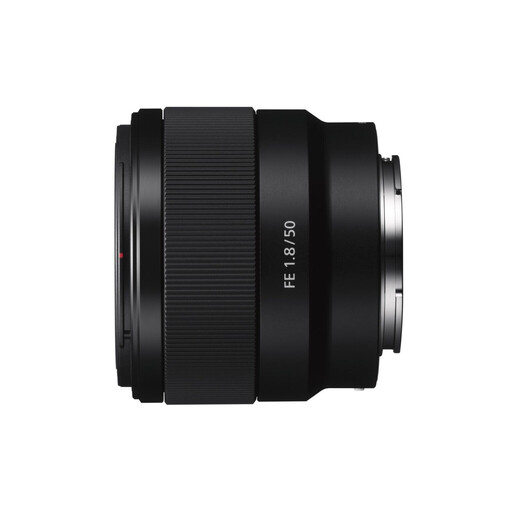 No image available
May suit product photography and limited close-ups, but its stated maximum magnification is below 1:1, making it less suited to very small details.
Maximum magnification: 0.16×.
Weight: 202 g.
No, not necessarily. For a whole card, first check whether you can frame it from your camera position and whether the lens mount is compatible. 1:1 is mainly useful when you want to capture individual small details in close-up.
Keep the camera steady, consider depth of field and move the light to show the raised details. Sony recommends trying a different shooting angle with reflective materials. Also check that the working distance leaves enough room for your light.
Yes. Canon says EF lenses can be used on EOS R cameras with a suitable EF–EOS R mount adapter. Check the exact camera body and lens, and remember that the adapter is a separate part of the setup.
According to the Dutch government, you usually have a 14-day cooling-off period when buying at a distance. The rules described do not apply in the same way to online purchases from private sellers. If the product is faulty, the Dutch government says the retailer is responsible for providing a solution.