
Photographers looking for a compatible lens
You already have a camera with interchangeable lenses and want to check the mount and sensor format before choosing a macro lens. Canon, Sony, Sigma, OM SYSTEM and Nikon lens versions are system-specific.


First, choose a lens with the right mount and sensor format. Then compare the actual magnification and the clear space between the lens and the grass seed. For tiny details, magnification greater than 1:1 may be a good fit, while working distance, focusing controls and weight may matter more when photographing moving grass or going for a long walk. The features mentioned are based on manufacturers’ specifications and photography advice, not a comparative hands-on test.
You already have a camera with interchangeable lenses and want to check the mount and sensor format before choosing a macro lens. Canon, Sony, Sigma, OM SYSTEM and Nikon lens versions are system-specific.
You want to capture an individual grass seed large in the frame, so you’re comparing the actual magnification on the sensor. Canon and Laowa list magnifications greater than 1:1 for certain models; also consider how precisely you’ll need to focus.
You shoot outdoors and want to consider the space between the lens and your subject, the focusing controls and the weight. Sony and Sigma provide model-specific information about working distance; Sony and OM SYSTEM also list product-specific details about stabilisation or weight.
First, check your camera mount and sensor format. Then compare magnification and working distance for the framing you want. If you’re heading out for a walk in the park, consider the weight and controls too.
| What to consider | What should you check? | Who should consider this? |
|---|---|---|
| Mount and sensor format | Check the exact camera model, lens mount and sensor format for the version you’re considering. | I want to make sure the lens fits my camera before choosing. Around 33% of consumers say system compatibility is their main buying concern. |
| Magnification | Compare the maximum reproduction ratio on the sensor; a full-frame equivalent is not the same as the actual ratio. | I want to fill the frame with a tiny seed detail, so I’m looking at the actual magnification. Around 27% of consumers put this level of detail first. |
| Working distance and focusing | Look up the working distance at the magnification you want, and distinguish it from the minimum focusing distance, which is measured from the sensor. | I photograph grasses that are standing or moving and want to leave some space between the lens and the seed. Around 20% of consumers focus mainly on working distance and focusing outdoors. |
| Weight and versatility | Check the weight, angle of view and maximum reproduction ratio for the exact version you’re considering. | I don’t want to take only macro photos on a walk, so I’m considering portability and other uses too. Around 20% of consumers prioritise this combination. |
The minimum focusing distance is measured from the sensor. The space between the front of the lens and the subject is a different distance, and partly determines how much room you have to frame a seed.
Check the stated working distance at the magnification you want to use, and compare it separately with the minimum focusing distance.
The OM SYSTEM 60mm achieves 1:1 on the sensor; the stated 2× is the full-frame equivalent. The Nikon Z DX MC 35mm achieves an actual 0.67×, even though Nikon describes it as a 1:1 equivalent for FX.
For tiny seed details, compare the ratio on the sensor and consider the sensor format and angle of view separately.
Stabilisation helps counter camera shake, but it won’t correct the movement of a blade of grass. Precise focusing can also be tricky in macro photography.
Take a test shot, check the focus and refocus if needed. Don’t choose a lens based solely on a stabilisation claim.
These examples cover specific product lines and versions; always check that the mount is compatible with your camera.
The RF 100mm F2.8L Macro IS USM is designed for a compatible Canon RF camera and photographers looking for magnification greater than 1:1.
According to Nikon, the Z MC 105mm f/2.8 VR S offers 1:1 macro on Nikon Z cameras; the Z DX MC 35mm f/1.7 is a more compact DX option for macro and general photography.
The FE 90mm F2.8 Macro G OSS is a Sony E option for photographers looking for 1:1 magnification and optical stabilisation.
According to Sigma, the 105mm F2.8 DG DN MACRO | Art is available in Sony E and L-Mount versions.
The 90mm F/2.8 Di III MACRO VXD is an autofocus option in the Sony E and Nikon Z versions listed by Tamron.
The M.Zuiko Digital ED 60mm F2.8 Macro is a Micro Four Thirds lens for a lightweight macro set-up.
The CF 65mm F2.8 CA-Dreamer Macro 2X is designed for APS-C photographers who want to focus manually on tiny details.
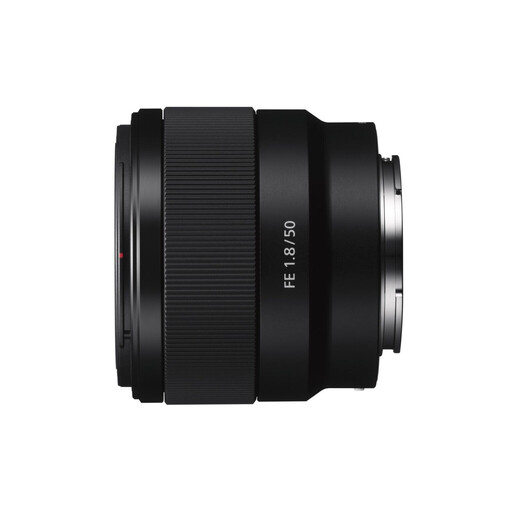
This Joybuy selection features a lightweight Sony E lens for close-ups. Its stated magnification makes it less suitable if you want to enlarge a single tiny grass seed significantly.
 No image available
According to the product description, this lens is designed for close-ups and macro photography; its stated magnification of 0.16× limits its suitability for very small grass seeds.
The product description lists a weight of 202 g.
No, check the maximum reproduction ratio on the sensor. The models listed range from 0.67× to 2×; a DX lens with a 1:1 equivalent does not necessarily achieve an actual 1:1 ratio.
Check the focus after taking a test shot and refocus if needed. Stabilisation helps counter camera shake, not subject movement, and macro photography requires precise focusing.
The minimum focusing distance is measured from the sensor; working distance is the space from the front of the lens to the subject. Check which distance a specification refers to, and look up the working distance at the magnification you want to use.
According to ACM ConsuWijzer, the seller is responsible for the statutory guarantee if a product is faulty. Depending on the circumstances, the seller must resolve the issue free of charge through repair, replacement or a refund; a limited manufacturer’s warranty does not take away this right.
The Dutch Data Protection Authority describes an exception for photos you keep private or share only with a very limited group. This exception does not apply if you share identifiable people more widely or for business purposes, and a lawful basis under the GDPR may be required.