
Photographing the whole fruit still life
You want to frame the fruit, bowl and background together. So pay attention to the angle of view and focusing distance, not just maximum magnification.


For a complete fruit still life, the right angle of view is often more important than maximum magnification; for small details in the skin, maximum magnification matters more. Canon specifies a maximum of 0.5× for the RF 24mm and 1.4× for the RF 100mm. Also check the camera mount and the space in front of the lens for your lighting. A tripod can help with a stationary subject, but it does not increase depth of field.
You want to frame the fruit, bowl and background together. So pay attention to the angle of view and focusing distance, not just maximum magnification.
You want to photograph individual pieces of fruit or details without the lens getting in the way of your artificial lighting. Compare the clearance in front of the lens at the magnification you plan to use.
For example, you may want to show a small area of fruit skin at a larger scale. Compare the maximum magnification of lenses that fit your camera; Canon, OM SYSTEM and Laowa publish model-specific figures.
Start with the composition you want, then check that the mount is compatible and there’s enough room for your lighting.
| What to consider | What should you check? | Who is this important for? |
|---|---|---|
| The whole arrangement | Check the lens’s angle of view, focal length and maximum magnification for your camera. | If I want to show the fruit, bowl and background together, framing matters more than maximum magnification. Around 36% of consumers prioritise the overall image. |
| Room for lighting | Compare the working distance in front of the lens at your preferred magnification, not just the minimum focusing distance. | If I want to place lights close to the subject, there needs to be enough room around the lens. Around 29% of consumers prioritise space for artificial lighting. |
| Small details | Check the maximum magnification of the exact lens and whether its focusing distance suits your setup. | If I want to show small textures in the fruit skin, I want to know how large they can appear on the sensor. Around 21% of consumers prioritise detail magnification. |
| Use beyond macro | Compare what your current lens can already do with the new mount, magnification and composition you want. | If I want to use the lens for other photos too, I want to know what it will add to my current kit. Around 14% of consumers prioritise versatility and cost. |
Maximum magnification varies by model. Canon specifies a maximum of 0.5× for the RF 24mm and 1.4× for the RF 100mm, which will produce a different image when photographing small fruit details.
Compare the maximum magnification of the exact lens with the size of the detail you want to photograph.
Minimum focusing distance is measured from the sensor and doesn’t tell you how much clearance there is in front of the lens. Nikon states that the Z MC 50mm has around 5 cm between the front of the lens and the subject at its closest focusing distance.
Compare the working distance at your preferred magnification and check that your light and modifier will fit into the setup.
Lens stabilisation does not increase depth of field. For the RF 100mm at 1.0×, Canon quotes a lower optical stabilisation rating than its general maximum claim.
Check the figures for the specific magnification. For a stationary subject, also consider a stable camera setup and the plane of focus you want.
A model name can refer to several versions. Sigma lists separate Sony E and L mounts for the 105mm DG DN; Laowa also describes differences between versions.
Check the complete lens version and mount against your camera model before ordering.
For compatible RF cameras, the options described range from a wider close-up view to greater magnification for details.
The NIKKOR Z MC 50mm f/2.8 is a 1:1 option for a compatible Nikon Z camera.
The FE 90mm F2.8 Macro G OSS is a 1:1 option for a compatible Sony E camera.
The 105mm F2.8 DG DN MACRO | Art is a 1:1 option available in separate Sony E and L-Mount versions.
The M.Zuiko Digital ED 60mm F2.8 Macro is a 1:1 option for a compatible Micro Four Thirds system.
According to Laowa, the FF 100mm F2.8 CA-Dreamer Macro 2X is designed for manual focusing and high magnification.
These Joybuy picks are Sony E lenses for close-ups and a range of compositions. Check that the stated magnification suits the fruit detail you want to capture.
 No image available
For fruit close-ups; the product information also mentions indoor use. The maximum magnification of 0.16× is limited for enlarging very small details.
Mount: Sony E. Focal length: 50 mm. Maximum aperture: f/1.8. Maximum magnification: 0.16×.
 No image available
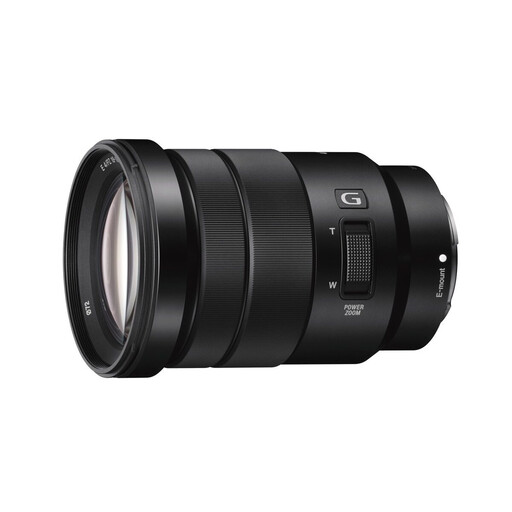
The zoom offers a range of focal lengths for framing fruit and its surroundings. The maximum magnification of 0.11× is limited for enlarging small textures.
Mount: Sony E. Focal length: 18–105 mm. Maximum aperture: f/4. Maximum magnification: 0.11×. Minimum focusing distance: 45 cm.
No. First decide how much of the fruit, bowl and background you want to show. Canon specifies a maximum of 0.5× for the RF 24mm close-up lens; for small details, magnification of 1:1 or higher may be useful.
No. Sony explains that minimum focusing distance is measured from the sensor, while working distance is the space from the front of the lens. Compare the working distance at the magnification you actually plan to use.
For a stationary subject, Nikon’s practical advice is to use a tripod and check the plane of focus carefully. Assess depth of field on your own camera; a wide maximum aperture or lens stabilisation does not guarantee that the whole fruit arrangement will be in focus.
Check that the exact mount and version are compatible with your camera, and leave room for your light source. Protect the lens from splashes when working with fruit, and keep your camera and setup steady.
Usually, yes: ACM ConsuWijzer states that for a product bought online, you generally have 14 days from delivery to change your mind, with some exceptions. The cooling-off period concerns cancelling an online purchase and is separate from your rights if a product is faulty or delivered incorrectly.