Start with the photos you want to create for your portfolio. For a complete fruit arrangement, the angle of view and shooting distance are key, while maximum magnification matters more for tiny textures. Then check the mount and make sure there’s enough room for your lighting. A macro lens won’t automatically give you enough depth of field across every layer of an arrangement.
Who is this for?
Portfolio creator with an existing camera
You want to buy a separate lens that fits your camera. First, check your camera model and the mount on the exact version you’re considering. For example, Sigma sells the 105mm lens separately with Sony E and L mounts.
Creator of wide-angle shots
You want to show the shape, colours and proportions of the whole arrangement, perhaps from a table or from above. Canon Netherlands and Canon Europe discuss both wider perspectives and close-ups for food photography, so remember to consider the angle of view and the space available for your setup.
Photographer of fine details
You might want to capture textures, cut surfaces or small joins in close-up. Sony Netherlands explains how depth of field is limited at short shooting distances, so consider how much of your subject needs to be in focus.
What should you look for when buying?
Start with the mount and the framing you need. Then compare magnification, space for lighting and how you’ll keep multiple layers in focus.
| What to consider |
What to look for when buying |
Who should consider this most? |
| Mount |
Note down the full camera model and check the mount for the exact version of the lens. |
If I’m looking for a lens for my existing camera, I want to be sure it’s compatible. Around 26% of consumers put compatibility first when buying. |
| Overall shot |
Compare the angle of view on your camera and the distance from which you can photograph the whole arrangement. |
When I want to show the composition as a whole, I consider how it will be framed from the shooting position available to me. Around 21% of consumers prioritise the overall shot. |
| Detail magnification |
Compare the maximum magnification of the exact model with the smallest texture or finish you want to capture. |
If tiny details matter more than a single wide shot, I check how much magnification I’ll need. Around 21% of consumers put detail magnification first. |
| Room for lighting |
Check the space in front of the lens with your chosen framing, and see whether you can position your light or diffuser there. |
For close-ups, I want to light my subject without the lens getting in the way of positioning the light. Around 16% of consumers choose room for lighting as their main consideration. |
| Sharpness throughout the depth |
Decide which parts need to be in focus and check whether your camera supports a suitable method using multiple focus points. |
When pieces of fruit are at different distances, I want to know in advance how to get the layers I need in focus. Around 16% of consumers make depth of field their top priority. |
Common buying mistakes
-
Assuming ‘macro’ in the name guarantees 1:1 magnification
According to Canon, the Canon RF 35mm F1.8 MACRO IS STM has a maximum magnification of 0.5×. Nikon specifies a 1:1 reproduction ratio for the NIKKOR Z MC 50mm f/2.8, so these figures don’t mean the same thing.
Check the maximum reproduction ratio of the exact version and compare it with the smallest details you want to photograph.
-
Confusing the focusing distance with space for a light
The minimum focusing distance doesn’t automatically tell you how much space there is in front of the lens. For the Z MC 50mm, Nikon specifies around 5 cm of clearance in front of the lens at the minimum focusing distance.
Check the distance from the front of the lens with your chosen framing, and see whether your light or diffuser will fit there.
-
Assuming one sharp detail means the whole arrangement will be in focus
Depth of field can be shallow in close-ups, while parts of a fruit arrangement may be at different distances.
If needed, plan separate wide and detail shots. Before relying on focus stacking, check whether your camera supports the required shooting method.
Relevant brands for this choice
Canon
Canon RF lenses are an option for compatible EOS R cameras. The RF 35mm F1.8 MACRO IS STM combines a wider view with close-up capabilities.
- Canon specifies a maximum magnification of 0.5× for this model.
- That’s not the same as 1:1. Check that the magnification is right for the smallest details you want to capture.
Nikon
The NIKKOR Z MC 50mm f/2.8 is a standard macro lens for a compatible Nikon Z camera.
- Nikon specifies a 1:1 reproduction ratio for this model.
- Nikon states that there’s around 5 cm of clearance in front of the lens at the minimum focusing distance. Bear this in mind when positioning your lighting.
Sony
The FE 90mm F2.8 Macro G OSS is a longer macro lens with a Sony E mount.
- Sony specifies 1.0× magnification and Optical SteadyShot for model SEL90M28G.
- The minimum focusing distance of 0.28 m isn’t the same as the clearance from the front of the lens.
Sigma
The 105mm F2.8 DG DN MACRO | Art is available in separate versions with Sony E and L mounts.
- Sigma specifies a 1:1 reproduction ratio for this lens.
- The minimum focusing distance is stated as 29,5 cm. Choose the version that fits your camera; a manufacturer’s claim about optical quality isn’t an independent comparison.
OM SYSTEM
The M.Zuiko Digital ED 60mm F2.8 Macro is an option for a compatible Micro Four Thirds camera.
- OM SYSTEM specifies 1:1 magnification and a weight of 185 g for this model.
- The stated 120mm equivalent describes the angle of view on a 35mm basis; the reproduction ratio remains 1:1.
Joybuy products
The Joybuy options below are Sony E lenses for flexible framing and close-ups. They aren’t a substitute for a 1:1 macro lens if you want to capture very small details at a large scale.
 No image available
Sony E 50mm f/1.8 OSS Black
For a Sony E camera and additional close-ups. The maximum magnification isn’t 1:1, so check whether it’s enough for your smallest details.
50 mm prime lens; f/1.8; OSS.
Joybuy
 No image available
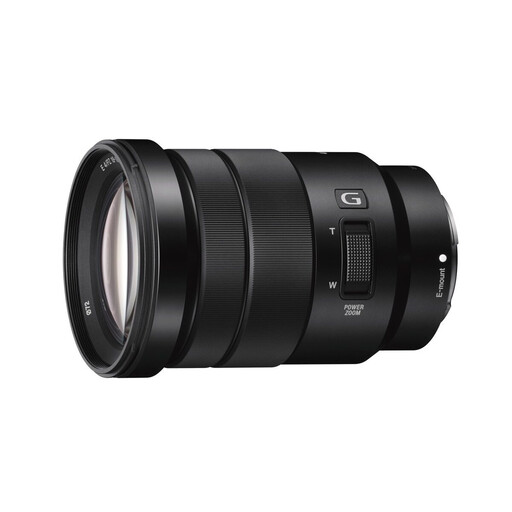
Sony E PZ 18-105mm f/4 G OSS
The zoom gives you more framing options from your camera position, but its limited maximum magnification means it isn’t a substitute for a 1:1 macro lens.
18–105 mm zoom; f/4; OSS.
Joybuy
Frequently asked questions
Do I need 1:1 magnification to photograph a whole fruit arrangement?
No, 1:1 magnification isn’t usually necessary for a wide shot. First, choose an angle of view that fits the arrangement into the frame from your available shooting position. 1:1 is mainly relevant when you need small features to appear large on the sensor.
How can I get fruit at different distances in focus?
Choose your focus point carefully and use a stable camera setup where needed. If depth of field is shallow, check whether your camera model supports taking shots at different focus points and whether you can combine them.
How can I check whether a lens will fit my camera?
Compare the mount on the exact version of the lens with your full camera model. Bear in mind that the same lens may be available with different mounts, such as the Sigma 105mm in Sony E and L versions.
Who is responsible if a lens bought online is faulty?
For a consumer purchase, the seller is responsible for the legal guarantee if the product doesn’t perform as you could reasonably expect under normal use. According to ACM ConsuWijzer, a solution could be a repair, replacement or refund; a shorter manufacturer’s warranty doesn’t remove this right.
Can I return a lens bought online?
For a distance purchase made by a consumer from a business, there’s often a 14-day cooling-off period. Whether it applies depends on the specific purchase; it isn’t a general rule for buying from a private seller, according to the Dutch government.


