
Fossil photographers with an existing camera
First, check which mount fits your camera body. Nikon Z, Sony E, Canon RF and L-mount are different versions and aren’t interchangeable.


Start by choosing a lens that fits your camera mount, then select a magnification that suits the size of the fossil details you want to capture. 0.5× may work well for larger subjects, while 1:1 or higher magnification makes small structures appear larger on the sensor. Also consider the space in front of the lens and the limited depth of field when photographing raised details. You may need a stable setup and, in some cases, focus stacking.
First, check which mount fits your camera body. Nikon Z, Sony E, Canon RF and L-mount are different versions and aren’t interchangeable.
Compare the maximum magnification with the size of the structures you want to capture. Manufacturers such as Sony recommend taking the magnification ratio into account when choosing a macro lens.
If you want to show different depths in sharp focus, consider not only the lens but also a stable setup and the option to combine shots taken at different focus points.
| What to consider | What should you check? | Who is this important for? |
|---|---|---|
| Camera and mount | Check the exact camera model and mount, and make sure the lens version is designed for that mount. | If you’re looking for a lens for your existing camera, you’ll want to make sure the connection is compatible. Around 33% of consumers say compatibility is their main concern when buying. |
| Magnification | Compare the stated maximum magnification with the size of the detail you want to photograph. | If you want small structures to appear larger in the frame, maximum magnification is an important factor. Around 25% of consumers prioritise capturing this kind of detail. |
| Sharpness across raised details | Check whether your camera can capture a focus bracket and whether you’re willing to edit the shots afterwards. | With a textured fossil, you may want to show several depths in sharp focus rather than just the front surface. Around 25% of consumers put depth of field at the top of their list. |
| Working space and window light | Measure the space available and, if stated, look for the working distance at the magnification you want. | If you have limited space by the window, you’ll want to know whether your lens setup will leave the fossil clear of obstructions so light can reach it. Around 17% of consumers cite working space and usable window light as their main concern. |
Compare magnification figures only in relation to the needs they’re relevant to. Canon lists 0.5× for the RF 85mm F2 Macro IS STM and 1.4× for the RF 100mm F2.8L Macro IS USM; Sony lists 1:1 for the FE 90mm. Higher magnification won’t automatically solve the limited depth of field when photographing a thick fossil. Canon and Nikon describe focus stacking as a way to combine shots taken at different focus points.
Minimum focusing distance and working distance are different measurements. Sigma lists a working distance of 141 mm at 1:1 for the 105mm F2.8 DG DN MACRO | Art. Use this information to plan the space you’ll need for the lens, fossil and lighting. Canon also mentions natural light from a window as an option for indoor photography.
The models in this comparison range from 0.5× to 2×. A general view of a larger fossil and a very small detail may call for different magnifications.
Compare the stated maximum magnification with the detail you want to photograph, and check that the lens version is compatible with your camera.
Minimum focusing distance doesn’t tell you how much room there’ll be between the front of the lens and the fossil for lighting and positioning.
Look for the working distance at the magnification you need. Sigma, for example, lists this measurement separately for its 105mm lens at 1:1.
Image stabilisation and depth of field are two different things. In close-up photography, only part of a fossil may be in focus in a single shot.
For a stationary fossil, take a series of shots at different focus points and combine them if needed. Allow extra time for taking and editing the shots.
Canon offers RF macro lenses for EOS R cameras, with different stated magnifications.
The NIKKOR Z MC 105mm f/2.8 VR S is a Z-mount lens with a stated reproduction ratio of 1:1.
The FE 90 mm F2.8 Macro G OSS (SEL90M28G) is a Sony E-mount lens with a stated maximum magnification of 1:1.
The 105mm F2.8 DG DN MACRO | Art is available in Sony E-mount and L-mount versions, with a stated magnification of 1:1.
The CF 65mm F2.8 CA-Dreamer Macro 2X is designed for APS-C versions and offers manual focusing.
Sony E-mount lenses for close-up photography. Their stated magnifications mean they aren’t a substitute for the macro lenses with 0.5× or higher magnification compared above.
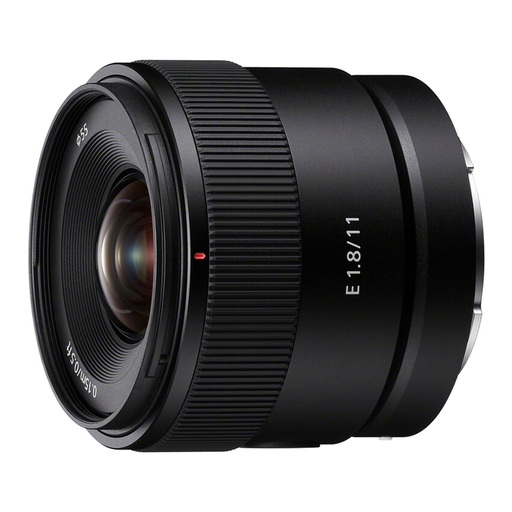 No image available
The product description mentions close-up photography as a use, but its stated magnification is below the macro options of 0.5× and above mentioned here.
Magnification: 0.13× with autofocus and 0.20× with manual focusing. Sony E-mount; APS-C version.
 No image available
The product description mentions macro and close-up photography, but its stated magnification is below the macro options of 0.5× and above mentioned here.
Magnification: 0.16×. Sony E-mount.
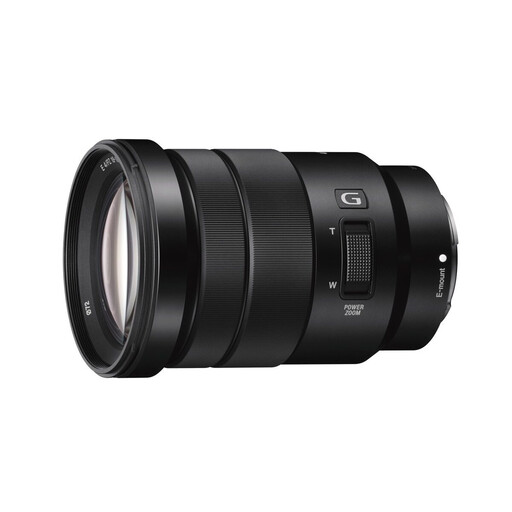 No image available
The product description mentions close-up photography, but its stated magnification is below the macro options of 0.5× and above mentioned here.
Magnification: 0.11×. Sony E-mount; zoom lens.
Not necessarily. If enough daylight reaches the fossil, you can start by using window light. Canon lists light coming in through a window as an option for indoor photography. Check whether your lighting and setup provide enough light for the shot.
If needed, take several shots at different focus points and combine them. Focus stacking can increase the apparent depth of field, but it requires a stable setup and some post-processing.
No. First check the exact mount and lens version. Then compare the magnification: Canon, for example, lists 0.5× for the RF 85mm F2 Macro IS STM and 1.4× for the RF 100mm F2.8L Macro IS USM.
If it’s faulty, contact the retailer. According to the Dutch government, the retailer must provide a solution if there’s a problem with a product. Any manufacturer’s guarantee is separate from your legal right to a product that is fit for purpose.
Not always. According to the Dutch government, distance purchases usually come with a 14-day cooling-off period, but this doesn’t apply to every transaction. For example, online purchases from a private seller aren’t covered by these rules. Check which terms apply to your purchase.