
Photographers capturing tiny flower details
You want to capture stamens in close-up, so you compare the maximum magnification, focusing options and working distance of lenses compatible with your camera.


Start by checking your camera’s mount, then decide how much magnification you need: 1:1 reproduces your subject at life size on the sensor, while 0.5x gives you a less powerful close-up. Next, compare working distance and weight. Image stabilisation helps reduce camera shake, but it won’t freeze a flower moving in the wind.
You want to capture stamens in close-up, so you compare the maximum magnification, focusing options and working distance of lenses compatible with your camera.
You want to bring a macro lens without making your walk more of a workout, so you weigh up the lens’s weight against its magnification and protection for outdoor use.
You take handheld photos of moving flowers and want to distinguish camera shake from subject movement.
First, check that the mount is compatible. Then decide how much detail magnification you need, and compare working distance, weight and protection for outdoor use.
| What to consider | What to look for when buying | Who is this important for? |
|---|---|---|
| Compatible camera mount | Check the exact camera model and the mount of the version on offer. For example, Sigma makes separate versions for Sony E and L-Mount. | I want to make sure the lens fits my camera before comparing other features. Around 31% of consumers prioritise compatibility. |
| Magnification and working distance | Compare both the maximum magnification and the working distance. The minimum focusing distance is measured from the sensor, not the front of the lens. | If I want the stamens to look large in the frame, I prioritise magnification and precise focusing. Around 25% of consumers put flower details first. |
| Sharpness in windy conditions | Check whether the lens has image stabilisation, but also adjust the shutter speed to suit the flower’s movement and the available light. | When flowers move as I take handheld photos, I want to avoid subject movement making my shot blurry. Around 25% of consumers prioritise this scenario. |
| Portability and protection | Compare the weight of the compatible version and check exactly what dust and splash protection the manufacturer specifies. If possible, change lenses away from sand. | I want to keep the weight down on a walk and protect my gear from sand and moisture. Around 19% of consumers prioritise portability and outdoor use. |
Canon lists a maximum magnification of 0.5x for the RF 85mm F2 Macro IS STM and 1.4x for the RF 100mm F2.8L Macro IS USM. So these models don’t offer the same maximum magnification for fine detail.
Check the maximum magnification of the exact model rather than relying on the product name alone.
Minimum focusing distance is measured from the sensor; working distance is the distance between your subject and the front of the lens.
Compare both measurements if you want to leave some space in front of the lens when photographing a flower.
Sigma describes its construction as dust- and splash-resistant and says it can be used in light rain, but it isn’t waterproof. The protection offered by the lens and camera should be assessed separately.
Read the manufacturer’s guidance and protect your gear from sand and splashing water.
For compatible RF cameras, Canon offers both a 1.4x option and a less powerful 0.5x lens.
Sony says the FE 90 mm F2.8 Macro G OSS is designed for Sony E cameras and features optical stabilisation.
The NIKKOR Z MC 105mm f/2.8 VR S is a 1:1 lens for a compatible Nikon Z camera.
The M.Zuiko Digital ED 60mm F2.8 Macro is a lightweight 1:1 option for a compatible Micro Four Thirds camera.
Sigma says the 105mm F2.8 DG DN MACRO | Art is available in versions for Sony E and L-Mount.
The selection below includes Sony E lenses for different uses and with different magnification levels. Their stated maximum magnifications are below 1:1, so these models don’t meet the 1:1 guideline above if you want stamens to appear large in the frame.
 No image available
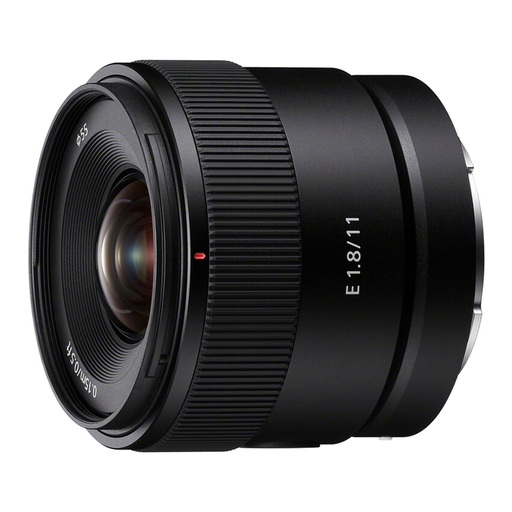
This is a Sony E wide-angle lens for APS-C; its stated magnification is limited for capturing tiny flower details.
Maximum magnification: 0.13x with AF and 0.20x with MF. Weight: 181 g. Minimum focusing distance: 15 cm. The product information lists OSS and a dust- and moisture-resistant design.
 No image available
This Sony E lens lists macro photography as one of its uses, but its stated magnification is below 1:1.
Maximum magnification: 0.16x. Weight: 202 g. OSS is included in the product name.
 No image available
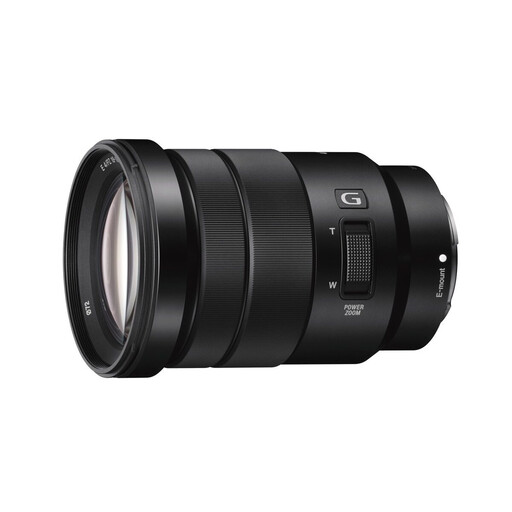
This Sony E zoom lens lists close-up photography as one of its uses, but its stated magnification isn’t designed to capture tiny stamens at 1:1.
Maximum magnification: 0.11x. Weight: 427 g. Minimum focusing distance: 45 cm. OSS is included in the product name.
No. At 1:1, the image projected onto the sensor in use is the same size as the subject. For its 60mm lens, OM SYSTEM lists both 1.0x on Micro Four Thirds and 2.0x in 35 mm equivalent terms; these are different measurements.
Image stabilisation compensates for camera movement, not the movement of the flower. So also consider the shutter speed you need and the available light. When shooting close up, even a small movement can shift the plane you want to keep sharp.
Sony recommends changing lenses only when necessary, in an area free from dust or sand, and pointing the camera body down while doing so. Keep the cap on any lens you aren’t using.
Contact the seller about your statutory guarantee. ACM ConsuWijzer explains that statutory guarantees in the Netherlands don’t have a fixed two-year term; what you could reasonably expect from the product and the cause of the fault are taken into account.
It depends on the area. In the Noordhollands Duinreservaat, PWN’s access rules require visitors to stick to official paths and play areas. The Dutch government says that rules can vary from one area to another, so check the local rules and signs.