
Maker with an existing camera
You want to find a lens that fits your camera mount first, then compare magnification and size. Manufacturers such as Canon, Sony, Nikon and Sigma specify models for different camera mounts.


Start by checking your camera’s mount, then work out how small the details you want to photograph are: 0.5× may be enough for wider shots, while 1:1 gives you more room to capture fine lines and edges. Next, compare the working distance with the space you need on the shared workbench for your lighting and camera. Greater magnification won’t, by itself, solve shallow depth of field or reflections on glossy enamel.
You want to find a lens that fits your camera mount first, then compare magnification and size. Manufacturers such as Canon, Sony, Nikon and Sigma specify models for different camera mounts.
You want to capture fine lines and edges individually, and weigh magnification against the shallow depth of field when focusing at close range. Sony highlights this limited depth of field as something to bear in mind in macro photography.
You share a workbench and need space in front of the lens to position your camera, pin and lighting. The working distance at your intended magnification can help you decide whether everything will fit.
When photographing enamel pins in a shared workshop, five different priorities may guide your choice.
| What to consider | What should you check? | Who should consider this? |
|---|---|---|
| Compatibility | Check the mount and camera model; with Sigma, also compare the separate E-mount and L-mount versions. | If I want to keep using my existing camera, the version needs to be compatible with it. Around 28% of consumers put compatibility first. |
| Magnification | Compare the maximum reproduction ratio on a like-for-like basis and check that it suits the smallest detail you want to capture. | For a fine line or small edge, I want to know how large that detail will appear on the sensor. Around 22% of consumers put magnification first. |
| Working distance and lighting | Check the clear space in front of the lens at your intended magnification, and allow for the position of your lighting. | At a shared workbench, I want room for my camera and lighting without the setup getting in the way. This is the main priority for around 22% of consumers. |
| Depth of field | Consider whether a single shot will show the relief sharply enough, and check whether your camera and editing software can handle a series of focus points. | If I want raised or curved areas to look sharp, I need to bear in mind the shallow depth of field when shooting close up. Around 17% of consumers prioritise this. |
| Complete setup | See whether your existing lens can already capture the composition you want, and whether your camera and any support equipment will fit on the workbench. | I want to know whether my current setup is good enough before choosing another lens. The overall workflow is the main consideration for around 11% of consumers. |
The percentages represent consumers who name each of these considerations as their main reason for choosing a macro lens for enamel pins.
Minimum focus distance is measured from the sensor plane. The space in front of the lens is smaller, and partly determines whether you can position your lighting and pin on the workbench.
Check the working distance at the magnification you plan to use, and make sure your complete camera, lighting and pin setup fits the available space.
An impractical distance may mean you need to rearrange the workbench or lighting.
Canon specifies a maximum of 0.5× for the RF 35mm F1.8 MACRO IS STM, compared with a maximum of 1.4× for the RF 100mm F2.8L Macro IS USM.
Compare the stated maximum reproduction ratio with the smallest composition you actually need.
For the M.Zuiko Digital ED 60mm F2.8 Macro, OM SYSTEM states 1.0× on Micro Four Thirds and 2.0× as the 35mm-equivalent magnification. These are not the same measurements.
Compare optical reproduction ratios on a like-for-like basis, and assess angle of view and sensor size separately.
Magnification alone doesn’t determine how reflections appear or how much of the relief is in focus. Sony describes both the effect of light direction on shadows and the shallow depth of field in macro photography.
Take test shots and, if needed, change the position of the light, pin or camera. If a single shot doesn’t give you enough depth of field, you can take shots at different focus points of a stationary pin and combine them. This requires extra shots and editing.
Focus stacking takes extra time to capture stable shots and edit them.
For compatible RF cameras, Canon offers options including a 35mm lens for close-ups and a 100mm lens with a higher maximum magnification.
The range for Sony E-mount cameras includes a 90mm lens with 1:1 magnification and a 100mm lens with a maximum of 1.4×.
The NIKKOR Z MC 105mm f/2.8 VR S is a 1:1 option for a compatible Nikon Z camera.
The 105mm F2.8 DG DN MACRO | Art is a 1:1 option available with a separate Sony E or L mount.
The M.Zuiko Digital ED 60mm F2.8 Macro is a 1:1 option for a compatible Micro Four Thirds camera.
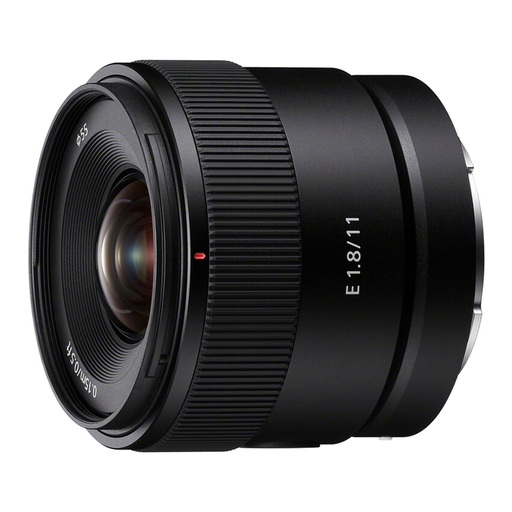
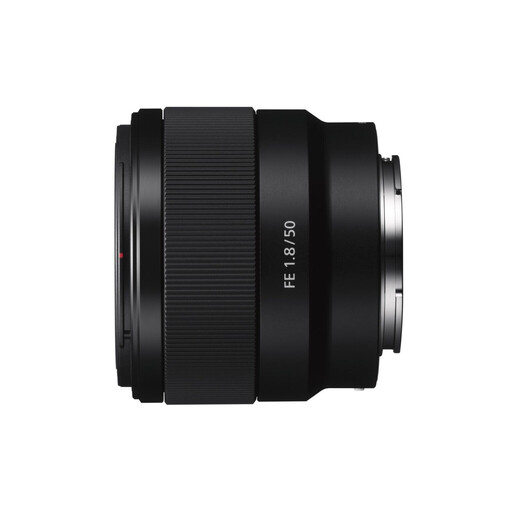
These Joybuy products are Sony E-mount lenses for modest close-ups; they are not 1:1 macro lenses for filling the frame with very small pin details.
 No image available
Worth considering only if you use a Sony E-mount camera and can capture the close-up you want at low magnification; it’s not a substitute for a 1:1 macro lens when photographing very fine pin lines.
The product information lists a maximum magnification of 0.20× with manual focusing and a minimum focus distance of 0.15 m. This focus distance is not the same as the clear working space in front of the lens.
 No image available
Worth considering for close-ups with a Sony E-mount camera if your desired composition doesn’t require high magnification; compared with a 1:1 macro lens, its specified magnification is limited for very small details.
The product information lists 0.16× magnification and a minimum focus distance of 39 cm. This distance doesn’t tell you how much clear space will be left in front of the lens.
It depends on the smallest composition you want and your sensor. At 0.5×, the subject is projected onto the sensor at a maximum of half its actual size; at 1:1, it is life-size. First check whether your current lens can capture the whole pin and its smallest details at a sufficient size.
Keep the pin and camera steady, and check focus across the entire relief. If a single shot doesn’t give you enough depth of field, you can combine images taken at different focus points. Check that your camera and editing software support this.
First, review some test shots and, if needed, change the position of the light, pin or camera. Sony explains that the angle of incoming light affects visible shadows, so simply using a different lens won’t guarantee a good result with glossy enamel.
When you buy from a business at a distance as a consumer, you generally have a 14-day cooling-off period, subject to exceptions explained by the Dutch government. The product must also meet legal requirements; there is no fixed general statutory guarantee period, and the retailer is your point of contact if something is wrong.
If identifiable people appear in images used for professional or commercial purposes, the Dutch Data Protection Authority says you need a lawful basis under the GDPR to take and publish those images. Consent can be one such basis, but it isn’t automatically the only one. Keep others out of shot if you only want to photograph pins, and assess identifiable images separately.