
Photographer building a portfolio of small details
You want to show enamel lines, edges and finishes clearly. Magnification, framing and focusing at close range are all important considerations.


Start by choosing a lens mount that fits your camera, then check that the maximum magnification is sufficient for the details you want to capture. A versatile close-up lens may be enough to photograph a whole pin; for tiny finishing details, 1:1 magnification or higher gives you more scope. However, keeping the relief in focus and controlling reflections also depend on your setup.
You want to show enamel lines, edges and finishes clearly. Magnification, framing and focusing at close range are all important considerations.
You want to choose a lens that fits your camera, rather than relying on the word ‘macro’ alone. So, check the mount on the exact version you’re considering.
You want to control reflections and capture both the surface and the relief clearly. Lighting and focusing matter just as much as the lens.
Suitable if: you mainly photograph whole pins and want to use the lens for other subjects too. Check that its magnification suits the framing you want.
Consider: ‘macro’ in a model name doesn’t automatically mean 1:1; Canon lists a maximum magnification of 0.5× for the RF 85mm F2 Macro.
Suitable if: you want to highlight tiny lines, edges or fastenings, and have a camera with a compatible mount.
Consider: 1:1 magnification won’t solve limited depth of field or reflections; also allow room in front of the lens for your lighting. Nikon, Sony, Tamron and Fujifilm list 1:1 or 1× for the macro versions mentioned here.
Suitable if: you want to magnify individual, very small finishing details and have a Canon RF camera; Canon lists a maximum of 1.4× for the RF 100mm F2.8L Macro IS USM.
Consider: extra magnification isn’t necessarily needed for a photo of the whole pin; precise focusing and suitable lighting remain important.
| What to consider | What should you check? | Who is this important for? |
|---|---|---|
| Magnifying small details | Compare the maximum magnification of the exact model with the framing you want; don’t choose based on the word ‘macro’ alone. | If I want to fill the frame with small enamel details, I focus on maximum magnification. Around 36% of consumers make detail magnification their top priority. |
| Compatible mount | Note your camera model and mount; if there are several versions, check that you’re choosing the right one. | If you want to keep using your existing camera system, you need a lens with the right mount. For around 29% of consumers, compatibility comes first. |
| Room for lighting | Consider the working distance at your chosen magnification. The focusing distance measured from the camera isn’t the same as the clear space in front of the lens. | With glossy pins, I want to position the light and camera without bringing out unwanted reflections. Around 21% of consumers prioritise working space and glare control. |
| Keeping the relief in focus | Check whether your camera and editing workflow support focus bracketing or focus stacking if a single plane of focus isn’t enough. | If I want raised areas to appear sharp from front to back, I look at focusing across multiple distances. Around 14% of consumers put this need first. |
Maximum magnification varies by model. For example, Canon lists 0.5× for the RF 85mm F2 Macro and 1.4× for the RF 100mm F2.8L Macro.
Check the maximum magnification of the exact version against the smallest details you want to photograph.
The stated distance doesn’t necessarily tell you how much clear space there will be between the pin and the front of the lens. Fujifilm explains that its distance is measured from the camera mount; Nikon notes that the front of the Z MC 50mm can come close to the subject.
Check the space in front of the lens with your own lighting setup, especially at maximum magnification.
Stabilisation is designed to counter camera movement, while focus stacking combines shots taken at different focus points. These are separate considerations when photographing a pin with glossy or raised areas.
Plan your lighting separately, and check whether your camera and editing workflow can handle a series of shots taken at different focus points.
For Canon RF camera owners choosing between versatile close-ups and greater detail magnification.
For Nikon Z users considering a 50mm lens for a range of subjects or a 105mm macro lens.
For owners of cameras with a Sony E mount considering a full-frame macro lens.
A 90mm macro option for anyone looking for a version with a Sony E or Nikon Z mount.
For owners of a compatible Fujifilm X camera looking for an XF macro lens.
These product options are intended for close-up photography. Check that the mount and magnification of each model suit your pin and camera.
 No image available
This version is worth considering if you have a Sony E camera; check that its magnification is sufficient for the smallest details in your portfolio.
The product name lists 50 mm, f/1.8 and OSS.
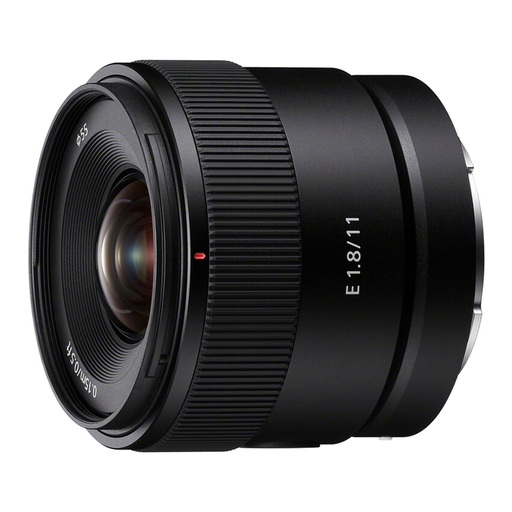 No image available
The product name identifies this model as an ultra-wide-angle lens. Consider the framing you want and check whether its magnification will work for the small details on your pin.
The product name lists 11 mm, F1.8 and APS-C.
No, maximum magnification varies by model. For example, Canon lists 0.5× for the RF 85mm F2 Macro and 1.4× for the RF 100mm F2.8L Macro; the magnification you need depends on the framing you want.
If a single plane of focus isn’t enough, you can combine shots taken at different focus points using focus stacking. Check which bracketing or stacking features your camera and editing software support; this is a shooting technique, not a feature guaranteed by every macro lens.
First, see how the pin reflects the light, then try changing the position of the light, camera and subject. A different magnification won’t control reflections by itself.
For many online purchases from a business, Dutch government guidance provides for a 14-day cooling-off period; exceptions and the type of seller matter. Faulty products are covered by a statutory guarantee, with no fixed statutory guarantee period in the Netherlands. Contact the seller to find a solution.