What should you look for when photographing embroidery stitches on dark fabric?
First check that the lens fits your camera, then compare its magnification with your smallest stitch, and finally consider the space available for lighting and focusing.
| What to consider |
What should you check? |
Who is this important for? |
| Camera mount |
Check your camera model and the mount on the exact version of the lens. |
When choosing a lens, I want to make sure it fits my camera first. Around 28% of consumers prioritise compatibility. |
| Magnification |
Compare the maximum magnification with your smallest stitch and the framing you want. |
If I want to make a small stitch appear large in the frame, magnification is my main consideration. Around 22% of consumers prioritise capturing fine details. |
| Sharpness and lighting |
Test the depth of field at different aperture settings and assess the exposure on the dark fabric. |
When photographing texture on dark fabric, I want to know whether the stitches will stay sharp without the image becoming too dark. Around 22% of consumers prioritise a balance of sharpness and exposure. |
| Space in front of the lens |
Look up the working distance for the exact model; the minimum focusing distance is not the same as the clear space in front of the lens. |
If I use a lamp or reflector, I want to leave enough room in front of the lens. Around 17% of consumers focus on this working space. |
| Other uses |
Decide whether the magnification is sufficient for embroidery and suits the other subjects you photograph. |
If I want to use my lens for more than embroidery photography, I weigh this against the magnification I need and the set-up. Around 11% of consumers prioritise versatility and the complete set-up. |
Joybuy lenses for close-ups
This Joybuy selection includes Sony E lenses for close-up and product photography. Compare the stated magnification with the smallest stitch you want to capture.
 No image available
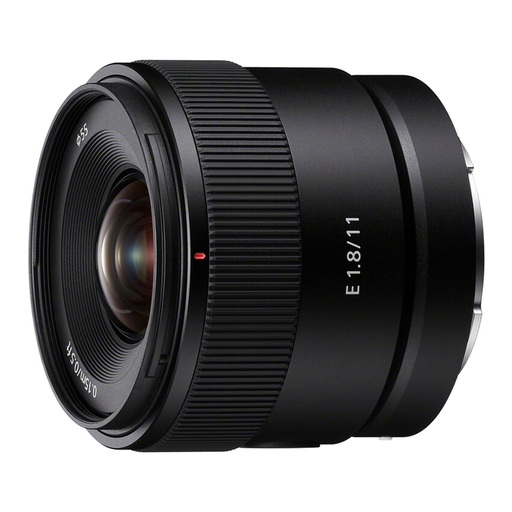
Sony E 11mm F1.8 APS-C wide-angle lens (SEL11F18)
The product information mentions close-ups; compare the magnification with the size of your embroidery stitches before choosing this lens for the job.
11mm F1.8, APS-C. The stated magnification is 0.13× with autofocus and 0.20× with manual focus.
Joybuy
 No image available
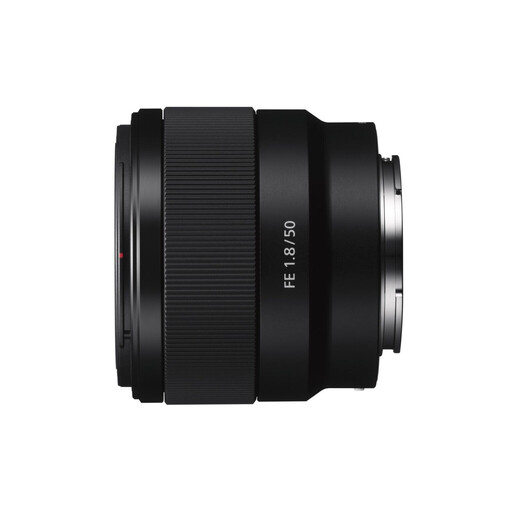
Sony E 50mm f/1.8 OSS Black
The product information mentions close-up and product photography; check whether the magnification is sufficient for the smallest stitches you want to capture.
The stated magnification ratio is 0.16×.
Joybuy
Frequently asked questions about macro lenses for embroidery
Is ‘macro’ on a lens enough to tell whether a single stitch will appear large in the frame?
No. Compare the maximum magnification of the exact lens with the stitch and the framing you want. For example, Canon Europe lists a maximum of 0.5× for the RF 85mm F2 MACRO IS STM and 1.4× for the RF 100mm F2.8L.
How can you keep several layers of embroidery stitches in focus?
Test the depth of field at different aperture settings. If your work is stationary, you can combine different focus points from several shots using focus stacking; this also requires post-processing.
Why won’t a fast lens automatically solve the problem of photographing dark fabric?
With close-ups, you may need to stop down to bring more of the embroidery texture into focus. Extra light can help; check that the working distance of your chosen lens leaves enough room for your lighting, and take some test shots.
What are your rights when buying a lens online in the Netherlands?
According to the Dutch government, when you buy from a business online as a consumer, you generally have 14 days to change your mind; check the terms and exceptions that apply to your specific purchase. If a product is faulty, the Dutch government says the seller must provide a solution; this responsibility does not lie solely with the manufacturer.


