First, choose a lens with the right mount, then decide how much magnification you need: for individual stitches, maximum magnification matters more than simply having ‘macro’ in the name. Also compare the working distance, as a lens positioned close to the fabric may block the window light. With a shallow depth of field, a stable camera setup may matter more than a high stabilisation rating. This is a buying guide based on manufacturers’ specifications and photography advice, not a practical test on embroidery.
Who is this buying guide for?
Embroiderers who want to show individual stitches
You want to fill the frame with tiny stitches, so you need to consider magnification, working distance and depth of field together. Nikon Netherlands, Sony Netherlands and Nikon provide information on magnification and macro photography.
Creators with a mirrorless camera
You’re looking for a lens that fits your existing camera mount and leaves enough working space above the embroidery. Nikon Netherlands, Sony Netherlands, Canon Europe and Fujifilm describe models and mounts for different camera systems.
Creators with a spot by the window
You want to capture texture in natural light without the camera and lens blocking the light from reaching the fabric. Nikon Netherlands and Canon Europe offer photography advice on stable setups and lighting conditions.
What should you look for when choosing?
First, check your camera’s mount. Then decide whether you want to photograph individual stitches or a larger motif, and whether there’s enough room to position the lens and make the most of the window light.
Short macro lens with 1:1 magnification
A good fit if: you want to photograph both details and larger areas of fabric, and can position the camera close to your work.
Bear in mind: there’s little space between the lens and the fabric; Nikon Netherlands gives an approximate working distance of 5 cm for the NIKKOR Z MC 50mm f/2.8 at its closest setting.
Macro lens of around 90–105 mm
A good fit if: you want to capture individual stitches while leaving some space between the lens and the fabric.
Bear in mind: a longer lens needs more room around your setup; Sony Netherlands gives an approximate working distance of 13 cm for the FE 90mm at its closest focusing distance.
Close-ups with less magnification
A good fit if: you mainly want to show an embroidery motif or a larger area of fabric. First, check whether your current lens can capture the framing you want.
Bear in mind: smaller details will appear less large on the sensor than they would with 1:1 magnification.
| What to consider |
What to look for when buying |
Who is this important for? |
| Magnification |
Compare the maximum magnification with the size of the stitches you want to show. 1:1 means the subject is reproduced on the sensor at life size. |
If I want to fill the frame with individual stitches, I need to know whether the magnification can capture that level of detail. Around 33% of consumers prioritise magnification suited to the stitch size they want to show. |
| Mount and working space |
Check the exact camera mount and lens version. Distinguish between the minimum focusing distance and the space between the front of the lens and the fabric. |
When using a camera I already own, I need a compatible mount and enough room above the fabric. Around 27% of consumers prioritise the camera mount and working space. |
| Sharpness in window light |
Consider whether a tripod and manual focusing will work for your setup. Stabilisation does not increase depth of field. |
When the window light changes, I want to keep the stitches sharp without the lens blocking the light. Around 20% of consumers prioritise sharpness in window light. |
| Features you need |
First, try framing your subject as you want it with your current lens. Then compare only versions with the right mount. |
For a larger embroidery motif, I don’t want to choose magnification I don’t need, so I’ll first check what my current lens can do. Around 20% of consumers prioritise the features they need. |
Common mistakes
-
Assuming ‘macro’ always means the same magnification
Maximum magnification varies between lenses and determines how large a small stitch can appear on the sensor.
Check the maximum magnification and match it to the detail you want to show: individual stitches or a larger motif.
-
Comparing only the minimum focusing distance
This distance is not measured from the front of the lens to the fabric. A short working distance can limit the space available for window light.
Look up the working distance too, and plan the camera position in relation to the window.
-
Confusing a high stabilisation rating with greater depth of field
Stabilisation and the position of the plane of focus are two different things. Manufacturers’ ratings also apply under specific conditions.
Check where the plane of focus falls on the stitches, and consider using a stable setup for a stationary subject.
Relevant brands for macro photography
Nikon
The NIKKOR Z MC 50mm f/2.8 is designed for Nikon Z users looking for a compact 1:1 lens for details as well as wider shots.
- Nikon Netherlands specifies 1:1 magnification.
- At its closest setting, Nikon gives an approximate working distance of 5 cm, leaving little room above the fabric. According to Nikon, any VR comes from a compatible camera, not this lens.
Sony
The FE 90mm F2.8 Macro G OSS is an option for Sony E users who want to compare 1:1 detail while keeping more distance from the fabric.
- Sony Netherlands specifies 1:1 magnification and optical stabilisation.
- Sony gives an approximate working distance of 13 cm at the closest focusing distance. These are manufacturer specifications, not an independent sharpness test on embroidery.
Canon
The RF 100mm F2.8L Macro IS USM is designed for compatible Canon RF cameras when you want to capture very small details at high magnification.
- Canon Europe specifies up to 1.4× magnification and a minimum focusing distance of 0.26 m.
- Under its own test conditions, Canon gives a lower stabilisation rating at 1.0× than its general maximum rating. These figures can’t predict the results of every window-light setup.
Fujifilm
The XF30mmF2.8 R LM WR Macro is designed for Fujifilm X users looking for a compact 1:1 lens that’s useful for more than just close-ups.
- Fujifilm specifies 1:1 magnification and a minimum focusing distance of 10 cm.
- According to Fujifilm, at this setting the subject is almost touching the front element, which is worth considering if you’re using light from the side.
Sigma
The 105mm F2.8 DG DN MACRO | Art is a 1:1 alternative, available in separate versions for Sony E and L-mount.
- Sigma specifies 1:1 magnification and a minimum focusing distance of 29.5 cm.
- Check the mount of the version on offer: the different versions are not interchangeable.
Joybuy products for close-ups
This selection features Sony E lenses with limited close-up magnification. They may suit larger embroidery motifs, but their stated magnification is below 1:1, making them less suitable if you want individual stitches to fill the frame.
 No image available
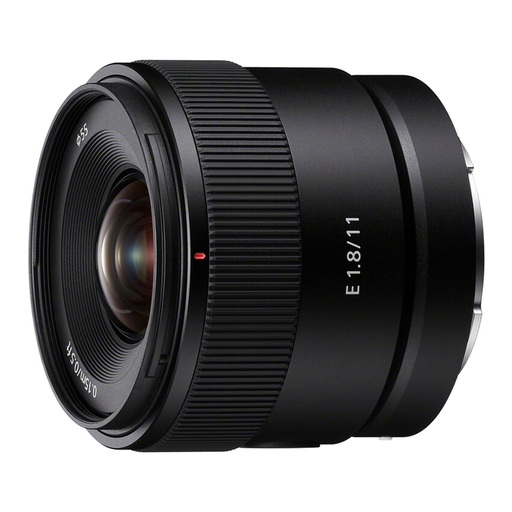
Sony E 11mm F1.8 APS-C Wide Angle Prime Lens (SEL11F18)
Worth considering for close-ups of a larger motif; maximum magnification is below 1:1.
Mount: Sony E. Maximum magnification: 0.13× with autofocus and 0.20× with manual focus. Minimum focusing distance: 15 cm.
View at Joybuy
 No image available
Sony E 50mm f/1.8 OSS Black
May suit a close-up of a larger embroidery motif; its stated magnification is below 1:1 for individual stitches.
Mount: Sony E. Maximum magnification: 0.16×. Minimum focusing distance: 39 cm.
View at Joybuy
 No image available
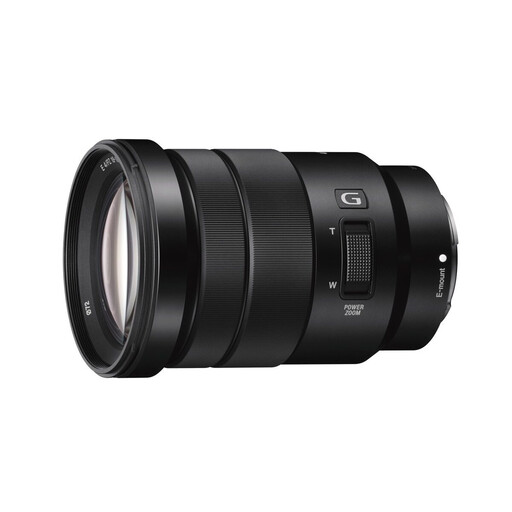
Sony E PZ 18-105mm f/4 G OSS
Worth considering if you want to frame a larger motif; its stated magnification is below 1:1.
Mount: Sony E. Zoom range: 18–105 mm. Maximum magnification: 0.11×. Minimum focusing distance: 45 cm. The product description mentions optical image stabilisation.
View at Joybuy
Frequently asked questions
Do I need 1:1 magnification for every embroidery photo?
No. Less magnification may be enough for an entire embroidery motif. At 1:1, the subject is reproduced on the sensor at life size, so first compare the framing you want with what your current lens can capture.
Why isn’t the minimum focusing distance the same as the space above the fabric?
The minimum focusing distance is measured from the sensor plane, while the working distance is measured from the front of the lens to the subject. For the FE 90mm, Sony Netherlands gives these as 28 cm and approximately 13 cm respectively.
How can I keep my shot steady in window light?
A tripod can help keep the camera steady when photographing a small subject, while manual focusing helps you choose the point you want in focus. Nikon offers this as photography advice; also consider how the window light falls on the fabric.
What are my rights when buying a lens online in the Netherlands?
For online distance purchases from a business, you usually have 14 days to change your mind, according to the Dutch Government. There are exceptions, and purchases from private individuals are not covered in the same way. When you buy as a consumer, the product must be of satisfactory quality, and the seller is your point of contact if something is wrong. The Dutch Government states that there is no fixed statutory guarantee period for all products.


