
Dried-flower detail seeker
Wants to capture veins and tiny textures in close-up, and focuses on magnification, focusing distance and the space around the subject.


For fine veins and tiny textures, a lens with 1:1 magnification or higher is a natural choice; for a flower head or a wider still-life composition, a lens with less magnification may be enough. First, check your camera’s mount and consider how much room you have around the flower. With limited window light and several areas you want in focus, a stable set-up and focus stacking may matter more than a wide maximum aperture alone.
Wants to capture veins and tiny textures in close-up, and focuses on magnification, focusing distance and the space around the subject.
Wants to frame a flower head or arrangement and choose how much of it will be in focus. A maximum magnification of 1:1 is not automatically necessary.
Wants a lens that fits their existing camera and is weighing up a new purchase against trying their current lens first.
First decide whether you want to capture tiny details or a wider still-life composition. Then check the camera mount and choose an approach that suits the level of sharpness you want and the available window light.
| What to consider | What should you look for? | Who is this important for? |
|---|---|---|
| Magnification for fine details | Compare the maximum magnification and minimum focusing distance of the exact model; this distance is not the same as the clear space in front of the lens. | If I want to capture veins or tiny leaves in close-up, I focus mainly on magnification. Around 36% of consumers prioritise capturing fine details. |
| Sharpness in window light | Decide whether you want one detail or several layers of the flower in focus; consider a stable set-up and, if needed, focus stacking. | If I want to keep several parts of a still floral arrangement in focus, I weigh the available light against the depth of field I want. Around 29% of consumers prioritise this choice of focus. |
| Compatible camera mount | Check your camera model and the exact lens mount; take extra care if a model is available with several mounts. | Before choosing a lens, I want to make sure the version is compatible with my camera. Around 21% of consumers prioritise compatibility. |
| Current lens or a new one | First, take a test shot at the minimum focusing distance of your current lens and compare the framing with the result you want. | If I mainly want to photograph larger flowers or an arrangement, I first want to know whether my current lens can focus close enough. Around 14% of consumers prioritise versatile use of their existing equipment. |
A close-up lens with ‘Macro’ in its name may not offer life-size magnification. Lower magnification may not be enough if you want tiny details to fill the frame.
Before buying, compare the exact model’s maximum magnification with the framing you want.
If the lens cannot show the details at the size you want, you may still need a different lens for those shots.
The minimum focusing distance does not tell you how much clear space there will be between the front of the lens and the dried flower. That difference can matter in a tight window-side set-up.
Also check the practical working distance at the magnification you want to use.
Stabilisation and keeping several layers of a flower sharp solve different problems. Canon also quotes a lower stabilisation rating for the RF 100mm F2.8L Macro IS USM at 1.0× than its general maximum claim.
First decide which parts of the flower need to be sharp. For a still subject, you could consider a stable set-up or focus stacking.
For a compatible Canon EOS R camera, the RF 100mm F2.8L Macro IS USM and RF 85mm F2 Macro IS STM are two different close-up options.
Nikon describes the NIKKOR Z MC 105mm f/2.8 VR S as a 1:1 macro lens for a compatible Nikon Z camera.
For a compatible Sony E camera, Sony lists the FE 90 mm F2.8 Macro G OSS and FE 100 mm F2.8 Macro GM OSS as two different macro models.
The 105mm F2.8 DG DN MACRO | Art is a 1:1 option, available in separate versions for Sony E and L-Mount.
According to Tamron, the 90mm F/2.8 Di III MACRO VXD (F072) offers 1:1 magnification and is available for Sony E and Nikon Z.
These Sony E lenses are suited to close-ups or more flexible framing; their quoted magnifications remain below 1:1.
 No image available
Could suit close-ups of dried flowers if magnification below 1:1 is enough and your camera has a Sony E mount.
Maximum aperture: f/1.8. Quoted magnification: 0.16×.
Magnification is below 1:1 for life-size reproduction on the image sensor.
 No image available
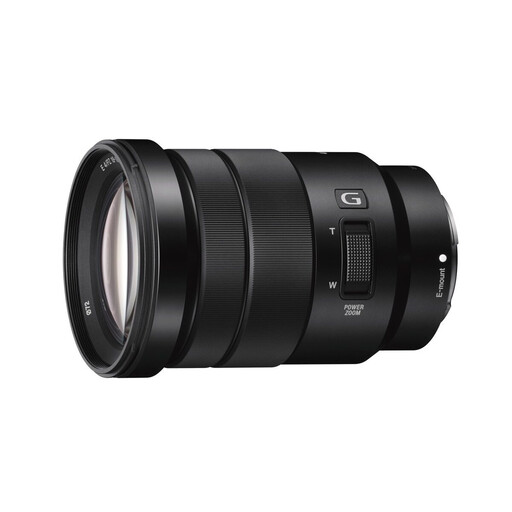
Could suit you if you want to adjust the framing of a flower or still life and do not need 1:1 magnification.
Zoom range: 18–105mm. Maximum aperture: f/4. Quoted maximum magnification: 0.11×.
The quoted magnification is below 1:1 for life-size reproduction on the image sensor.
 No image available
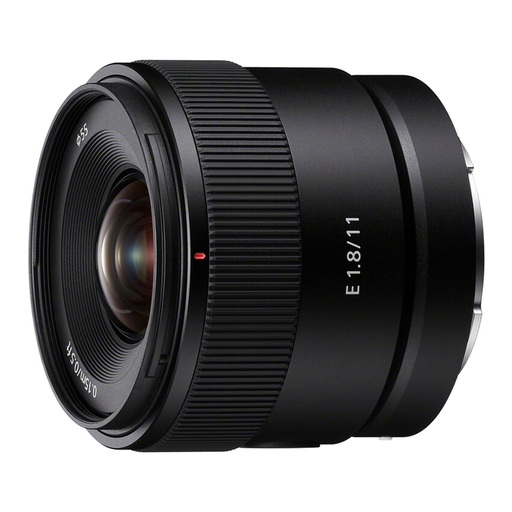
Could suit a close-up where you also want more of the surroundings in the frame, provided your camera and shooting technique are compatible with this version.
Focal length: 11mm. Maximum aperture: f/1.8. Quoted maximum magnification: 0.20× in MF and 0.13× in AF. Minimum focusing distance: 15 cm.
Both quoted magnifications are below 1:1 for life-size reproduction on the image sensor.
No. For a whole flower or a wider still-life composition, a lens with less magnification may be enough. If you want to capture a tiny detail at life size on the image sensor, compare the exact model’s maximum magnification; ‘Macro’ in the name alone is not enough.
Use a stable set-up and focus carefully. If your shooting and editing workflow allows, you can combine images taken at different focus points; this is called focus stacking.
No. Check your camera model, the mount and the exact lens version. Canon RF, Nikon Z, Sony E and Sigma L-Mount versions do not share the same connection.
According to the Dutch government, when you buy at a distance, you will usually have a 14-day cooling-off period. If a product is faulty, contact the seller about your right to a product that is fit for purpose. The Dutch government states that there is no fixed statutory warranty period covering all products in the Netherlands.